
Habranthus martinezii
Also known as: Information to be completed
A bulbous perennial to around 20cm high, with strappy green basal leaves to 20cm long. Upright stems bear solitary, funnel-shaped palest pink flowers, with dark maroon throats, in late summer and into autumn
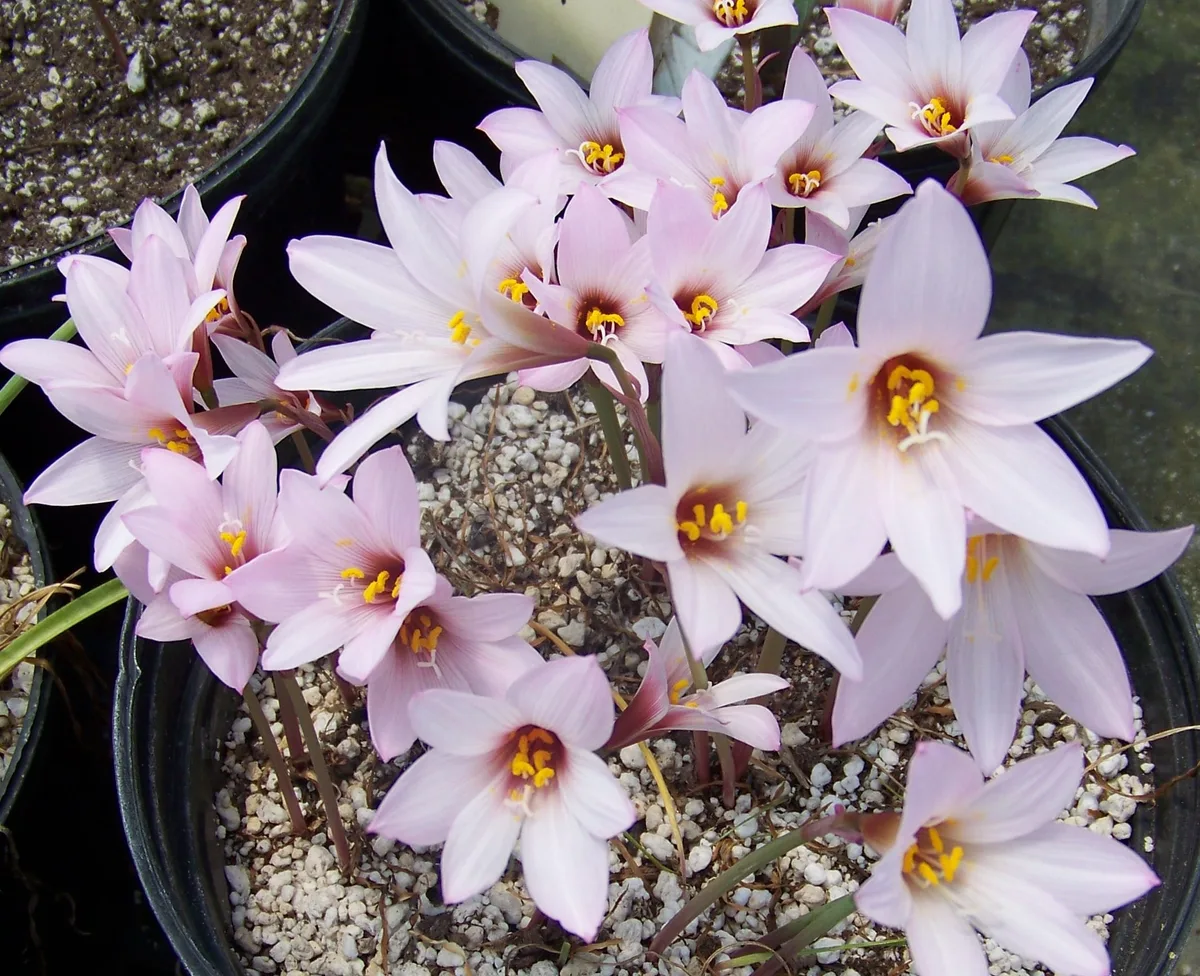
Scientific classification
- Species
- Habranthus martinezii (Habranthus martinezii)
- Genus
- Habranthus
- Family
- Amaryllidaceae
- Order
- Asparagales
- Class
- Liliopsida
- Phylum
- Magnoliophyta
- All parts of the plant are mildly toxic if ingested. Wear gloves and other protective equipment when handling
- Toxicity
- Bulbs
- Plant type
- 0.1-0.5 metres
- Height
- 0.1-0.5 metres
- Spread
- Deciduous
- Foliage
- Columnar upright
- Habit
- Spring · Summer · Autumn
- Season of interest
- Full sun
- Sunlight
- Information to be completed
- Ideal temperature









Habranthus martinezii pictures
Distribution of Habranthus martinezii
Distribution map
- Native
- Introduced
- Cultivated
Source:WCVP v16 · Royal Botanic Gardens, Kew · CC BY 3.0 · Boundaries:WGSRPD / TDWG
Toxicity
All parts of the plant are mildly toxic if ingested. Wear gloves and other protective equipment when handling
Habranthus martinezii care guide
- Moderate regular watering, avoid prolonged drought or waterlogging
- Watering
- Full sun
- Sunlight

Watering
Moderate regular watering, avoid prolonged drought or waterlogging
Fertilizing
 Fertilizing
Balanced feed in spring and light repeat in growth season
Pruning
 Pruning
No pruning required
Propagation
 Propagation
Propagate by seed, sown at 16-18°C as soon as ripe, or by division, separating bulb offsets in winter when the plant is dormant
Growing
 Growing
Grow under glass in loam-based compost with added grit, in bright, filtered light. Provide a balanced liquid feed monthly during the growing period. Reduce watering in winter but do not allow to become completely dry
Common pests and diseases
Diseases
Generally disease-free
Pests
Generally pest-free
Explore the plant health library →




