
spider orchid Rex gx
Also known as: Information to be completed
A medium to large-sized epiphytic orchid with elliptic, bright or dark-green leathery leaves up to 30cm long and 3-5cm wide. Pseudobulbs are oval-shaped, approximately 12cm long, partially covered with basal, green, leafed sheaths. Typically flowers in spring and summer on 35cm long, arching stems, carrying up to 20 fragrant flowers. Each flower is 10-17cm large, with long and slender petals and sepals, covered with dark brown markings.
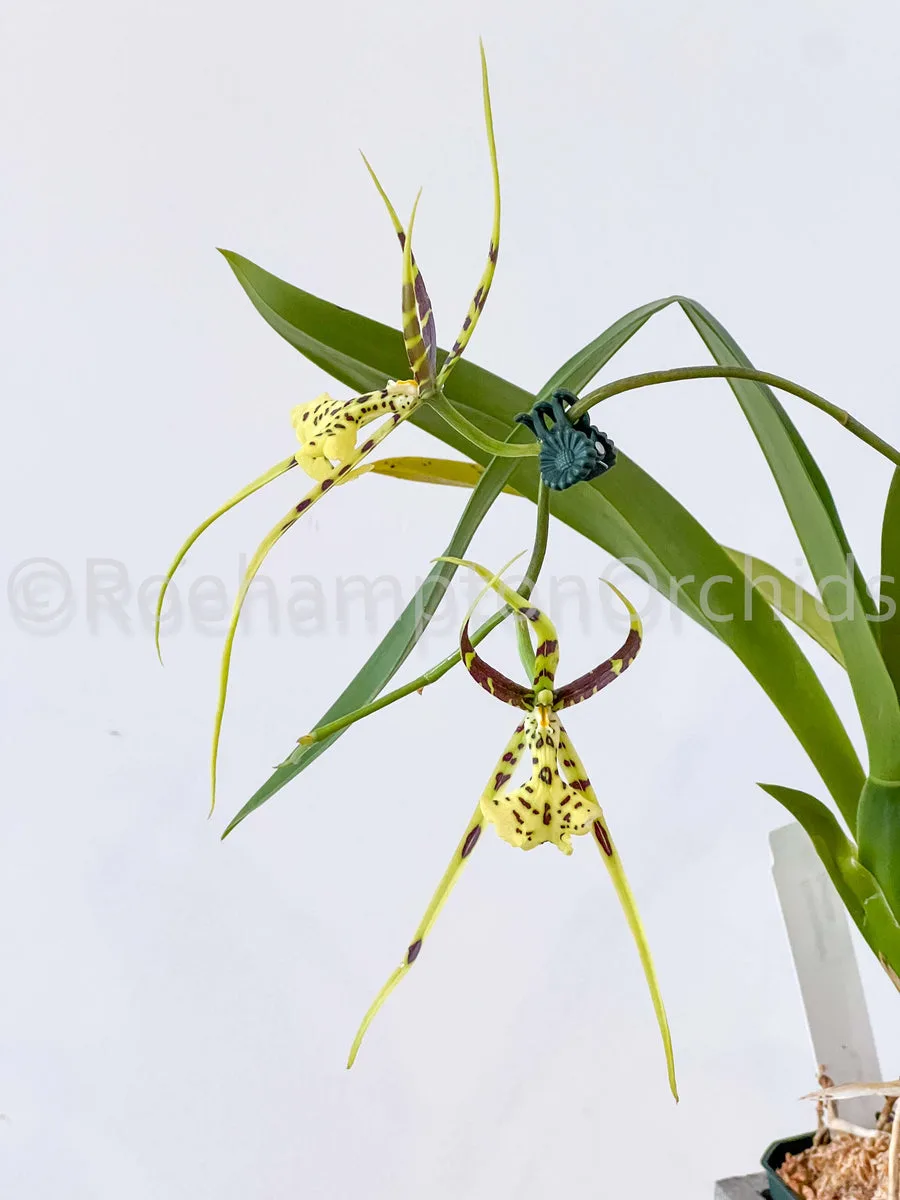
Scientific classification
- Species
- spider orchid Rex gx (Brassia Rex gx)
- Genus
- Brassia
- Family
- Orchidaceae
- Order
- Asparagales
- Class
- Liliopsida
- Phylum
- Tracheophyta
- Information to be completed
- Toxicity
- Conservatory Greenhouse · Houseplants
- Plant type
- 0.1-0.5 metres
- Height
- 0.5-1 metres
- Spread
- Evergreen
- Foliage
- Clump forming
- Habit
- Spring · Summer · Autumn · Winter
- Season of interest
- Partial shade
- Sunlight
- Information to be completed
- Ideal temperature









spider orchid Rex gx pictures
spider orchid Rex gx care guide
- Moderate regular watering, avoid prolonged drought or waterlogging
- Watering
- Partial shade
- Sunlight

Watering
Moderate regular watering, avoid prolonged drought or waterlogging
Fertilizing
 Fertilizing
Balanced feed in spring and light repeat in growth season
Pruning
 Pruning
No pruning required
Propagation
 Propagation
Mature plants may be divided when the plant overgrows its container. Each division should have at least 3 older pseudobulbs with a sufficient amount of stored energy and water, to support new growth and reduce stress after repotting.
Growing
 Growing
Grow in an open bark-based orchid compost with addition of perlite, sphagnum moss or coir. Provide enough bright filtered light, but keep away from direct sunlight or a heating source. Ideal temperatures are around 15°C minimum at night and up to maximum 25 °C during day. Water regularly, when the pot feels light when lifted. Ensure that all water drains away, preventing the plant sitting wet. Orchid fertiliser can be applied regularly throughout the growing season. Reduce watering and feeding in winter months. The orchid will naturally produce aerial roots, growing outside of the pot. As with many orchids, they grow best when well-established and slightly pot-bound. Re-potting should be only done if the plant overgrows its container or before the potting mix starts to deteriorate - approximately once in 2-3 years.
Common pests and diseases
Diseases
Generally disease-free.
Pests
May be susceptible to mealybugs, aphids and scale insects.
Explore the plant health library →




