
variegated thousand flowered mint-bush
Also known as: Information to be completed
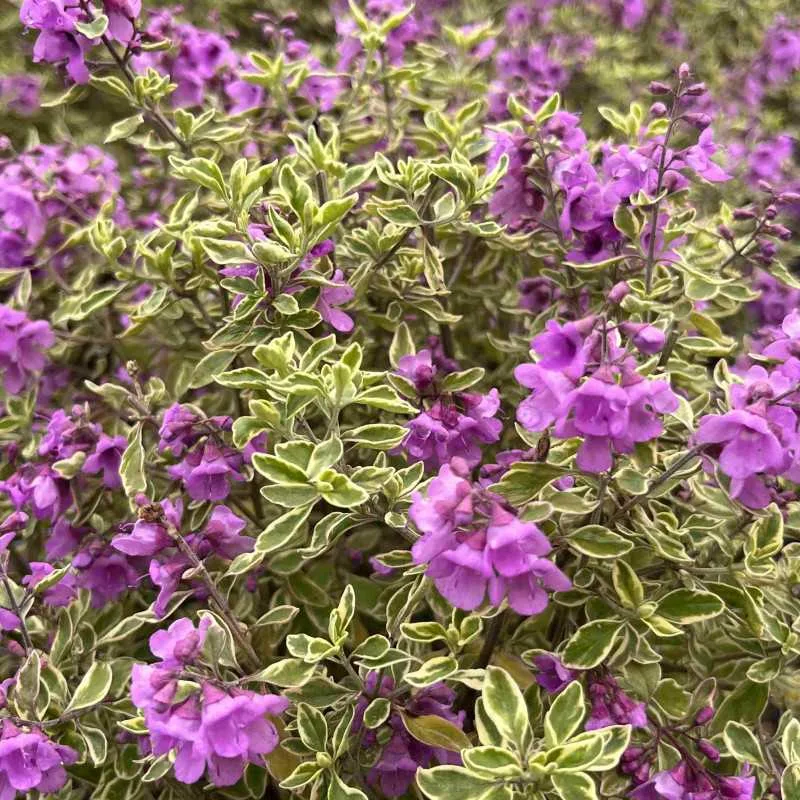
P. ovalifolium 'Variegatum' is a bushy shrub with upright stems and small, aromatic, lance-shaped leaves of greyish-green edged with a narrow creamy margin. Sprays of small, trumpet-shaped, pinky-purple flowers are produced in late spring and early summer
Scientific classification
- Species
- variegated thousand flowered mint-bush (Prostanthera ovalifolia 'Variegata')
- Genus
- Prostanthera
- Family
- Lamiaceae
- Order
- Lamiales
- Class
- Magnoliopsida
- Phylum
- Magnoliophyta
- Information to be completed
- Toxicity
- Shrubs
- Plant type
- 1-1.5 metres
- Height
- 0.5-1 metres
- Spread
- Evergreen
- Foliage
- Bushy
- Habit
- Spring · Summer · Autumn · Winter
- Season of interest
- Full sun
- Sunlight
- Information to be completed
- Ideal temperature









variegated thousand flowered mint-bush pictures
Distribution of variegated thousand flowered mint-bush
Distribution map
- Native
- Introduced
- Cultivated
Source:WCVP v16 · Royal Botanic Gardens, Kew · CC BY 3.0 · Boundaries:WGSRPD / TDWG
variegated thousand flowered mint-bush care guide
- Allow partial soil dryness between watering, guard against root rot
- Watering
- Full sun
- Sunlight

Watering
Allow partial soil dryness between watering, guard against root rot
Fertilizing
 Fertilizing
Low phosphorus native shrub feed monthly in spring and summer
Pruning
 Pruning
Usually little pruning is needed. Lightly shape if necessary, removing dead, damaged or diseased shoots. Prune after flowering.
Propagation
 Propagation
Propagate by semi-hardwood cuttings
Growing
 Growing
Grow under glass in a loam-based compost in full light. In frost-free areas grow outdoors in moist but well-drained soil in full sun. Prune after flowering; hard pruning may be detrimental
Common pests and diseases
Diseases
May be susceptible to honey fungus in gardens where it is present but insufficient data to determine degree of susceptibility
Pests
May be susceptible to glasshouse red spider mite and glasshouse whitefly
Explore the plant health library →




