
Campanula pyramidalis 'Alba'
Also known as: Information to be completed
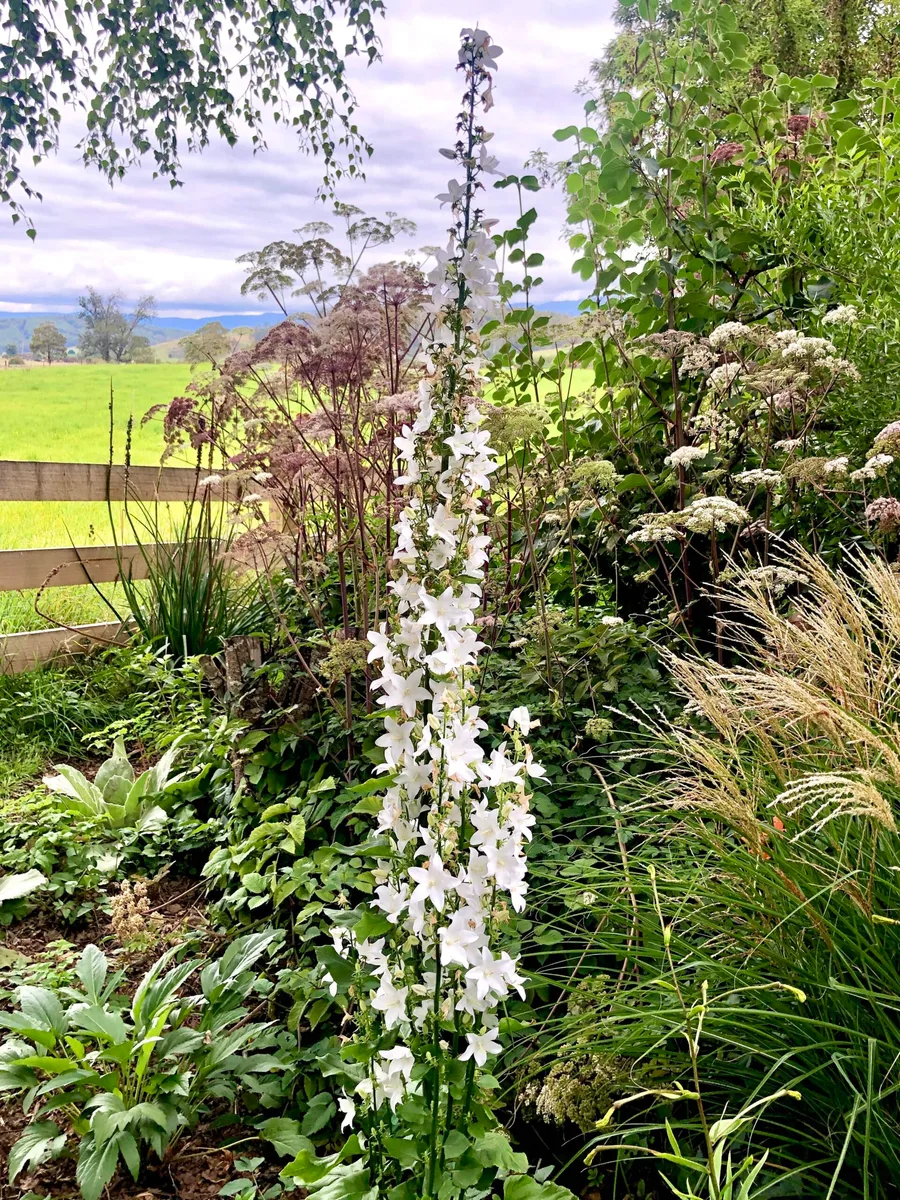
A clump forming, vigorous,herbaceous perennial sending up tall upright stems with green, lance-shaped foliage and numerous large, outward facing, white, bell-shaped flowers forming a pyramidal shape tall stem providing a long flowering display in summer. An easy to grow plant that dislikes wet winters.
Scientific classification
- Species
- Campanula pyramidalis 'Alba' (Campanula pyramidalis 'Alba')
- Genus
- Campanula
- Family
- Campanulaceae
- Information to be completed
- Toxicity
- Herbaceous Perennial · Annual Biennial
- Plant type
- 1.5-2.5 metres
- Height
- 0.1-0.5 metres
- Spread
- Deciduous
- Foliage
- Columnar upright
- Habit
- Spring · Summer · Autumn
- Season of interest
- Full sun · Partial shade
- Sunlight
- Information to be completed
- Ideal temperature









Campanula pyramidalis 'Alba' pictures
Distribution of Campanula pyramidalis 'Alba'
Distribution map
- Native
- Introduced
- Cultivated
Source:WCVP v16 · Royal Botanic Gardens, Kew · CC BY 3.0 · Boundaries:WGSRPD / TDWG
Culture
Information to be completed
Toxicity
Information to be completed
Quick identification of Campanula pyramidalis 'Alba'
Information to be completed
Campanula pyramidalis 'Alba' care guide
- Moderate regular watering, allowing brief slight drying between soakings
- Watering
- Full sun · Partial shade
- Sunlight
- Information to be completed
- Ideal temperature

Watering
Moderate regular watering, allowing brief slight drying between soakings
Fertilizing
 Fertilizing
Balanced perennial feed every four weeks from spring through summer
Pruning
 Pruning
No pruning required
Propagation
 Propagation
Propagate by seed
Growing
 Growing
Will grow well in fertile, neutral to alkaline soil that is moist but well-drained, in full sun or partial shade avoiding wet conditions in winter. A semi-shade position will ensure the best flower colour is preserved.
People also ask
Information to be completed
Common pests and diseases
Diseases
May be susceptible to a rust, powdery mildews and leaf spot
Pests
May be susceptible to slugs and snails
Explore the plant health library →




