
Beuth nasturtium
Also known as: Information to be completed
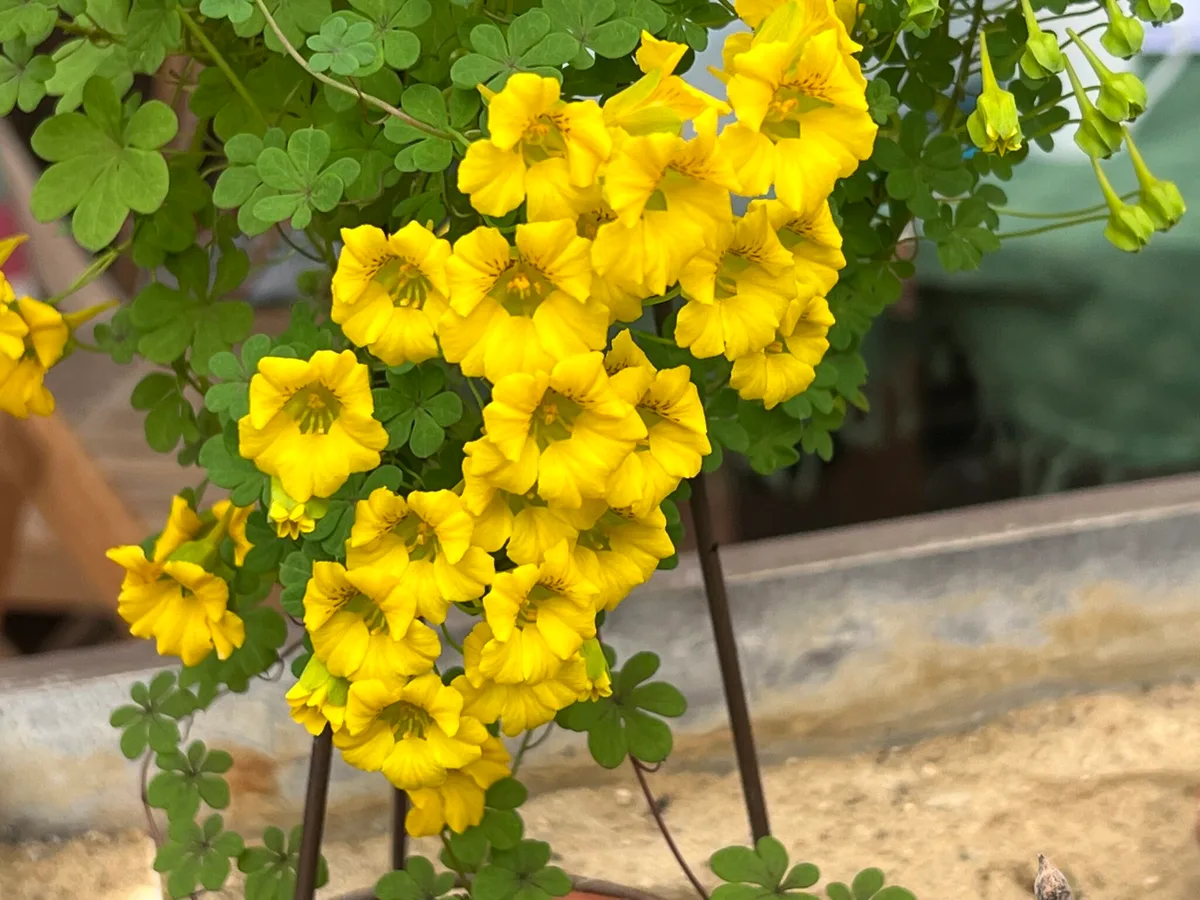
T. beuthii is a summer-dormant, tuberous, perennial climber to about 1m with small, deeply six-lobed, bright green leaves. The small, yellow, funnel-shaped flowers have a pale green calyx and spur, and appear in spring
Scientific classification
- Species
- Beuth nasturtium (Tropaeolum beuthii)
- Genus
- Tropaeolum
- Family
- Tropaeolaceae
- Order
- Brassicales
- Class
- Magnoliopsida
- Phylum
- Magnoliophyta
- Skin allergen. Wear gloves and other protective equipment when handling
- Toxicity
- Climber Wall Shrub · Conservatory Greenhouse
- Plant type
- 0.5-1 metres
- Height
- 0.1-0.5 metres
- Spread
- Deciduous
- Foliage
- Climbing
- Habit
- Spring · Autumn · Winter
- Season of interest
- Full sun
- Sunlight
- Information to be completed
- Ideal temperature









Beuth nasturtium pictures
Distribution of Beuth nasturtium
Distribution map
- Native
- Introduced
- Cultivated
Source:WCVP v16 · Royal Botanic Gardens, Kew · CC BY 3.0 · Boundaries:WGSRPD / TDWG
Toxicity
Skin allergen. Wear gloves and other protective equipment when handling
Beuth nasturtium care guide
- Moderate regular watering, avoid prolonged drought or waterlogging
- Watering
- Full sun
- Sunlight

Watering
Moderate regular watering, avoid prolonged drought or waterlogging
Fertilizing
 Fertilizing
Balanced feed in spring and light repeat in growth season
Pruning
 Pruning
No pruning needed - allow to die down naturally in midsummer
Propagation
 Propagation
Propagate by separating tubers when dormant in summer
Growing
 Growing
Grow under glass in good light with shade from hot sun. Plant tubers in a deep container of loam-based compost with added fine grit, starting into growth in autumn
Common pests and diseases
Diseases
Generally disease-free
Pests
May be susceptible to glasshouse whitefly and glasshouse red spider mite and whitefly
Explore the plant health library →




