
white cedar 'Brobeck's Tower'
Also known as: Information to be completed
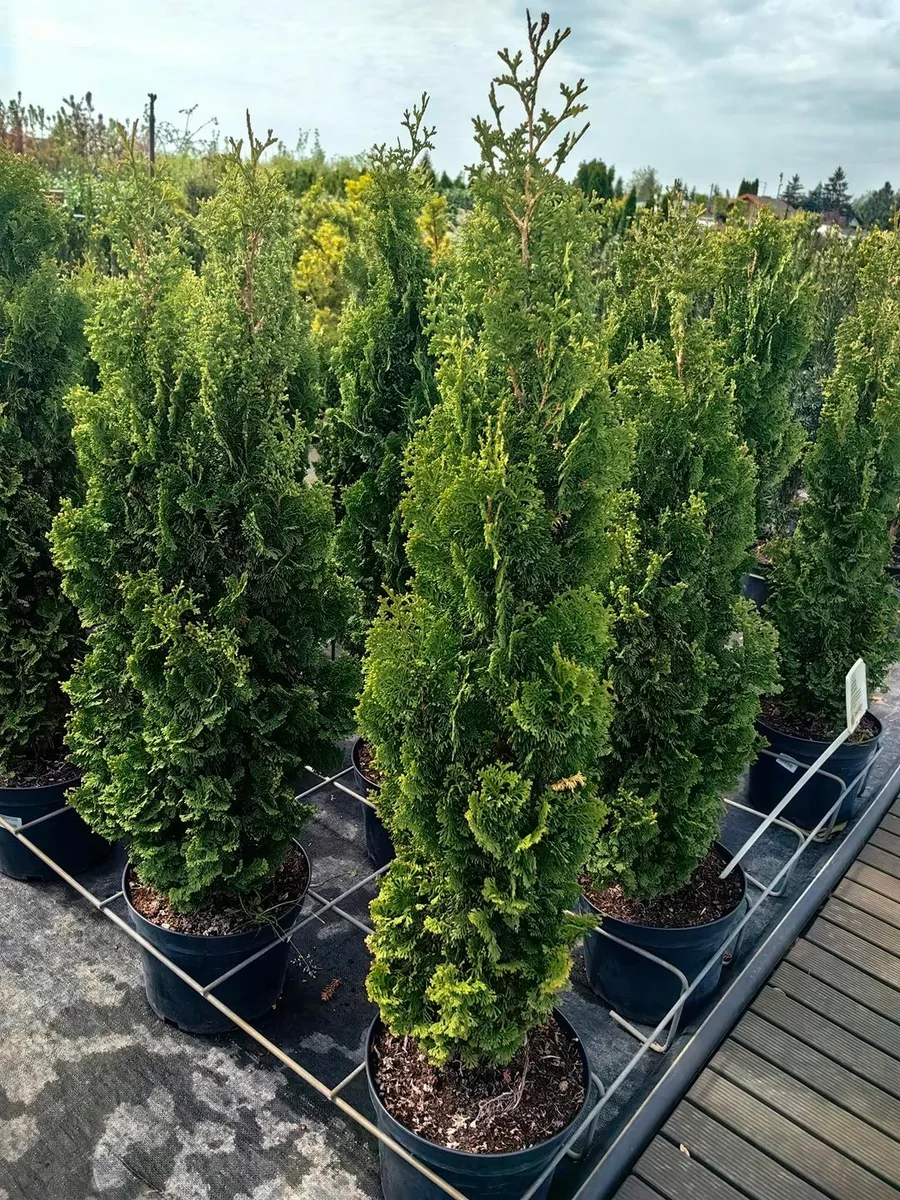
A compact, columnar, evergreen coniferous tree, slowly growing to a maximum height of 2m (6½ft) and 1m (39in) across. Producing dense flat sparays of bronze tinged light green foliage. Its strictly conical form is useful as an architectural focal point in a garden, as well as being a good addition to city and courtyard gardens, where ultimate size is an important consideration
Scientific classification
- Species
- white cedar 'Brobeck's Tower' (Thuja occidentalis 'Brobeck's Tower')
- Genus
- Thuja
- Family
- Cupressaceae
- Order
- Cupressales
- Class
- Pinopsida
- Phylum
- Pinophyta
- Harmful if eaten, skin allergen. Wear gloves and other protective equipment when handling]
- Toxicity
- Trees
- Plant type
- 1.5-2.5 metres
- Height
- 0.1-0.5 metres
- Spread
- Evergreen
- Foliage
- Columnar upright
- Habit
- Spring · Summer · Autumn · Winter
- Season of interest
- Full sun
- Sunlight
- Information to be completed
- Ideal temperature









white cedar 'Brobeck's Tower' pictures
Distribution of white cedar 'Brobeck's Tower'
Distribution map
- Native
- Introduced
- Cultivated
Source:WCVP v16 · Royal Botanic Gardens, Kew · CC BY 3.0 · Boundaries:WGSRPD / TDWG
Toxicity
Harmful if eaten, skin allergen. Wear gloves and other protective equipment when handling]
white cedar 'Brobeck's Tower' care guide
- Moderate regular watering, allowing brief slight drying between soakings
- Watering
- Full sun
- Sunlight

Watering
Moderate regular watering, allowing brief slight drying between soakings
Fertilizing
 Fertilizing
Balanced perennial feed every four weeks from spring through summer
Pruning
 Pruning
No pruning required unless grown as hedging. See: hedges and trimming hedges
Propagation
 Propagation
Propagate by semi-hardwood cuttings
Growing
 Growing
Grows well in any moist, but well-drained soil in full sun
Common pests and diseases
Diseases
May be susceptible to honey fungus and other fungal diseases, particularly thuja blight and Coryneum canker (see conifers: brown patches)
Pests
May be susceptible to scale insects and conifer aphids
Explore the plant health library →




