
Clematis × diversifolia 'Blue Boy'
Also known as: Information to be completed
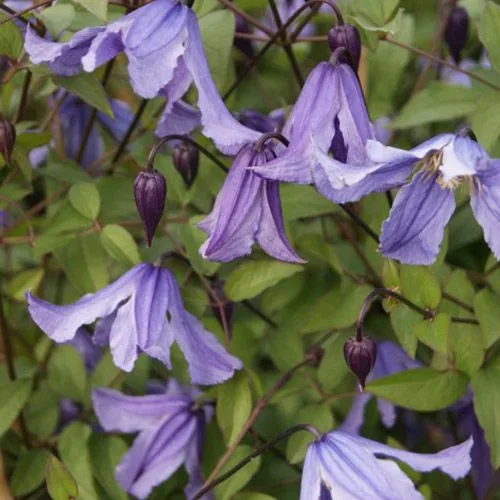
Deciduous, clump-forming herbaceous (non-climbing) clematis, to about 2m high, with pinnately divided green leaves. Scrambling stems are topped with widely bell-shaped, pale violet blue flowers to 7.5cm across, with recurved tips and wavy edges, from midsummer to early autumn
Scientific classification
- Species
- Clematis × diversifolia 'Blue Boy' (Clematis × diversifolia 'Blue Boy')
- Genus
- Clematis
- Family
- Ranunculaceae
- Order
- Ranunculales
- Class
- Magnoliopsida
- Phylum
- Tracheophyta
- Skin irritant. Wear gloves and other protective equipment when handling
- Toxicity
- Herbaceous Perennial
- Plant type
- Information to be completed
- Height
- Information to be completed
- Spread
- Deciduous
- Foliage
- Bushy
- Habit
- Spring · Summer · Autumn
- Season of interest
- Full sun
- Sunlight
- Information to be completed
- Ideal temperature









Clematis × diversifolia 'Blue Boy' pictures
Toxicity
Skin irritant. Wear gloves and other protective equipment when handling
Clematis × diversifolia 'Blue Boy' care guide
- Deep steady watering, retain mild dampness around root ball at all times
- Watering
- Full sun
- Sunlight

Watering
Deep steady watering, retain mild dampness around root ball at all times
Fertilizing
 Fertilizing
Potassium-rich climber feed every four weeks spring to mid-summer period
Pruning
 Pruning
Cut back hard before growth begins in early spring. See clematis pruning: group three
Propagation
 Propagation
Propagate by division or take basal softwood cuttings of herbaceous clematis in spring
Growing
 Growing
Plant herbaceous (non-climbing) clematis at soil level in moisture-retentive, well-drained soil in full sun, with the roots and base of the plant in shade. Ideal for growing through plants in the herbaceous border or through low shrubs for support. See clematis cultivation
Common pests and diseases
Diseases
May be susceptible to honey fungus (rarely), clematis wilt and clematis slime flux
Pests
May be susceptible to aphids. Cutworms and voles may cut young stems
Explore the plant health library →




