
Sequoiadendron giganteum 'Bultinck Yellow'
Also known as: Information to be completed
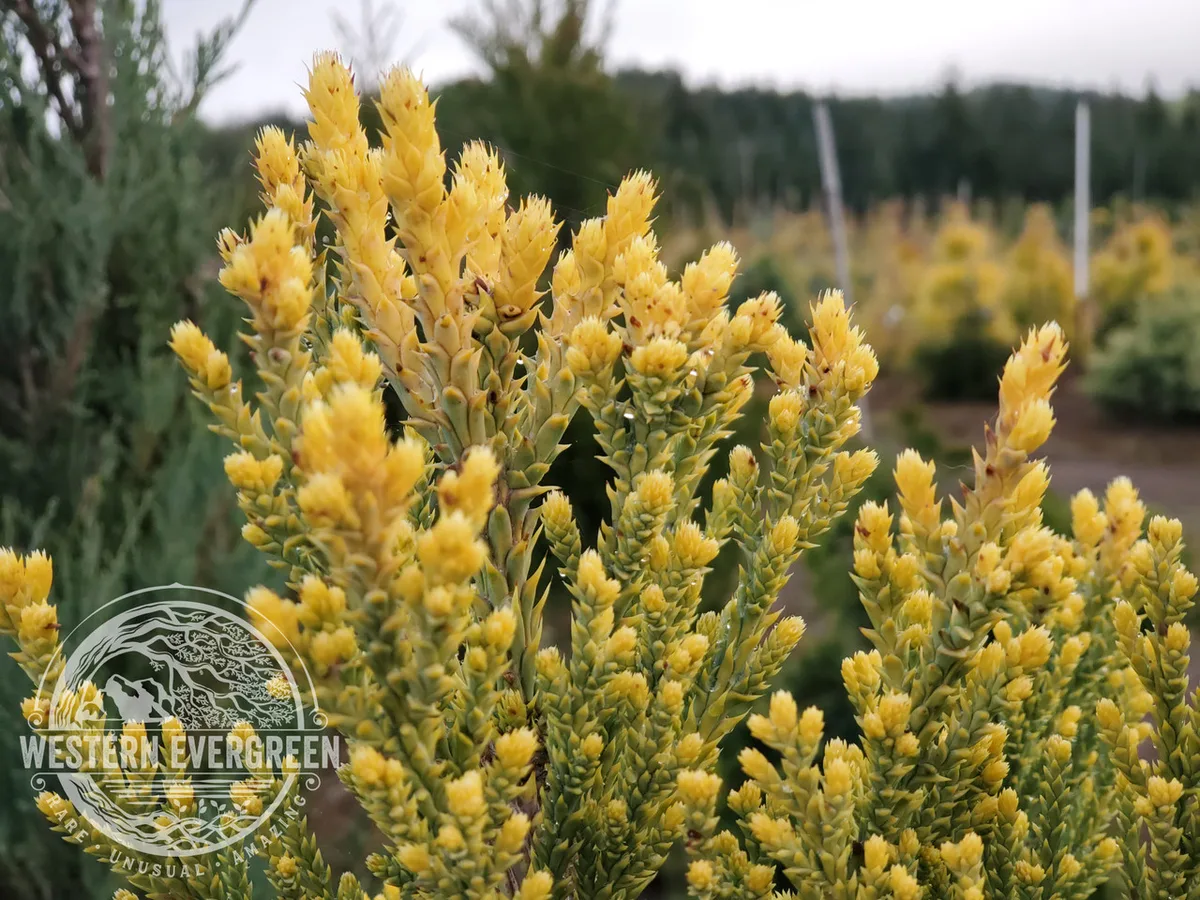
A large, slow-growing evergreen, tree that has a pyramidal growth habit and reaches approximately 25 metres in height. It has sharp, bright yellow-green awl-shaped leaves that mature to grey-green and a striking reddish-brown, soft and fibrous trunk. Upright cones appear after flowering and when ripe, the reddish-brown cones (5-8cm) hang down. Ideally suited to being planted as a specimen in a large park or garden.
Scientific classification
- Species
- Sequoiadendron giganteum 'Bultinck Yellow' (Sequoiadendron giganteum 'Bultinck Yellow')
- Genus
- Sequoiadendron
- Family
- Cupressaceae
- Order
- Cupressales
- Class
- Pinopsida
- Phylum
- Pinophyta
- Information to be completed
- Toxicity
- Conifers · Trees
- Plant type
- Higher than 12 metres
- Height
- wider than 8 metres
- Spread
- Evergreen
- Foliage
- Bushy
- Habit
- Spring · Summer · Autumn · Winter
- Season of interest
- Full shade · Full sun · Partial shade
- Sunlight
- Information to be completed
- Ideal temperature









Sequoiadendron giganteum 'Bultinck Yellow' pictures
Distribution of Sequoiadendron giganteum 'Bultinck Yellow'
Distribution map
- Native
- Introduced
- Cultivated
Source:WCVP v16 · Royal Botanic Gardens, Kew · CC BY 3.0 · Boundaries:WGSRPD / TDWG
Sequoiadendron giganteum 'Bultinck Yellow' care guide
- Deep infrequent watering, dry topsoil acceptable between waterings
- Watering
- Full shade · Full sun · Partial shade
- Sunlight

Watering
Deep infrequent watering, dry topsoil acceptable between waterings
Fertilizing
 Fertilizing
Slow-release tree shrub fertilizer once annually in early spring months
Pruning
 Pruning
No pruning required
Propagation
 Propagation
Propagate by seed in containers in a cold frame in spring. Root softwood cuttings in summer or semi-ripe cuttings in late summer
Growing
 Growing
Grow in moderately fertile, well-drained soil in full sun or light dappled shade
Common pests and diseases
Diseases
May be susceptible to honey fungus in gardens where it is present but insufficient data to determine degree of susceptibility
Pests
Generally pest-free
Explore the plant health library →




