
pea 'Sugar Lace'
Also known as: Information to be completed
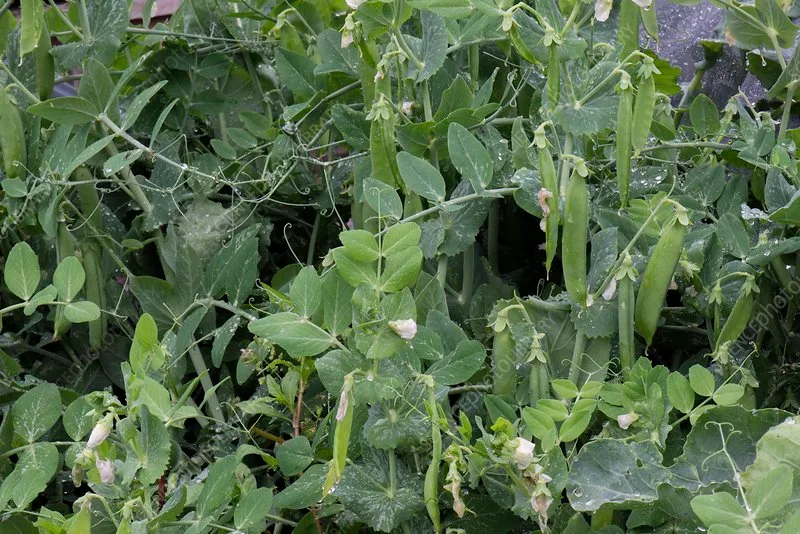
A very dwarf pea to 35cm. It has green leaves, though is described as semi-leafless and climbs using extra tendrils. Due to its compact size and tendrils, it does not need support. The flowers are white and develop into edible pod snap peas. It is an annual which lives for one summer.
Scientific classification
- Species
- pea 'Sugar Lace' (Pisum sativum 'Sugar Lace')
- Genus
- Pisum
- Family
- Fabaceae
- Order
- Fabales
- Class
- Magnoliopsida
- Phylum
- Magnoliophyta
- Information to be completed
- Toxicity
- Annual Biennial
- Plant type
- 0.1-0.5 metres
- Height
- 0.1-0.5 metres
- Spread
- Deciduous
- Foliage
- Climbing
- Habit
- Spring · Summer
- Season of interest
- Full sun
- Sunlight
- Information to be completed
- Ideal temperature









pea 'Sugar Lace' pictures
Distribution of pea 'Sugar Lace'
Distribution map
- Native
- Introduced
- Cultivated
Source:WCVP v16 · Royal Botanic Gardens, Kew · CC BY 3.0 · Boundaries:WGSRPD / TDWG
pea 'Sugar Lace' care guide
- Keep soil consistently moist for tender leafy growth, never hard dry
- Watering
- Full sun
- Sunlight

Watering
Keep soil consistently moist for tender leafy growth, never hard dry
Fertilizing
 Fertilizing
Nitrogen-rich vegetable feed every two to three weeks active growth
Pruning
 Pruning
No pruning required
Propagation
 Propagation
Propagate by seed. See sowing vegetable seeds
Growing
 Growing
Sow seed quite densely, in full sun in well-drained but moisture-retentive soil. Provide support such as twiggy hazel sticks or netting, them to climb up. Pick pods regularly to ensure a continuous crop. For more advice, see pea cultivation.
Common pests and diseases
Diseases
May be susceptible to Powdery mildews, downy mildews, foot and root rot, Fusarium wilt, grey moulds, pea leaf and pod spot, and virus diseases
Pests
May be susceptible to pea moth, aphids, pea and bean weevil, pea Thrips, pigeons, slugs and snails. Mice may eat newly-sown seeds
Explore the plant health library →




