
Virginian witch hazel
Also known as: American witch hazel; snapping hazel nut; spotted alder; winter bloom
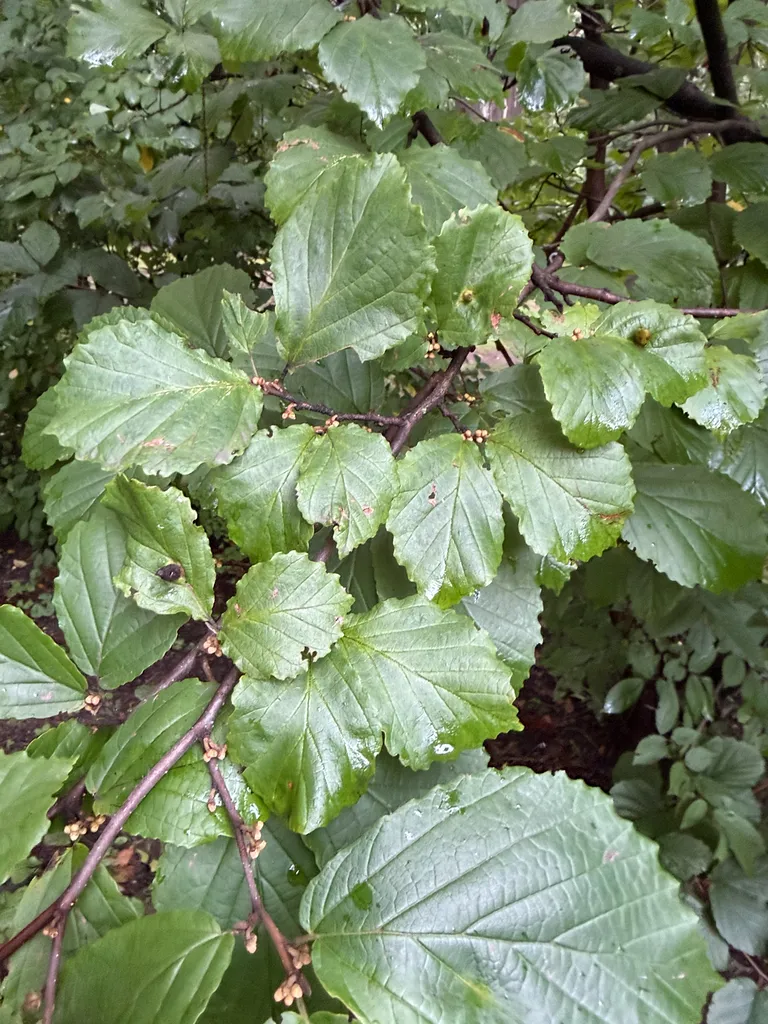
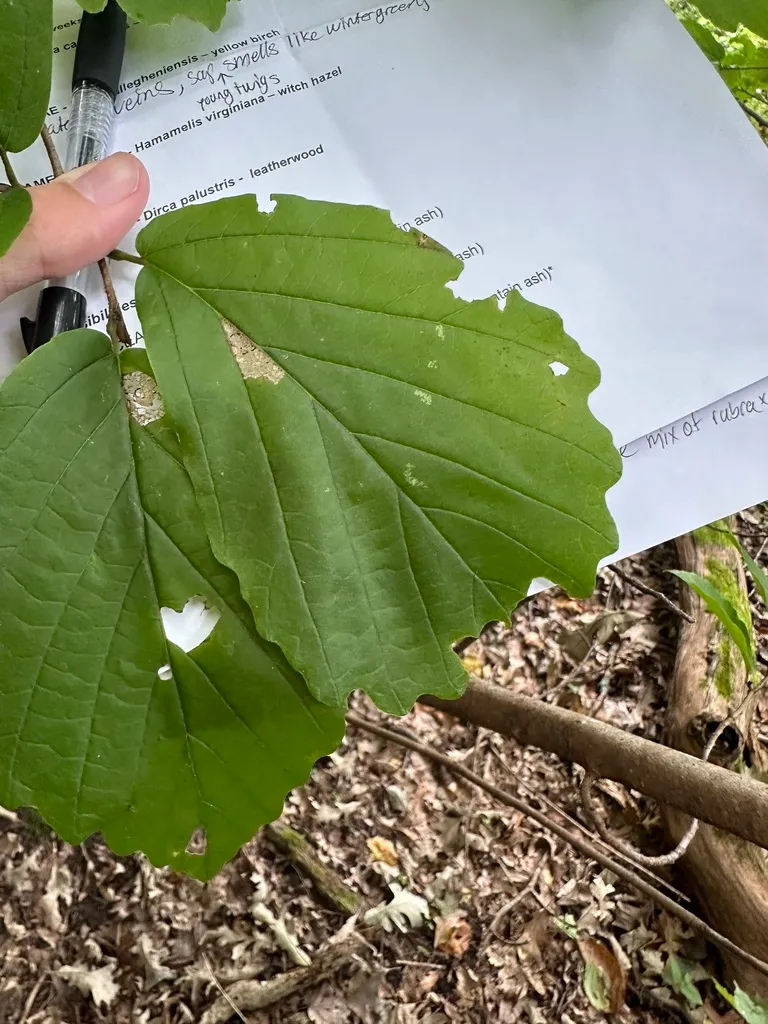
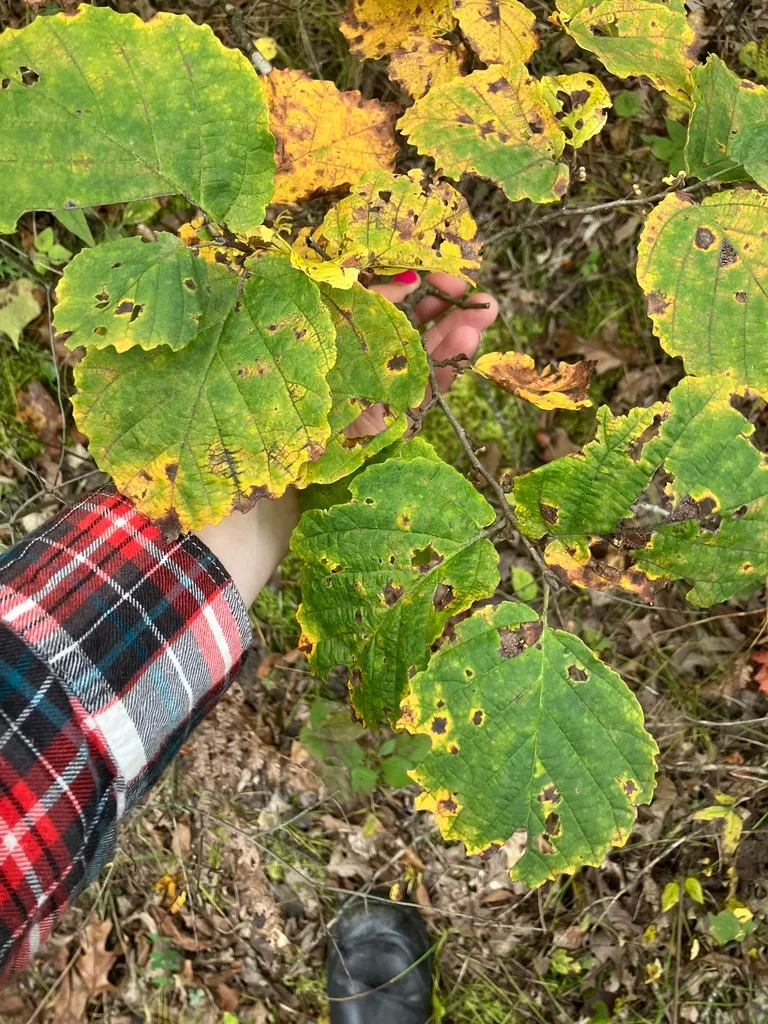
H. virginiana is an erect large shrub up to 5m high (or occasionally a small tree up to 10m high) with smooth, broadly-oval, obovate, or nearly-round leaves, up to 15cm long, which open light green before becoming dark green. Clusters of sweetly-scented flowers with slightly-twisted, crimped, pale yellow petals, about 16mm long, appear from mid-autumn to late autumn, the flowers emerging while the leaves are still green and remaining as the leaves turn golden yellow and fall. H. virginiana is the species from which medicinal witch-hazel extract is made
Scientific classification
- Species
- Virginian witch hazel (Hamamelis virginiana)
- Genus
- Hamamelis
- Family
- Hamamelidaceae
- Order
- Saxifragales
- Class
- Magnoliopsida
- Phylum
- Magnoliophyta
- Information to be completed
- Toxicity
- Shrubs
- Plant type
- 4-8 metres
- Height
- 2.5-4 metres
- Spread
- Deciduous
- Foliage
- Columnar upright
- Habit
- Autumn · Spring · Summer
- Season of interest
- Full sun · Partial shade
- Sunlight
- Information to be completed
- Ideal temperature









Virginian witch hazel pictures
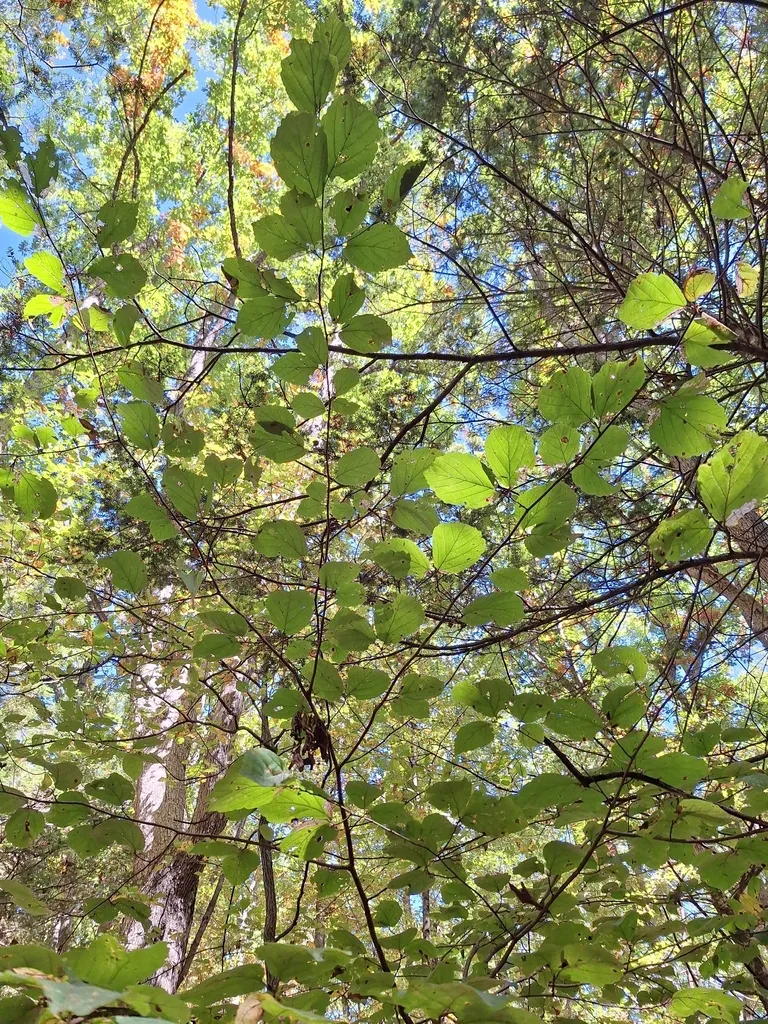
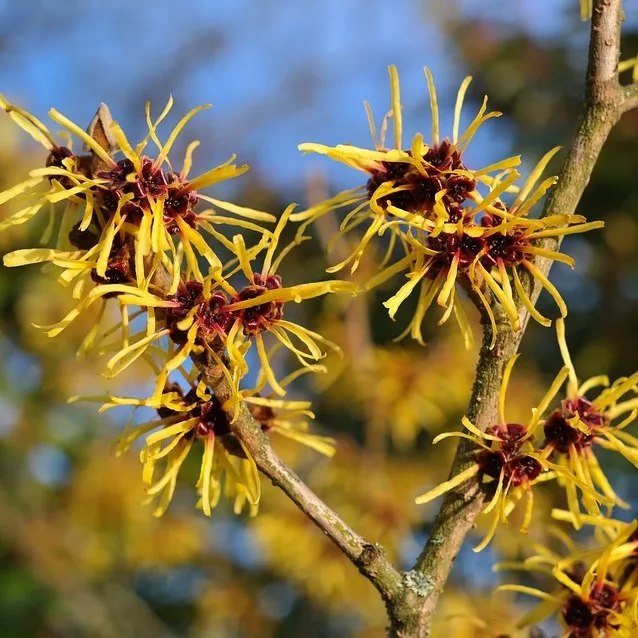
Distribution of Virginian witch hazel
Distribution map
- Native
- Introduced
- Cultivated
Source:WCVP v16 · Royal Botanic Gardens, Kew · CC BY 3.0 · Boundaries:WGSRPD / TDWG
Virginian witch hazel care guide
- Deep watering during dry spells, allowing slight surface drying between soakings
- Watering
- Full sun · Partial shade
- Sunlight

Watering
Deep watering during dry spells, allowing slight surface drying between soakings
Fertilizing
 Fertilizing
Balanced shrub or tree feed once each early spring
Pruning
 Pruning
Little pruning is needed. Remove diseased, damaged, crowded or crossing shoots and unwanted growth. Timing depends on the plant: generally late winter or early spring; plants prone to bleeding and deciduous magnolias need different timing, and deciduous azaleas and lilacs are pruned after flowering.
Propagation
 Propagation
Propagate by seed, sown in containers in a cold frame as soon as they are ripe (seeds may take two years to germinate), or by layering in autumn
Growing
 Growing
Grow in moderately fertile, neutral or preferably slightly acidic soil which is well-drained but humus-rich and moisture-retentive in summer, in full sun or partial shade, in an open position with shelter from cold drying winds, and add mulch to conserve moisture; will also tolerate soils over chalk if they are deep and humus-rich; for more advice, see witch hazel cultivation
Common pests and diseases
Diseases
May be susceptible to coral spot, honey fungus, phytophthora root rot and powdery mildews
Pests
Generally pest-free
Explore the plant health library →




