
Franklin tree
Also known as: Information to be completed
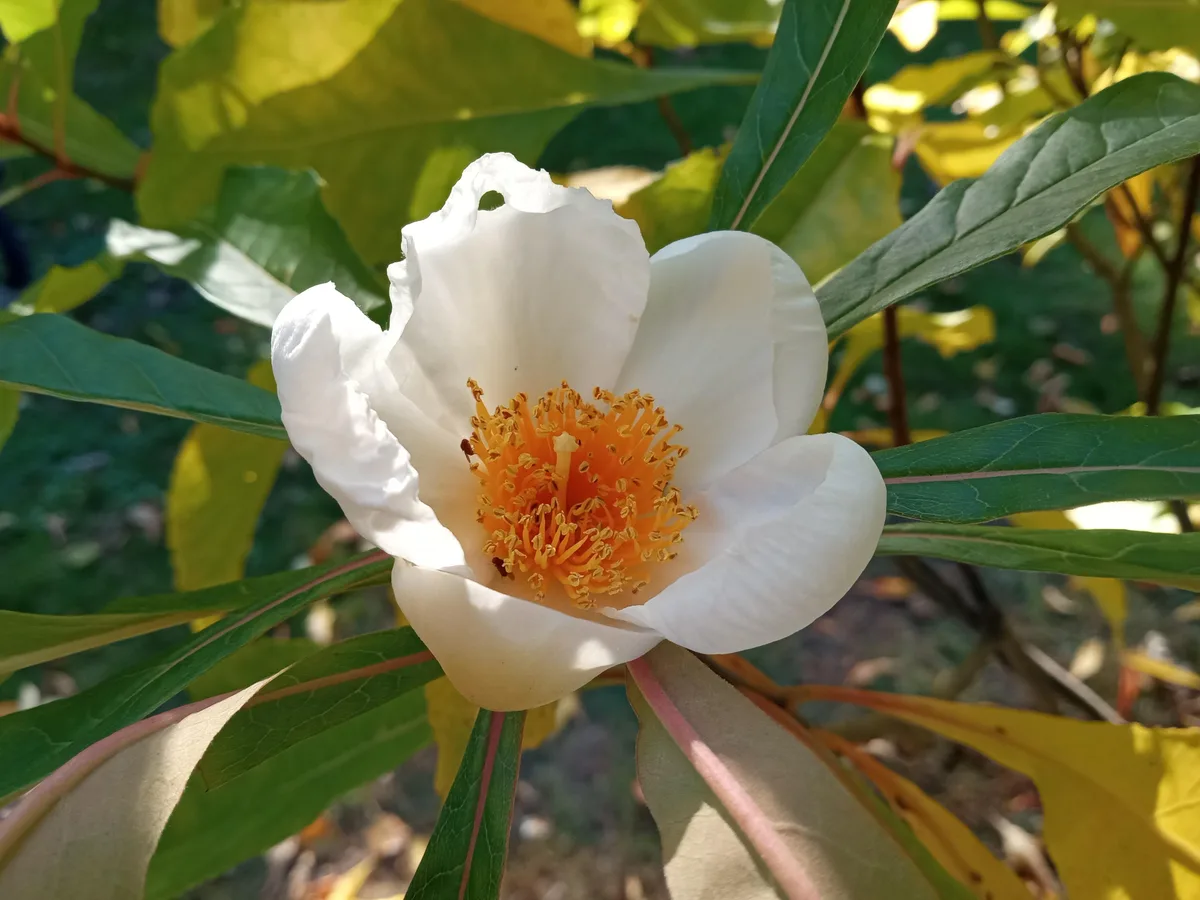
Franklinia alatamaha is the only species in this (monotypic) genus. It is a deciduous small tree or large shrub, 3-4.5m, with dark green, glossy, simple oblong leaves, to 18cm long, turning crimson in autumn. Flowers are large, to 6cm across, cup-shaped, snowy white with a large boss of yellow stamens, in autumn. Fragrant, and can flower with the autumn leaf colour, but blooms are only produced after a long, hot summer
Scientific classification
- Species
- Franklin tree (Franklinia alatamaha)
- Genus
- Franklinia
- Family
- Theaceae
- Order
- Ericales
- Class
- Magnoliopsida
- Phylum
- Tracheophyta
- Information to be completed
- Toxicity
- Trees
- Plant type
- 2.5-4 metres
- Height
- 2.5-4 metres
- Spread
- Deciduous
- Foliage
- Bushy
- Habit
- Autumn · Spring · Summer
- Season of interest
- Full sun · Partial shade
- Sunlight
- Information to be completed
- Ideal temperature









Franklin tree pictures
Distribution of Franklin tree
Distribution map
- Native
- Introduced
- Cultivated
No current, non-doubtful distribution records are available.
Locally extinct or doubtful records are excluded from native and introduced layers.
Source:WCVP v16 · Royal Botanic Gardens, Kew · CC BY 3.0 · Boundaries:WGSRPD / TDWG
Franklin tree care guide
- Moderate regular watering, allowing brief slight drying between soakings
- Watering
- Full sun · Partial shade
- Sunlight

Watering
Moderate regular watering, allowing brief slight drying between soakings
Fertilizing
 Fertilizing
Balanced perennial feed every four weeks from spring through summer
Pruning
 Pruning
Requires minimal pruning, only removing wayward, crossing or rubbing shoots in winter when dormant
Propagation
 Propagation
Propagate by seed as soon as ripe at 10-18C (50-64F). Root hardwood cuttings in winter or softwood cuttings in summer with bottom heat
Growing
 Growing
Can be challenging to grow. Best grown in rich, moist, well-drained soils in full sun to part shade. Intolerant of root disturbance once established as well as drought
Common pests and diseases
Diseases
Susceptible to Phytophthora root rot
Pests
Generally trouble free
Explore the plant health library →




