
nettle-leaved mullein 'Sixteen Candles'
Also known as: Information to be completed
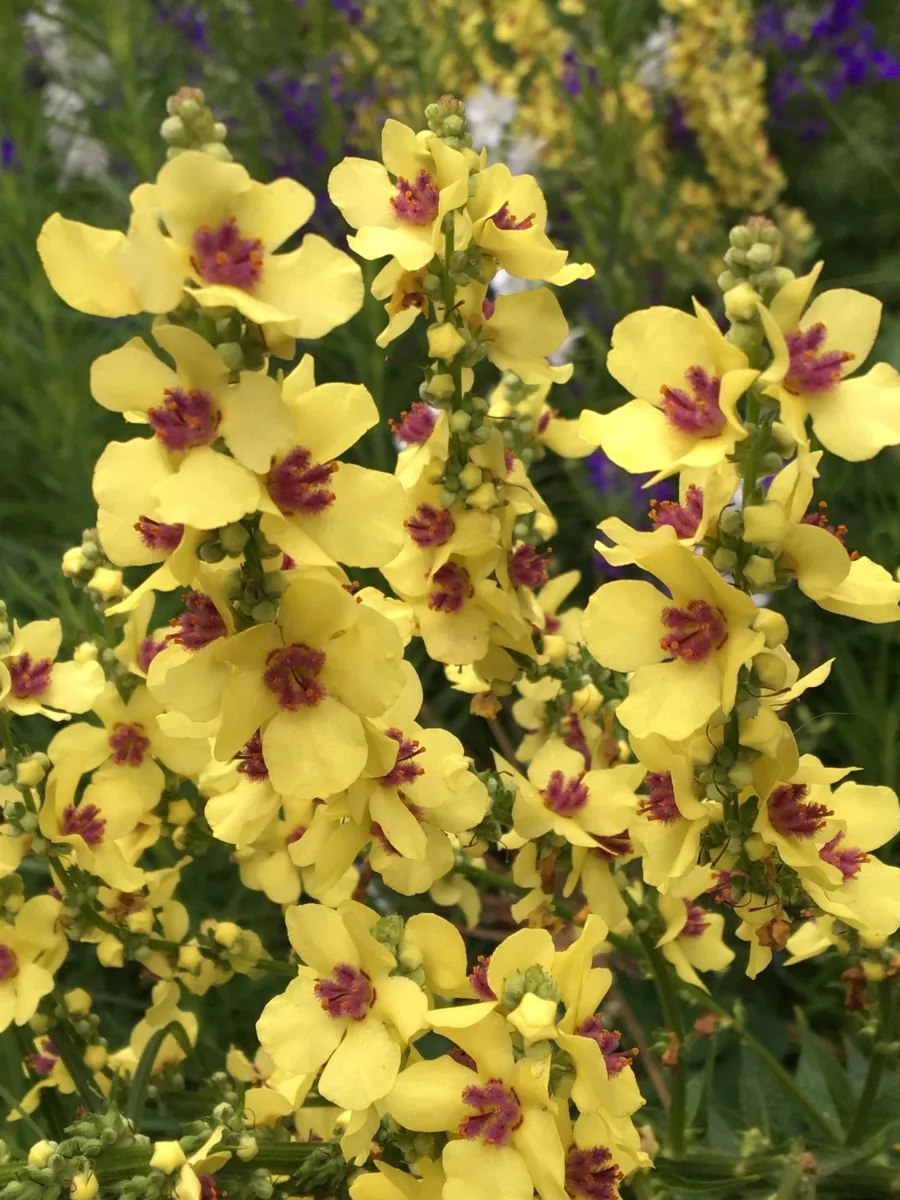
An upright variety which can be short-lived. It produces rosettes of hairy, grey to green leaves followed by long stems of saucer-shaped yellow flowers with violet-purple centres during the summer
Scientific classification
- Species
- nettle-leaved mullein 'Sixteen Candles' (Verbascum chaixii 'Sixteen Candles')
- Genus
- Verbascum
- Family
- Scrophulariaceae
- Order
- Lamiales
- Class
- Magnoliopsida
- Phylum
- Magnoliophyta
- Information to be completed
- Toxicity
- Herbaceous Perennial
- Plant type
- 0.5-1 metres
- Height
- 0.1-0.5 metres
- Spread
- Semi evergreen
- Foliage
- Columnar upright
- Habit
- Spring · Summer · Autumn · Winter
- Season of interest
- Full sun
- Sunlight
- Information to be completed
- Ideal temperature









nettle-leaved mullein 'Sixteen Candles' pictures
Distribution of nettle-leaved mullein 'Sixteen Candles'
Distribution map
- Native
- Introduced
- Cultivated
Source:WCVP v16 · Royal Botanic Gardens, Kew · CC BY 3.0 · Boundaries:WGSRPD / TDWG
nettle-leaved mullein 'Sixteen Candles' care guide
- Moderate regular watering, allowing brief slight drying between soakings
- Watering
- Full sun
- Sunlight

Watering
Moderate regular watering, allowing brief slight drying between soakings
Fertilizing
 Fertilizing
Balanced perennial feed every four weeks from spring through summer
Pruning
 Pruning
Remove faded flower spikes to prolong flowering
Propagation
 Propagation
Propagate by seed sown in containers in a cold frame in spring or early summer, or by root cuttings in winter
Growing
 Growing
Grow in alkaline, poor, well-drained soil in full sun. A drought-tolerant plant, which can grow large and need support in fertile soils
Common pests and diseases
Diseases
May be subject to powdery mildews
Pests
May be attacked by mullein moth caterpillars and figwort weevil
Explore the plant health library →




