
beautyberry
Also known as: French mulberry
A bushy, deciduous open and arching shrub grown for the freely-fruiting clusters of purplish-mauve to magenta berries are borne along the stems during autumn and often into winter. The elliptical to ovate leaves have serrated margins and the undersides may be covered with woolly hairs. The stems are slender and grey to reddish-brown. In late spring to early summer, inconspicuous flowers of violet, pink, or white are arranged in clusters from the leaf axils
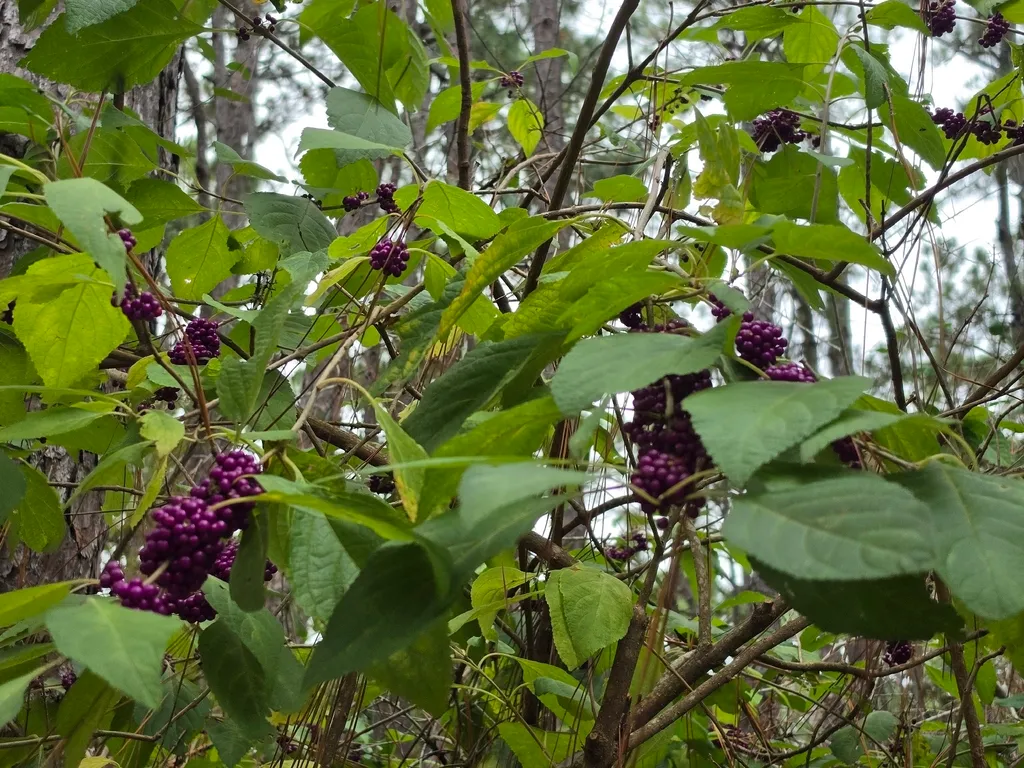
Scientific classification
- Species
- beautyberry (Callicarpa americana)
- Genus
- Callicarpa
- Family
- Lamiaceae
- Order
- Lamiales
- Class
- Magnoliopsida
- Phylum
- Magnoliophyta
- Fruit are ornamental - not to be eaten. Wear gloves and other protective equipment when handling
- Toxicity
- Shrubs
- Plant type
- 1.5-2.5 metres
- Height
- 1.5-2.5 metres
- Spread
- Deciduous
- Foliage
- Bushy
- Habit
- Autumn · Spring · Summer
- Season of interest
- Full sun · Partial shade
- Sunlight
- Information to be completed
- Ideal temperature









beautyberry pictures
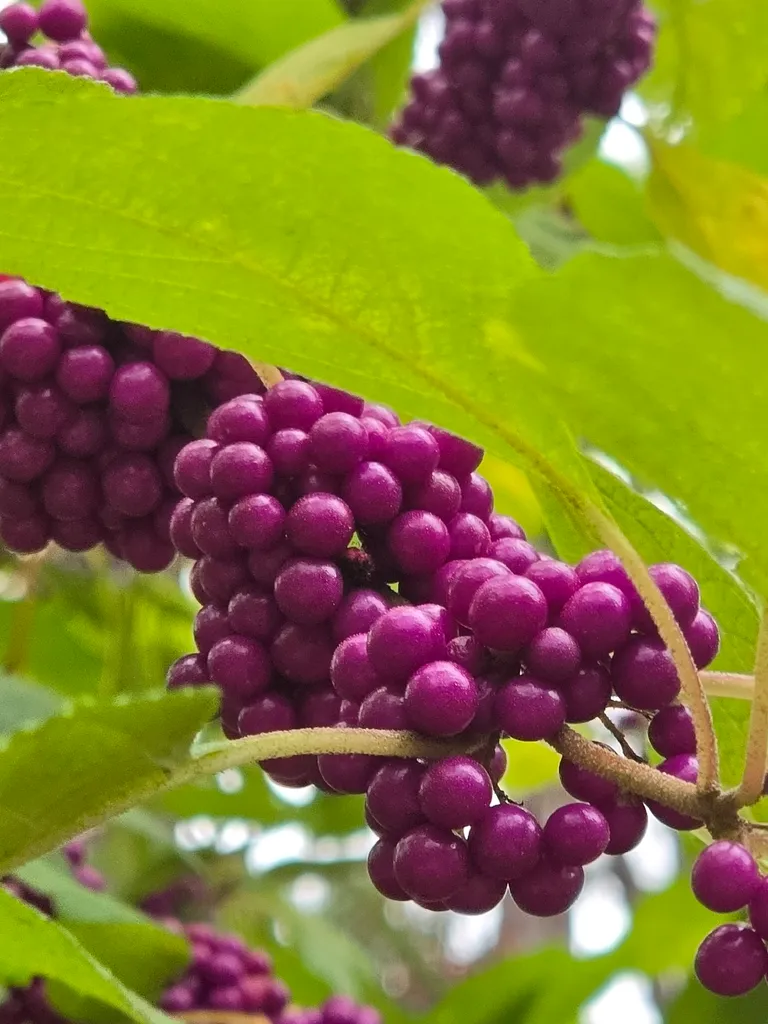
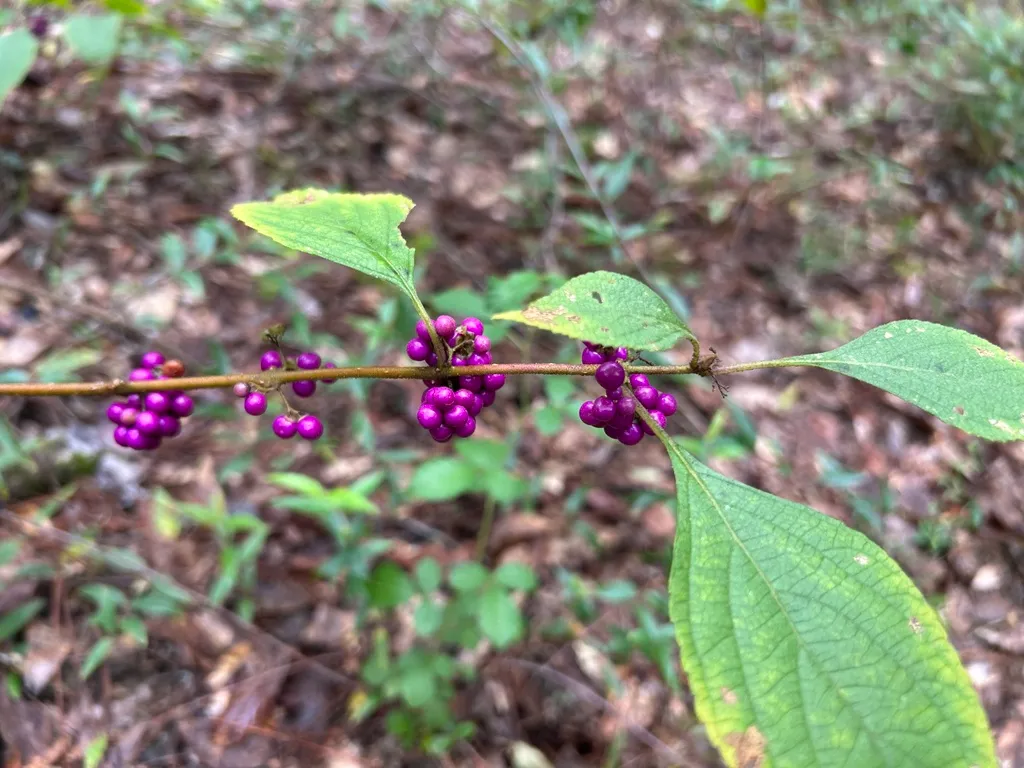
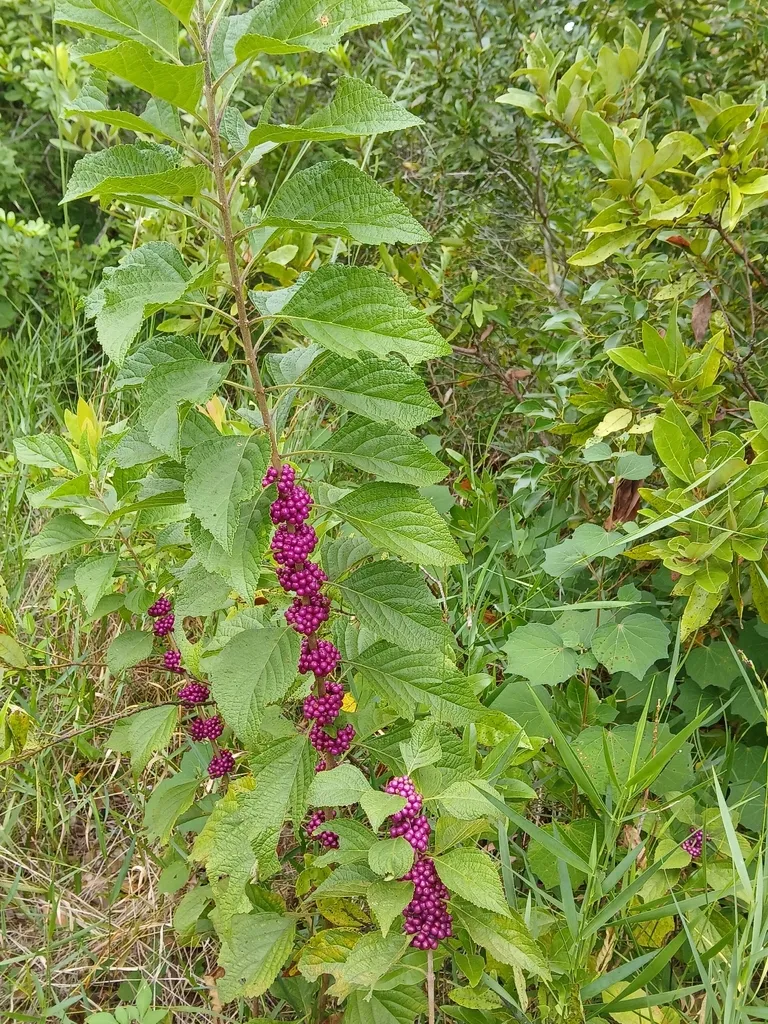
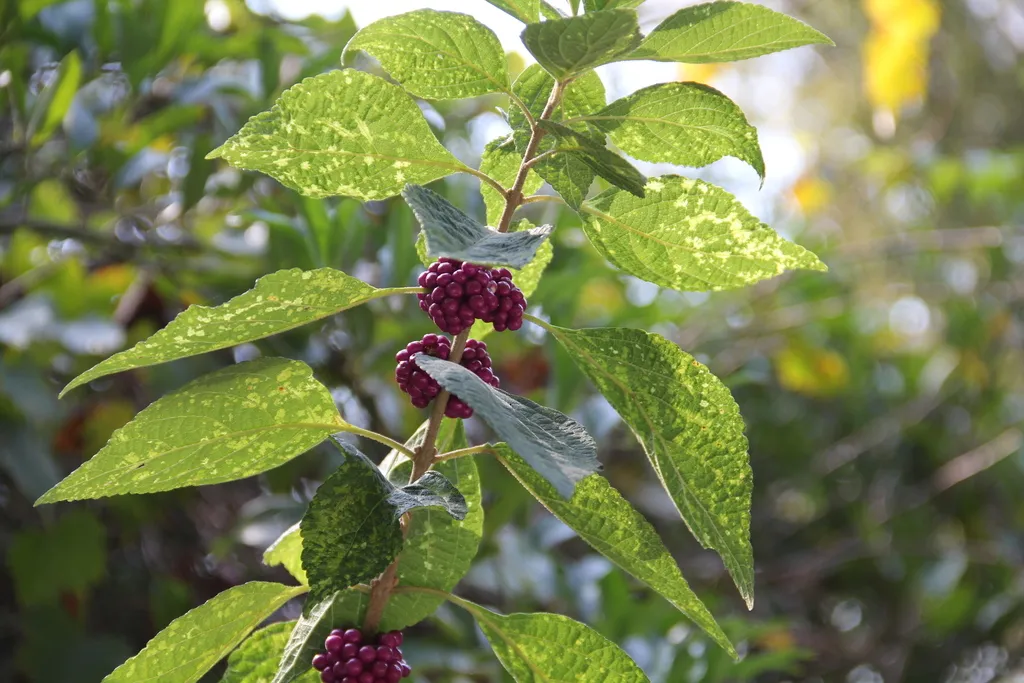
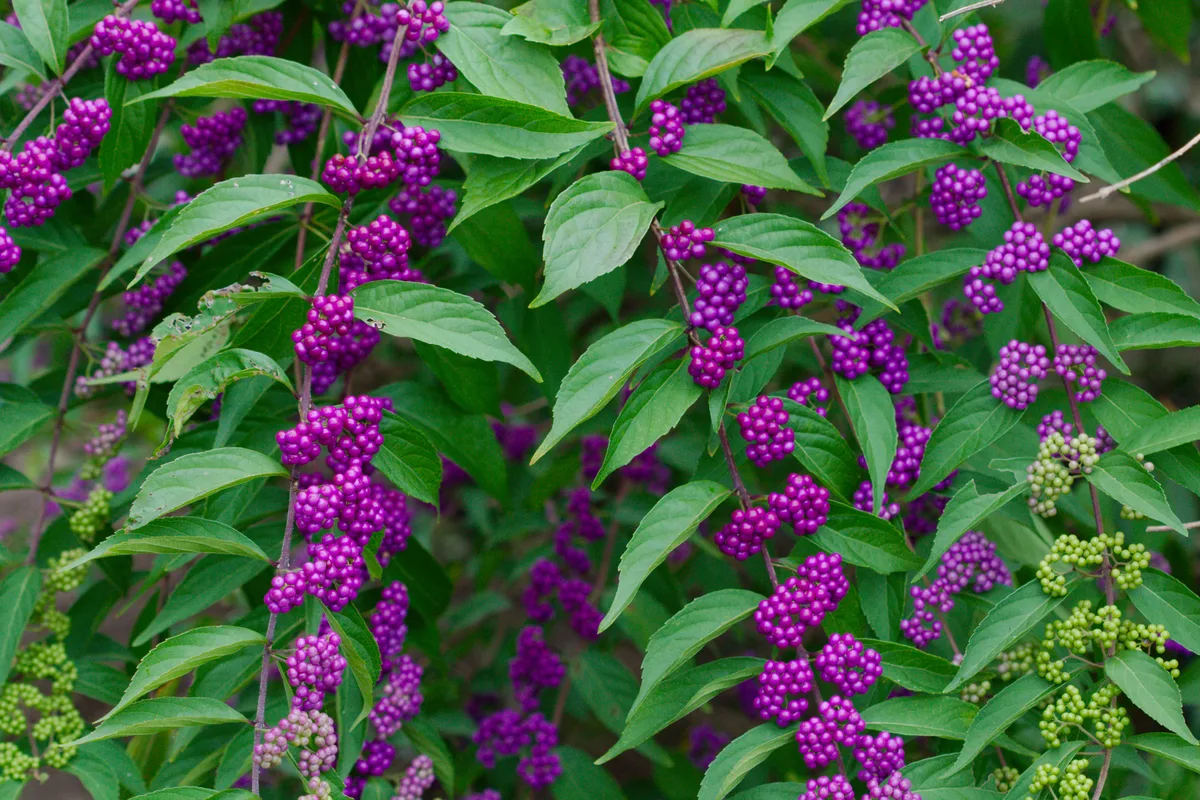
Distribution of beautyberry
Distribution map
- Native
- Introduced
- Cultivated
Source:WCVP v16 · Royal Botanic Gardens, Kew · CC BY 3.0 · Boundaries:WGSRPD / TDWG
Toxicity
Fruit are ornamental - not to be eaten. Wear gloves and other protective equipment when handling
beautyberry care guide
- Water regularly, but allow soil to dry slightly between waterings
- Watering
- Full sun · Partial shade
- Sunlight

Watering
Water regularly, but allow soil to dry slightly between waterings
Fertilizing
 Fertilizing
Once in early spring
Pruning
 Pruning
Cut flowered growth back to strong young shoots below, removing up to a fifth of old stems near the base each year. Prune immediately after flowering.
Propagation
 Propagation
Propagate by seed in autumn or spring or propagate by softwood cuttings in spring or semi-ripe cuttings in summer with bottom heat
Growing
 Growing
Grow in fertile well-drained soil in sun or partial shade
Common pests and diseases
Diseases
May be susceptible to honey fungus (rarely)
Pests
Generally pest-free
Explore the plant health library →




