
Papaver somniferum 'White Paeony'
Also known as: Information to be completed
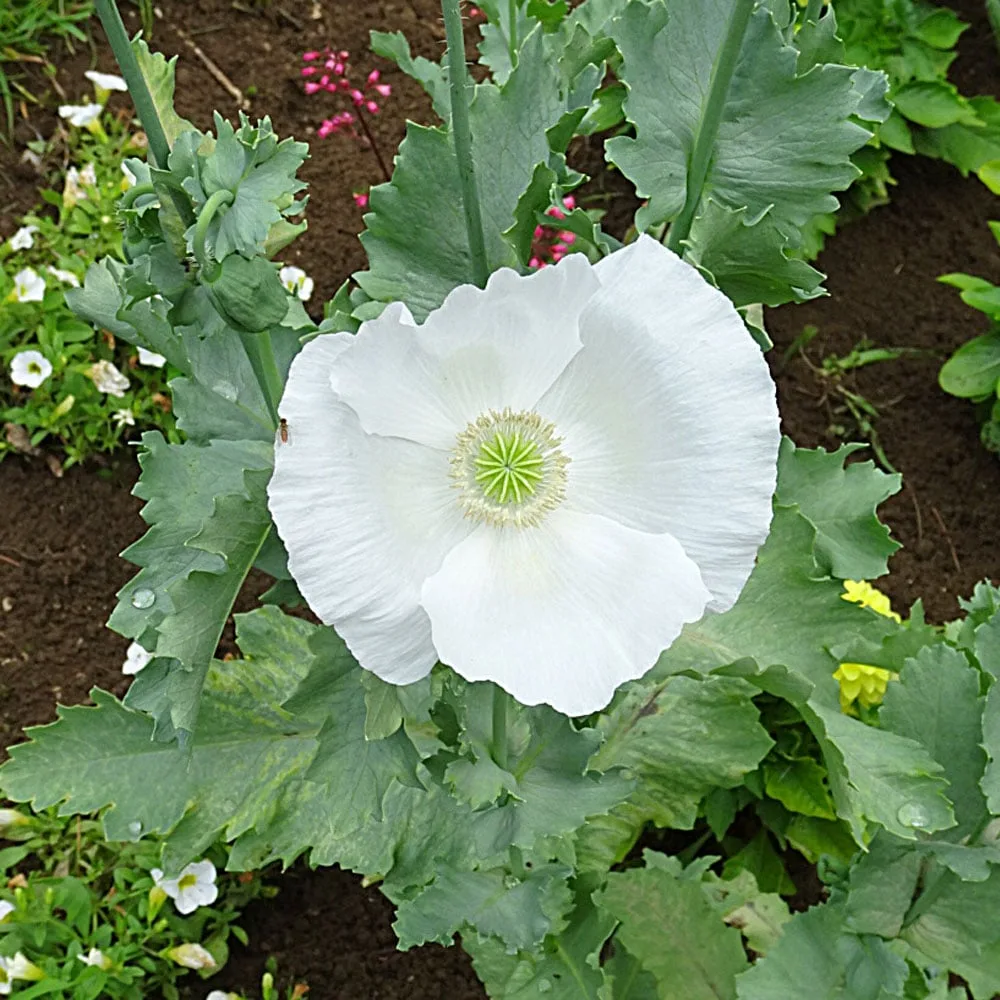
An annual poppy, to 1.2m high, with deeply toothed, pale blue-green leaves. In late spring and early summer, produces fully double, peony-like white flowers on leafy stems, followed by large, blue-green seed pods
Scientific classification
- Species
- Papaver somniferum 'White Paeony' (Papaver somniferum 'White Paeony')
- Genus
- Papaver
- Family
- Papaveraceae
- Order
- Ranunculales
- Class
- Magnoliopsida
- Phylum
- Magnoliophyta
- Harmful if eaten. Wear gloves and other protective equipment when handling
- Toxicity
- Annual Biennial
- Plant type
- 1-1.5 metres
- Height
- 0.1-0.5 metres
- Spread
- Deciduous
- Foliage
- Bushy
- Habit
- Spring · Summer
- Season of interest
- Full sun
- Sunlight
- Information to be completed
- Ideal temperature









Papaver somniferum 'White Paeony' pictures
Distribution of Papaver somniferum 'White Paeony'
Distribution map
- Native
- Introduced
- Cultivated
Source:WCVP v16 · Royal Botanic Gardens, Kew · CC BY 3.0 · Boundaries:WGSRPD / TDWG
Toxicity
Harmful if eaten. Wear gloves and other protective equipment when handling
Papaver somniferum 'White Paeony' care guide
- Moderate regular watering, avoid prolonged drought or waterlogging
- Watering
- Full sun
- Sunlight

Watering
Moderate regular watering, avoid prolonged drought or waterlogging
Fertilizing
 Fertilizing
Balanced feed in spring and light repeat in growth season
Pruning
 Pruning
No pruning required but deadhead if seed is not required
Propagation
 Propagation
Propagate by seed, sown successionally and in situ from early spring. Thin seedlings as required, but they do not like to be transplanted
Growing
 Growing
Grow in a sunny spot in well drained soil, with plenty of organic matter dug in before sowing
Common pests and diseases
Diseases
May be susceptible to downy mildews, powdery mildews, fungal wilts and verticillium wilt
Pests
May be susceptible to aphids
Explore the plant health library →




