
elegant Chinease meadow rue
Also known as: Information to be completed
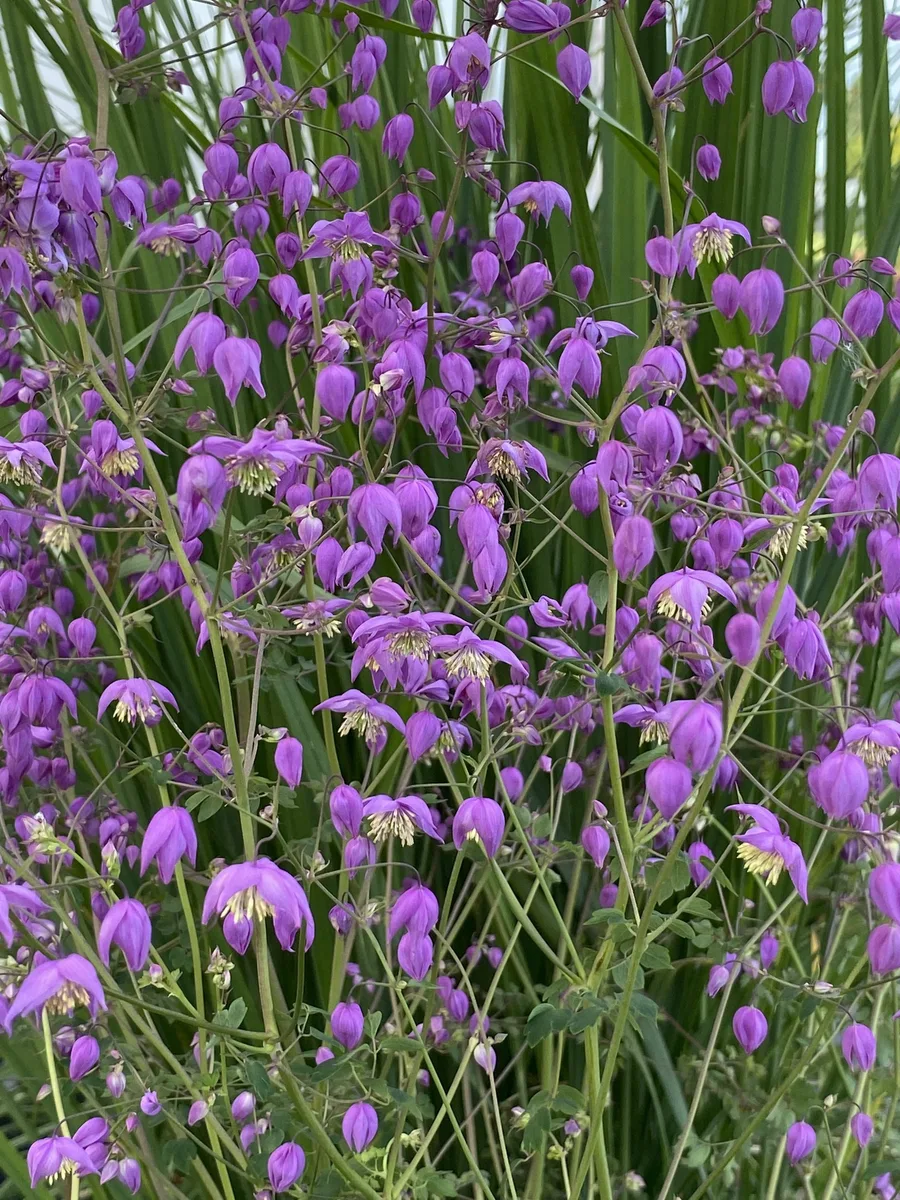
T.delavayi var. decorum produces blue-green leaves composed of leaflets and in early summer large nodding, purpleflowers in loose sprays on vigorous upright stems
Scientific classification
- Species
- elegant Chinease meadow rue (Thalictrum delavayi var. decorum)
- Genus
- Thalictrum
- Family
- Ranunculaceae
- Order
- Ranunculales
- Class
- Magnoliopsida
- Phylum
- Magnoliophyta
- Contact with foliage may produce a mild skin irritation. Wear gloves and other protective equipment when handling
- Toxicity
- Herbaceous Perennial
- Plant type
- 1-1.5 metres
- Height
- 0.1-0.5 metres
- Spread
- Deciduous
- Foliage
- Clump forming
- Habit
- Spring · Summer · Autumn
- Season of interest
- Full sun · Partial shade
- Sunlight
- Information to be completed
- Ideal temperature









elegant Chinease meadow rue pictures
Distribution of elegant Chinease meadow rue
Distribution map
- Native
- Introduced
- Cultivated
Source:WCVP v16 · Royal Botanic Gardens, Kew · CC BY 3.0 · Boundaries:WGSRPD / TDWG
Toxicity
Contact with foliage may produce a mild skin irritation. Wear gloves and other protective equipment when handling
elegant Chinease meadow rue care guide
- Moderate regular watering, avoid prolonged drought and stagnant waterlogging
- Watering
- Full sun · Partial shade
- Sunlight

Watering
Moderate regular watering, avoid prolonged drought and stagnant waterlogging
Fertilizing
 Fertilizing
Balanced perennial feed every four weeks spring through summer growth
Pruning
 Pruning
Spent flowers should be removed to prevent over abundance of self sown-seedlings; cut down foliage in late winter or early spring
Propagation
 Propagation
Propagate by division in spring as new growth begins
Growing
 Growing
Grow in moist, humus-rich soil in partial shade
Common pests and diseases
Diseases
May be subject to powdery mildews in dry conditions
Pests
Slugs may be a problem
Explore the plant health library →




