
Capsicum chinense 'Scotch Bonnet'
Also known as: Information to be completed
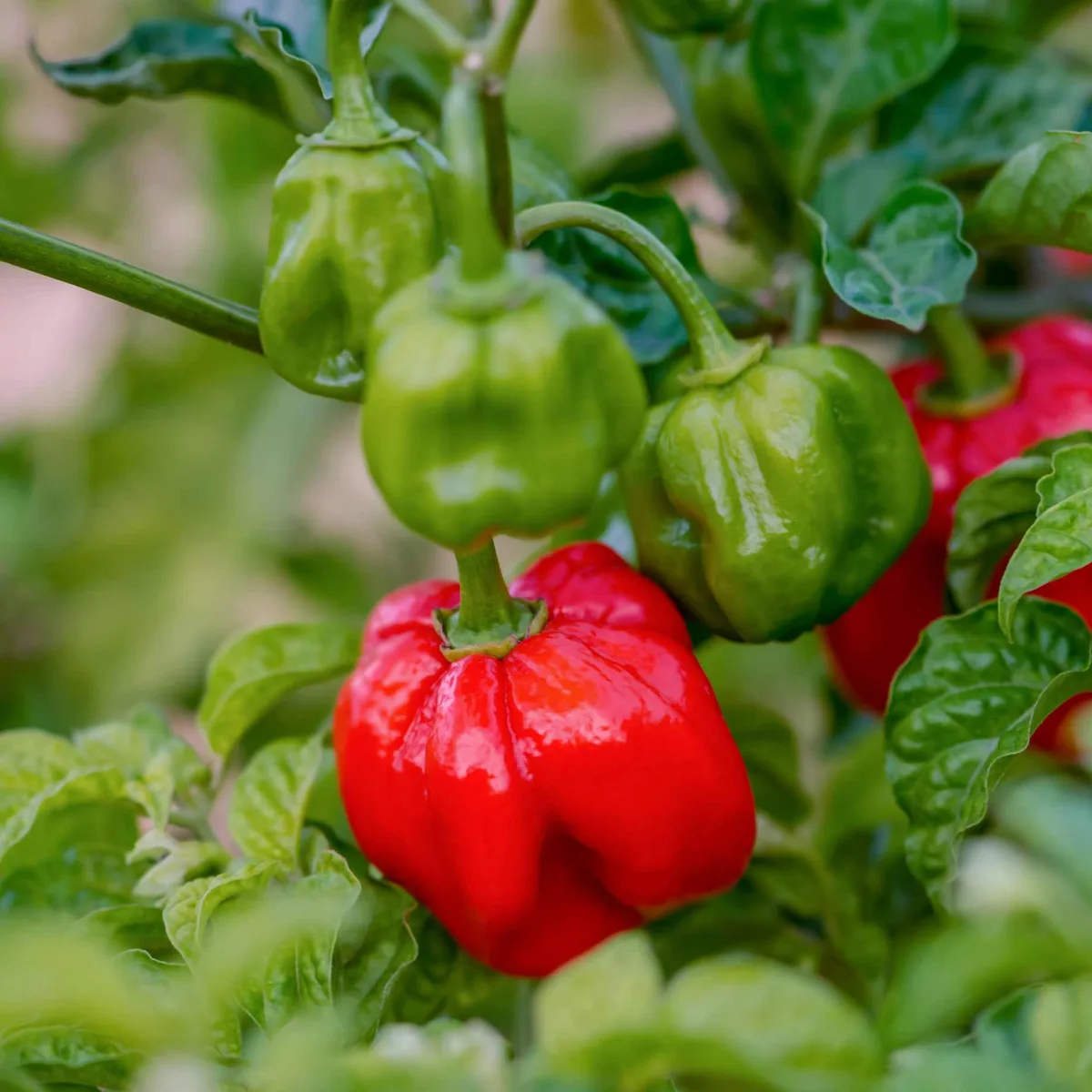
A very hot Habanero type chilli pepper cultivar growing around 70cm tall producing fruit typically 2.5-4cm long ripening from green to red. The fruit shape resembles tam o’ shanter flat bonnet. Wear gloves when handling the fruit
Scientific classification
- Species
- Capsicum chinense 'Scotch Bonnet' (Capsicum chinense 'Scotch Bonnet')
- Genus
- Capsicum
- Family
- Solanaceae
- Order
- Solanales
- Class
- Magnoliopsida
- Phylum
- Magnoliophyta
- Irritant if eaten, skin/eye irritant. Wear gloves and other protective equipment when handling]
- Toxicity
- Annual Biennial · Fruit Edible
- Plant type
- 0.5-1 metres
- Height
- 0.1-0.5 metres
- Spread
- Deciduous
- Foliage
- Bushy
- Habit
- Spring · Summer · Autumn
- Season of interest
- Full sun
- Sunlight
- Information to be completed
- Ideal temperature









Capsicum chinense 'Scotch Bonnet' pictures
Distribution of Capsicum chinense 'Scotch Bonnet'
Distribution map
- Native
- Introduced
- Cultivated
Source:WCVP v16 · Royal Botanic Gardens, Kew · CC BY 3.0 · Boundaries:WGSRPD / TDWG
Toxicity
Irritant if eaten, skin/eye irritant. Wear gloves and other protective equipment when handling]
Capsicum chinense 'Scotch Bonnet' care guide
- Keep moisture even through flowering and fruiting, avoiding hard dry swings
- Watering
- Full sun
- Sunlight

Watering
Keep moisture even through flowering and fruiting, avoiding hard dry swings
Fertilizing
 Fertilizing
Tomato or pepper feed every one to two weeks in fruiting season
Pruning
 Pruning
No pruning required; pinch out growing tips of plants when they are about 20cm tall to encourage bushiness
Propagation
 Propagation
Propagate by seed in late winter to early spring
Growing
 Growing
Best grown inside on a sunny windowsill or in a greenhouse, but can be grown outside once all danger of frost has passed; select a sunny, sheltered position and grow in containers, growing bags or in open ground. Water regularly and feed with a high-potassium, liquid fertiliser once the first fruit has set. See how to grow: chilli peppers for further advice
Common pests and diseases
Diseases
May be susceptible to grey moulds
Pests
May be susceptible to glasshouse red spider mite, whitefly, aphids, slugs and snails
Explore the plant health library →




