
soya bean 'Elena'
Also known as: Information to be completed
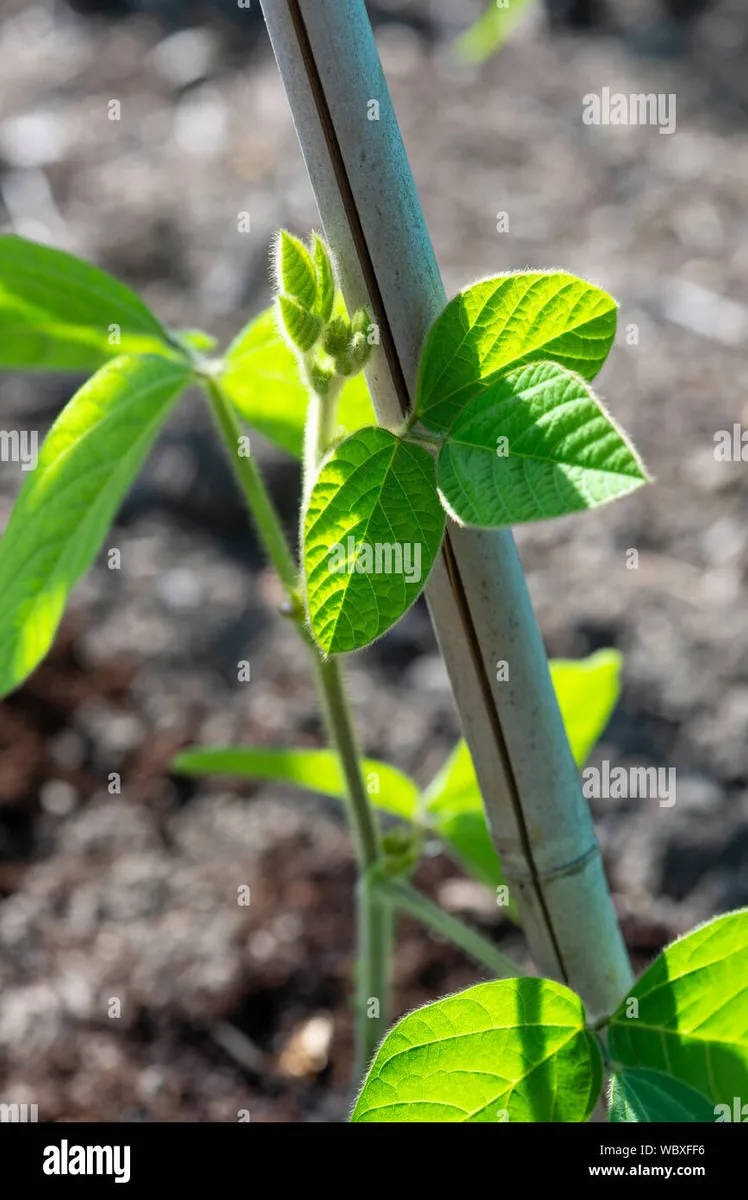
An upright, bushy annual legume bred specifically for the British climate and self-pollinating. It has green foliage and small, insignificant sweet-pea like white to purple-pink flowers which appear from July through to September, followed by clusters of green, hairy fruit pods containing around 3 to 4 soyabeans per pod. Ready to harvest July through to November, when the pods turn yellow and leaves begin to drop
Scientific classification
- Species
- soya bean 'Elena' (Glycine max 'Elena')
- Genus
- Glycine
- Family
- Fabaceae
- Order
- Fabales
- Class
- Magnoliopsida
- Phylum
- Tracheophyta
- Information to be completed
- Toxicity
- Annual Biennial · Fruit Edible
- Plant type
- 1.5-2.5 metres
- Height
- 0.5-1 metres
- Spread
- Deciduous
- Foliage
- Columnar upright
- Habit
- Spring · Summer · Autumn
- Season of interest
- Full sun
- Sunlight
- Information to be completed
- Ideal temperature









soya bean 'Elena' pictures
Distribution of soya bean 'Elena'
Distribution map
- Native
- Introduced
- Cultivated
Source:WCVP v16 · Royal Botanic Gardens, Kew · CC BY 3.0 · Boundaries:WGSRPD / TDWG
soya bean 'Elena' care guide
- Keep soil consistently moist for tender leafy growth, never hard dry
- Watering
- Full sun
- Sunlight

Watering
Keep soil consistently moist for tender leafy growth, never hard dry
Fertilizing
 Fertilizing
Nitrogen-rich vegetable feed every two to three weeks active growth
Pruning
 Pruning
No pruning required
Propagation
 Propagation
Propagate by seed
Growing
 Growing
Grow in moist, well-drained humus-rich soil in full sun under glass April to May. Remove cover when seedlings appear and transfer outside to harden off from late May when the risk of frost has passed. Plants may need support in windy areas. Harvest beans when pods turn yellow
Common pests and diseases
Diseases
May be susceptible to bacterial blights, brown spot, anthracnose, downy mildews, powdery mildews and soybean rust, root and stem rots, stem blights and virus diseases
Pests
May be susceptible to caterpillars
Explore the plant health library →




