
narrow-leaved Sally
Also known as: Information to be completed
A fast-growing evergreen tree reaching a height of 6-7m (20-23ft) in height if allowed to grow naturally. The smooth, highly ornamental bark is silver and cinnamon brown with cream striations and is regularly shed in strips, to reveal white bark beneath. The ovate, juvenile foliage is blue-green aging to a glossy rich green. Adult foliage is sickle shaped and glossy green with bright goleden yellow petioles. The foliage is strongly aromatic. Large groups of golden yellow buds, often up to 15 in a cluster, open to reveal creamy-white flowers in autumn
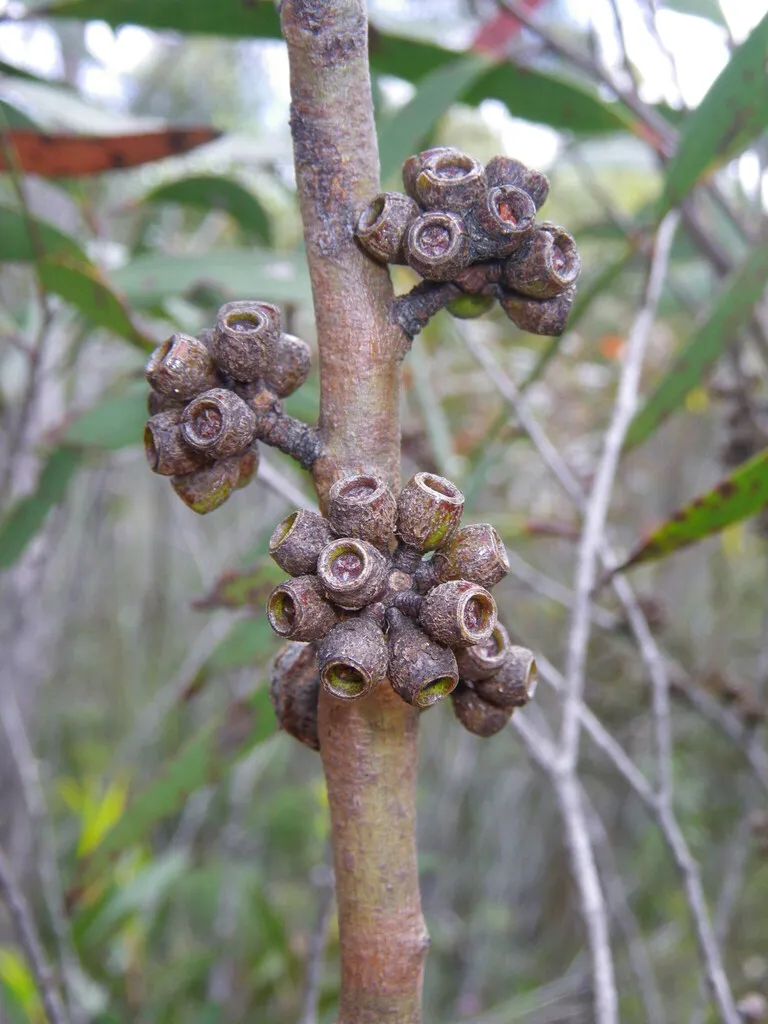
Scientific classification
- Species
- narrow-leaved Sally (Eucalyptus moorei)
- Genus
- Eucalyptus
- Family
- Myrtaceae
- Information to be completed
- Toxicity
- Trees
- Plant type
- 4-8 metres
- Height
- 2.5-4 metres
- Spread
- Evergreen
- Foliage
- Bushy
- Habit
- Autumn · Winter · Spring · Summer
- Season of interest
- Full sun
- Sunlight
- Information to be completed
- Ideal temperature









narrow-leaved Sally pictures
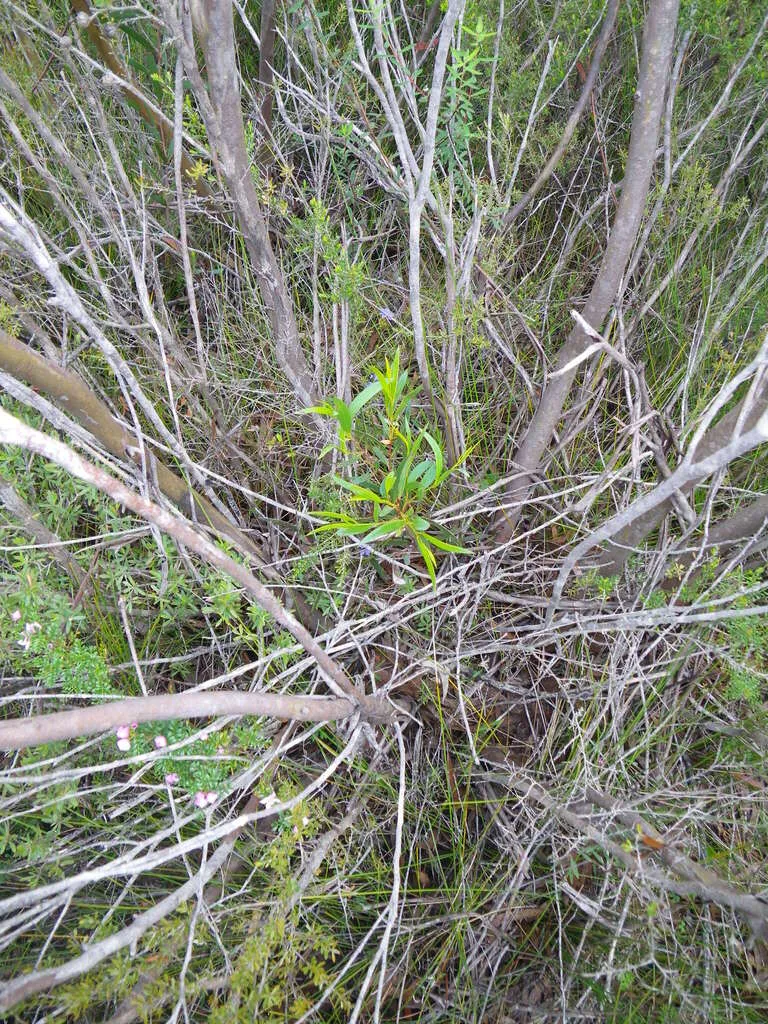
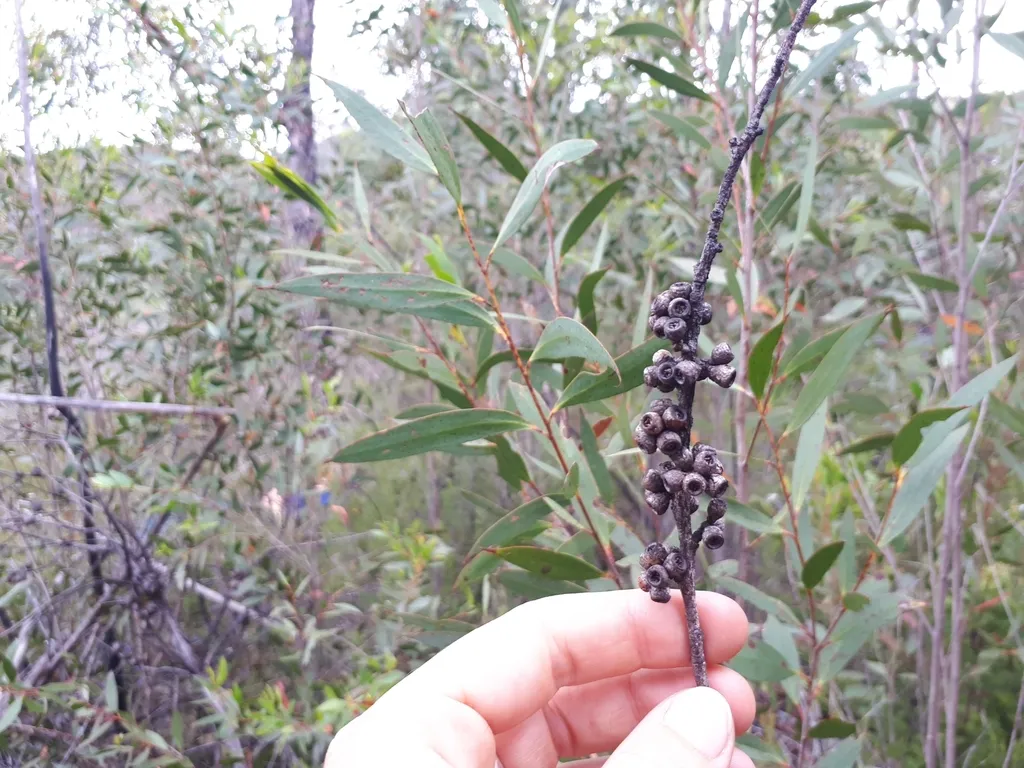
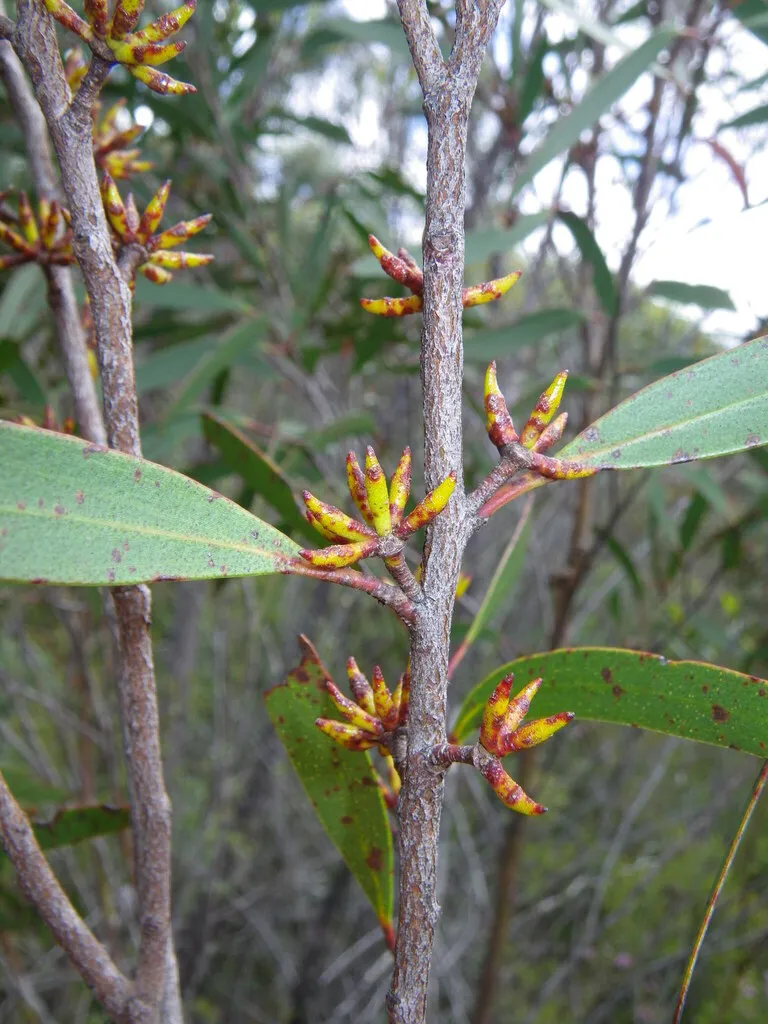
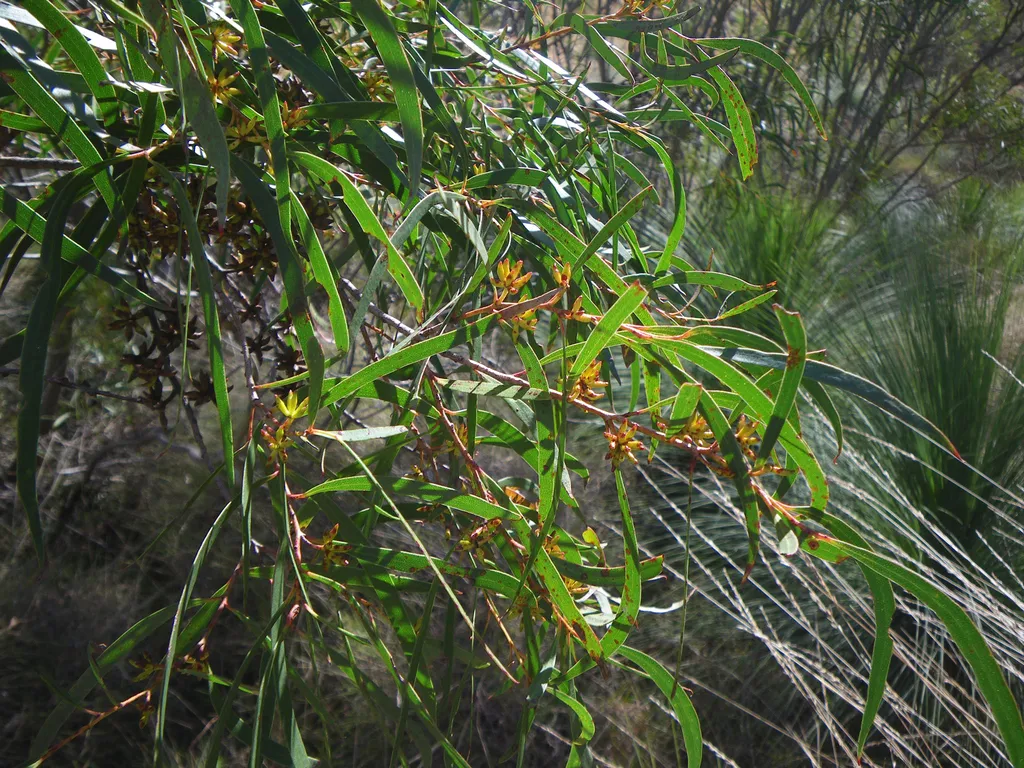
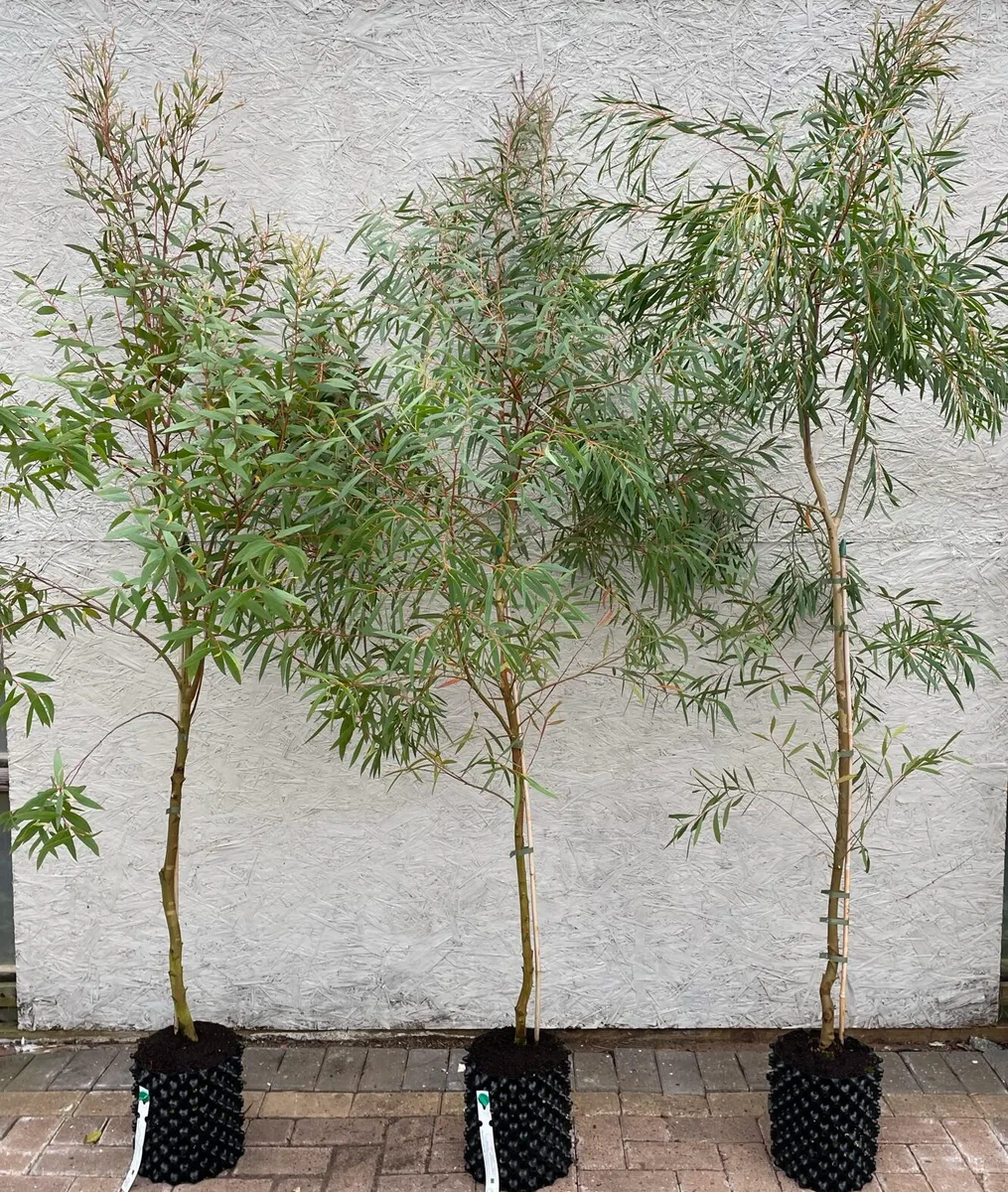
Distribution of narrow-leaved Sally
Distribution map
Information to be completed
Information to be completed
Culture
Information to be completed
Toxicity
Information to be completed
Quick identification of narrow-leaved Sally
Information to be completed
narrow-leaved Sally care guide
- Moderate regular watering, allowing brief slight drying between soakings
- Watering
- Full sun
- Sunlight
- Information to be completed
- Ideal temperature

Watering
Moderate regular watering, allowing brief slight drying between soakings
Fertilizing
 Fertilizing
Balanced perennial feed every four weeks from spring through summer
Pruning
 Pruning
Little pruning is needed. Remove diseased, damaged, crowded or crossing shoots and unwanted growth. Timing depends on the plant: generally late winter or early spring; plants prone to bleeding and deciduous magnolias need different timing, and deciduous azaleas and lilacs are pruned after flowering.
Propagation
 Propagation
Propagate by seed or semi-ripe cuttings
Growing
 Growing
Grows best in slightly acidic, moist but well drained soil in full sun, but unlike many other eucalypts will also tolerate wetter soils. Shelter from cold, drying winds especially when young. See eucalyptus cultivation
People also ask
Information to be completed
Common pests and diseases
Diseases
May be susceptible to silver leaf, oedema and honey fungus
Pests
May be susceptible to eucalyptus gall wasp and eucalyptus sucker
Explore the plant health library →




