
passion flower 'Star of Surbiton'
Also known as: Information to be completed
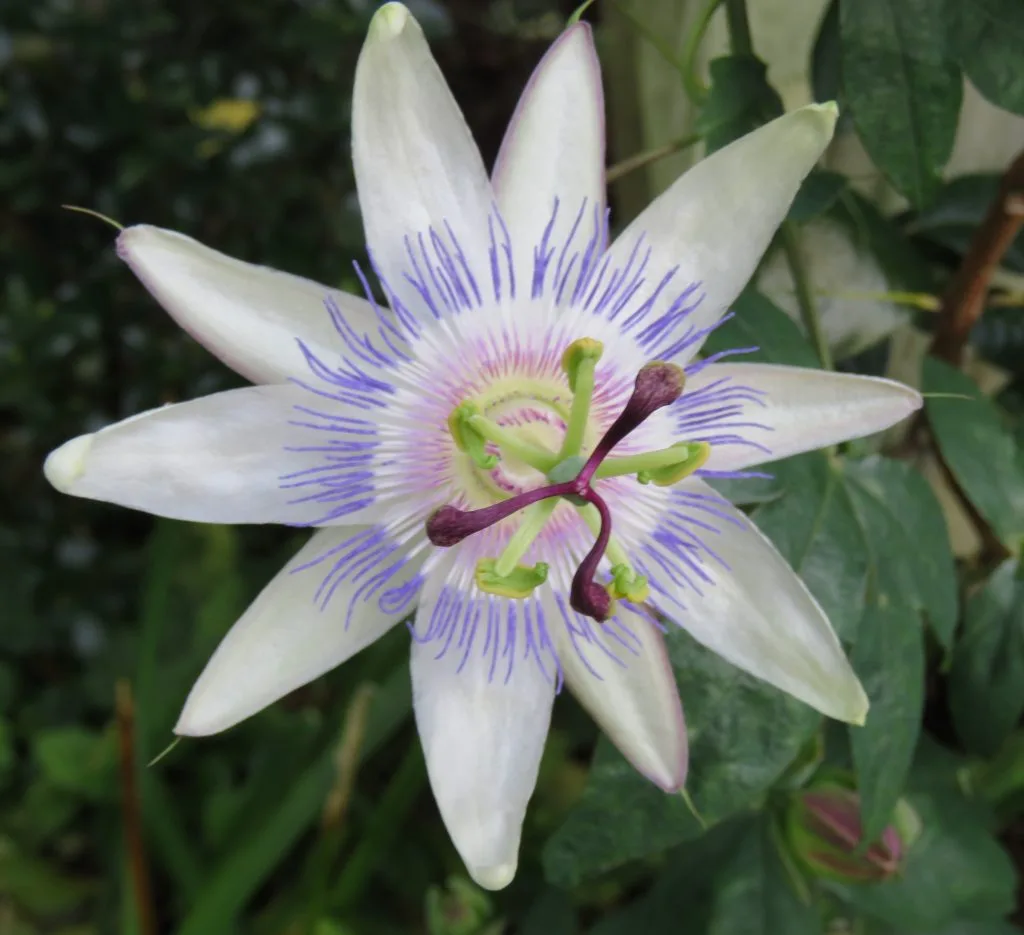
Star of Surbiton' is a vigorous, semi-evergreen, climber with twining tendrils and three to five-lobed leaves. Lightly scented flowers up to12cm across are borne in summer and autumn; the broad petals are white with pale pink centres and blue-tipped filaments. Flowers are rarely followed by orange-yellow fruits. The pulp in the fruits only can be eaten when they are fully ripe and yellow-orange. Unripe fruit is toxic
Scientific classification
- Species
- passion flower 'Star of Surbiton' (Passiflora 'Star of Surbiton')
- Genus
- Passiflora
- Family
- Passifloraceae
- Order
- Malpighiales
- Class
- Magnoliopsida
- Phylum
- Magnoliophyta
- Fruit are ornamental - not to be eaten. Wear gloves and other protective equipment when handling
- Toxicity
- Climber Wall Shrub
- Plant type
- 4-8 metres
- Height
- 2.5-4 metres
- Spread
- Semi evergreen
- Foliage
- Climbing
- Habit
- Spring · Summer · Autumn · Winter
- Season of interest
- Full sun
- Sunlight
- Information to be completed
- Ideal temperature









passion flower 'Star of Surbiton' pictures
Toxicity
Fruit are ornamental - not to be eaten. Wear gloves and other protective equipment when handling
passion flower 'Star of Surbiton' care guide
- Moderate regular watering, allowing brief slight drying between soakings
- Watering
- Full sun
- Sunlight

Watering
Moderate regular watering, allowing brief slight drying between soakings
Fertilizing
 Fertilizing
Balanced perennial feed every four weeks from spring through summer
Pruning
 Pruning
Routine pruning is unnecessary; shorten overlong shoots to fit the available space. For last-year flowering growth, prune after flowering; for current-year flowering growth, prune in late winter or spring. This guidance is for established plants.
Propagation
 Propagation
Propagate by, semi-hardwood cuttings or by layering in spring or autumn
Growing
 Growing
Fast-growing climber for a warm position in a sunny and sheltered position; thrives in moist but well-drained soil. In cold areas, grow in a container and overwinter indoors
Common pests and diseases
Diseases
May be susceptible to honey fungus (rarely) and a virus
Pests
May be susceptible to glasshouse red spider mite, scale insects and glasshouse whitefly
Explore the plant health library →




