
Bowden lily 'Marjorie'
Also known as: Information to be completed
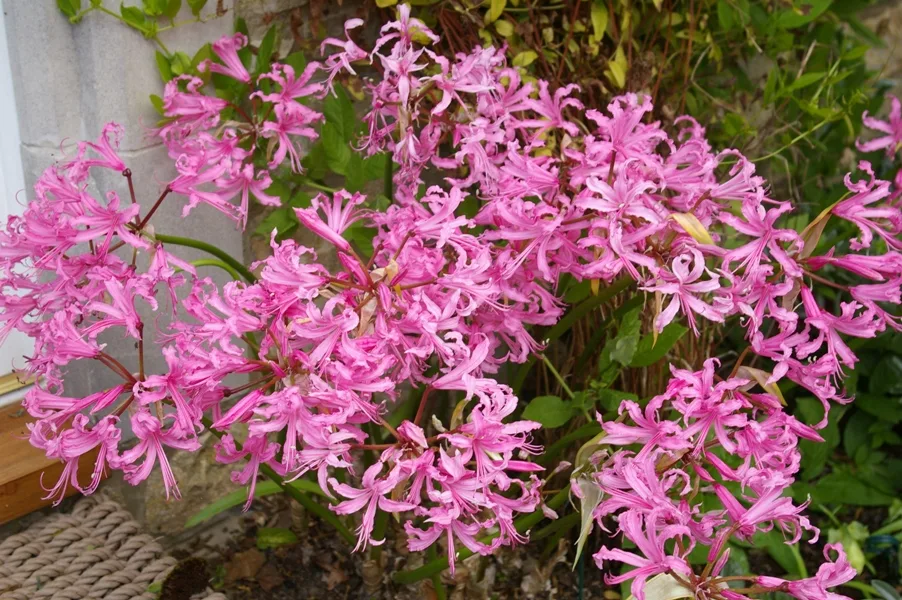
A summer-dormant perennial autumn-flowering bulb with large terminal umbels of wavy-petalled funnel-shaped bright pink flowers followed by the growth of rich green long, strappy foliage in autumn once the temperature drops.
Scientific classification
- Species
- Bowden lily 'Marjorie' (Nerine bowdenii 'Marjorie')
- Genus
- Nerine
- Family
- Amaryllidaceae
- Order
- Asparagales
- Class
- Liliopsida
- Phylum
- Magnoliophyta
- Ornamental bulbs - not to be eaten. Wear gloves and other protective equipment when handling
- Toxicity
- Bulbs
- Plant type
- 0.1-0.5 metres
- Height
- 0-0.1 metre
- Spread
- Deciduous
- Foliage
- Columnar upright
- Habit
- Autumn
- Season of interest
- Full sun
- Sunlight
- Information to be completed
- Ideal temperature









Bowden lily 'Marjorie' pictures
Distribution of Bowden lily 'Marjorie'
Distribution map
- Native
- Introduced
- Cultivated
Source:WCVP v16 · Royal Botanic Gardens, Kew · CC BY 3.0 · Boundaries:WGSRPD / TDWG
Toxicity
Ornamental bulbs - not to be eaten. Wear gloves and other protective equipment when handling
Bowden lily 'Marjorie' care guide
- Moist soil during active growth, then reduce watering after foliage yellows
- Watering
- Full sun
- Sunlight

Watering
Moist soil during active growth, then reduce watering after foliage yellows
Fertilizing
 Fertilizing
Light bulb fertilizer at emergence and again after flowering
Pruning
 Pruning
Remove spent flower heads to avoid self-seeding and clear away dead foliage once the plant becomes dormant
Propagation
 Propagation
Propagate by seed or by division after flowering
Growing
 Growing
Will grow best in well-drained soil preferably in a sheltered position and in full sun for best flowering performance. Plant bulbs 10cm apart with the neck of the bulb showing above the soil except for colder areas where they will prefer to be planted 5cm underground for frost protection. See also Nerine cultivation.
Common pests and diseases
Diseases
May be susceptible to virus diseases
Pests
May be susceptible to slugs
Explore the plant health library →




