
cherry plum 'Golden Sphere'
Also known as: Information to be completed
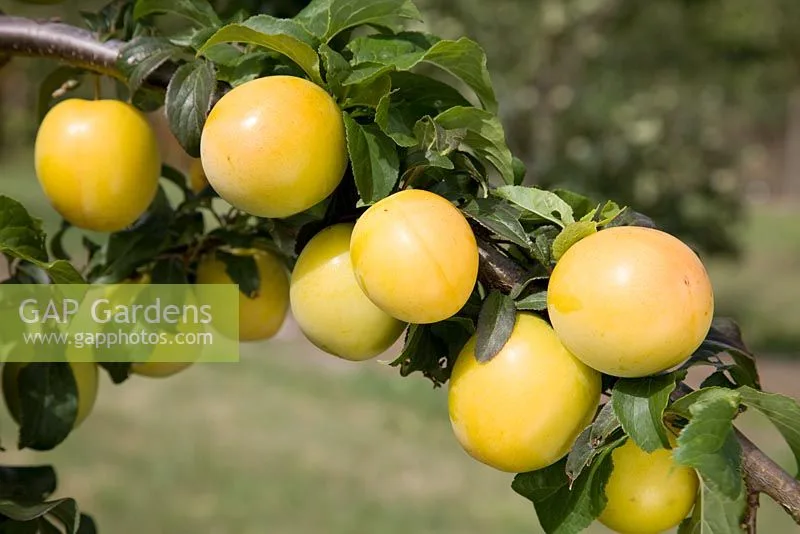
A partly self-fertile, dual purpose cherry plum cultivar. The white spring blossom is followed by larger, round, almost translucent yellow fruit that is well suited for cooking as well as eating fresh. Cold hardy. Cropping season: mid-August. Pollination group 1. It will cross-pollinate with early flowering plums and damsons
Scientific classification
- Species
- cherry plum 'Golden Sphere' (Prunus cerasifera 'Golden Sphere')
- Genus
- Prunus
- Family
- Rosaceae
- Order
- Rosales
- Class
- Magnoliopsida
- Phylum
- Magnoliophyta
- Information to be completed
- Toxicity
- Trees · Fruit Edible
- Plant type
- 2.5-4 metres
- Height
- 2.5-4 metres
- Spread
- Deciduous
- Foliage
- Bushy
- Habit
- Spring · Summer · Autumn
- Season of interest
- Full sun
- Sunlight
- Information to be completed
- Ideal temperature









cherry plum 'Golden Sphere' pictures
Distribution of cherry plum 'Golden Sphere'
Distribution map
- Native
- Introduced
- Cultivated
Source:WCVP v16 · Royal Botanic Gardens, Kew · CC BY 3.0 · Boundaries:WGSRPD / TDWG
cherry plum 'Golden Sphere' care guide
- Deep weekly watering, drastically reduce moisture through winter
- Watering
- Full sun
- Sunlight

Watering
Deep weekly watering, drastically reduce moisture through winter
Fertilizing
 Fertilizing
Deciduous fruit tree slow feed applied once each early spring
Pruning
 Pruning
Little pruning is needed. Remove diseased, damaged, crowded or crossing shoots and unwanted growth. Timing depends on the plant: generally late winter or early spring; plants prone to bleeding and deciduous magnolias need different timing, and deciduous azaleas and lilacs are pruned after flowering.
Propagation
 Propagation
Propagate by chip budding or grafting, although softwood cuttings in early summer with bottom heat can be successful
Growing
 Growing
Tolerant of a range of soils as long as well drained, but prefers loamy, ideally slightly acidic soils pH of 6 to 6.5. Ideally plant in a sunny, sheltered site. Flowers may be susceptible to spring frosts damage. See How to grow: Plums for further cultivation details
Common pests and diseases
Diseases
May be susceptible to peach leaf curl, silver leaf, bacterial canker, blossom wilt and honey fungus
Pests
May be susceptible to plum aphid and winter moth caterpillar
Explore the plant health library →




