
butcher's broom 'John Redmond'
Also known as: Information to be completed
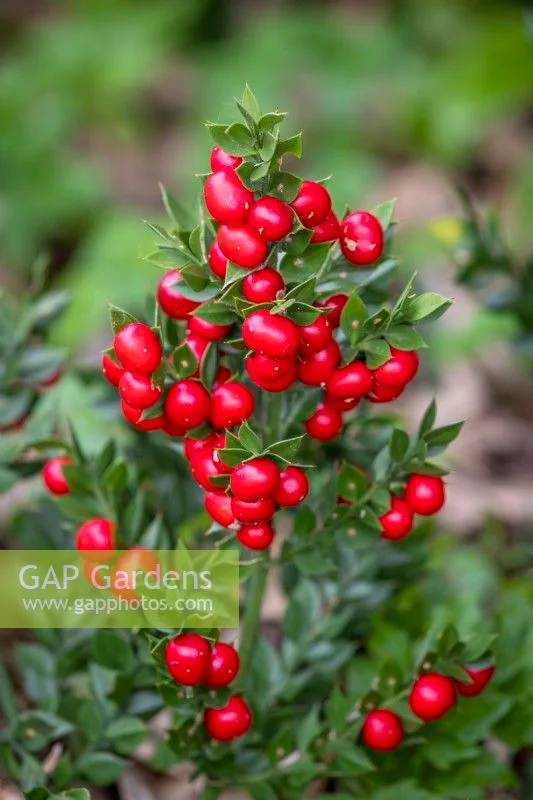
A compact, dwarf cultivar of this British native plant. Like the species, the "leaves" are actually flattened shoots, known as cladophylls, bearing a sharp spine. Red berries show from late summer
Scientific classification
- Species
- butcher's broom 'John Redmond' (Ruscus aculeatus 'John Redmond')
- Genus
- Ruscus
- Family
- Asparagaceae
- Fruit are ornamental - not to be eaten. Wear gloves and other protective equipment when handling
- Toxicity
- Shrubs
- Plant type
- 0.1-0.5 metres
- Height
- 0.5-1 metres
- Spread
- Evergreen
- Foliage
- Bushy
- Habit
- Spring · Summer · Autumn · Winter
- Season of interest
- Full shade · Full sun · Partial shade
- Sunlight
- Information to be completed
- Ideal temperature









butcher's broom 'John Redmond' pictures
Distribution of butcher's broom 'John Redmond'
Distribution map
- Native
- Introduced
- Cultivated
Source:WCVP v16 · Royal Botanic Gardens, Kew · CC BY 3.0 · Boundaries:WGSRPD / TDWG
Culture
Information to be completed
Toxicity
Fruit are ornamental - not to be eaten. Wear gloves and other protective equipment when handling
Quick identification of butcher's broom 'John Redmond'
Information to be completed
butcher's broom 'John Redmond' care guide
- Moderate regular watering, allowing brief slight drying between soakings
- Watering
- Full shade · Full sun · Partial shade
- Sunlight
- Information to be completed
- Ideal temperature

Watering
Moderate regular watering, allowing brief slight drying between soakings
Fertilizing
 Fertilizing
Balanced perennial feed every four weeks from spring through summer
Pruning
 Pruning
Cut out dead stems to the base in spring
Propagation
 Propagation
Propagate by division
Growing
 Growing
Grow in any but waterlogged soils and northern exposed sites. Hardy to -15°C. Good for groundcover in shaded spots
People also ask
Information to be completed
Common pests and diseases
Diseases
May be susceptible to honey fungus in gardens where it is present but insufficient data to determine degree of susceptibility
Pests
Generally pest-free
Explore the plant health library →




