
Salvia patens 'Blue Angel'
Also known as: Information to be completed
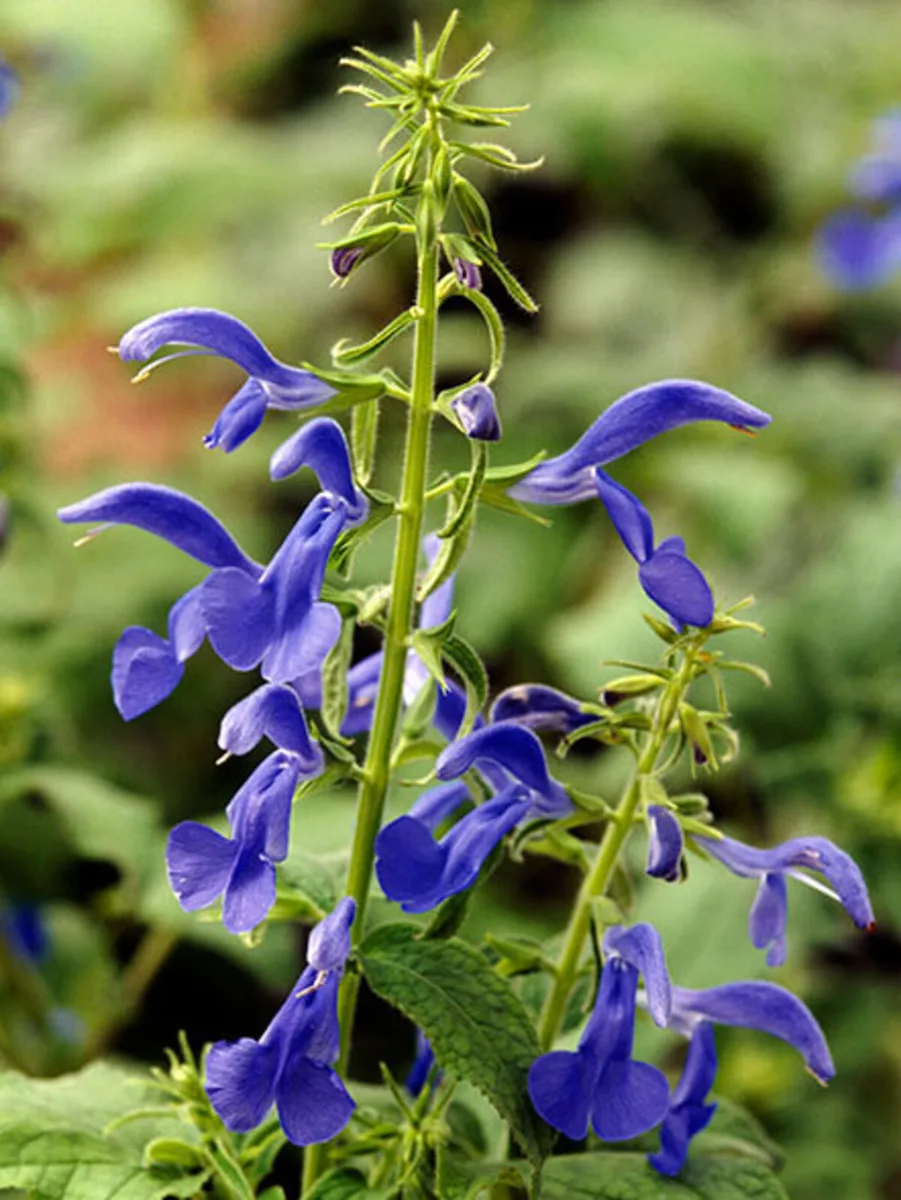
A bushy, upright, tender perennial with mid-green aromatic arrowhead shaped leaves. From mid-summer to autumn, large azure-blue flowers bloom in succession on thin stems above the foliage. Requires winter protection.
Scientific classification
- Species
- Salvia patens 'Blue Angel' (Salvia patens 'Blue Angel')
- Genus
- Salvia
- Family
- Lamiaceae
- Order
- Lamiales
- Class
- Magnoliopsida
- Phylum
- Tracheophyta
- Information to be completed
- Toxicity
- Herbaceous Perennial
- Plant type
- 0.5-1 metres
- Height
- 0.1-0.5 metres
- Spread
- Deciduous
- Foliage
- Bushy · Clump forming
- Habit
- Spring · Summer · Autumn
- Season of interest
- Full sun
- Sunlight
- Information to be completed
- Ideal temperature









Salvia patens 'Blue Angel' pictures
Distribution of Salvia patens 'Blue Angel'
Distribution map
- Native
- Introduced
- Cultivated
Source:WCVP v16 · Royal Botanic Gardens, Kew · CC BY 3.0 · Boundaries:WGSRPD / TDWG
Salvia patens 'Blue Angel' care guide
- Moderate regular watering, avoid prolonged drought and stagnant waterlogging
- Watering
- Full sun
- Sunlight

Watering
Moderate regular watering, avoid prolonged drought and stagnant waterlogging
Fertilizing
 Fertilizing
Balanced perennial feed every four weeks spring through summer growth
Pruning
 Pruning
Deadhead by removing faded fower spikes. If flowering diminishes cut back by half to promote flowering sideshoots. In late winter/early spring cut back stems to the base.
Propagation
 Propagation
Take basal softwood cuttings in spring. Softwood and semi-ripe cuttings can be taken in mid-to late summer.
Growing
 Growing
Grow in free draining moderately fertile soil in full-sun. Prefers a sheltered position. Provide winter protection.
Common pests and diseases
Diseases
May be susceptible to honey fungus (rarely), powdery mildews, verticillium wilt and foot and root rots
Pests
Maybe susceptible to leafhopper, slugs and snails.
Explore the plant health library →




