
Hippeastrum 'Sumatra'
Also known as: Information to be completed
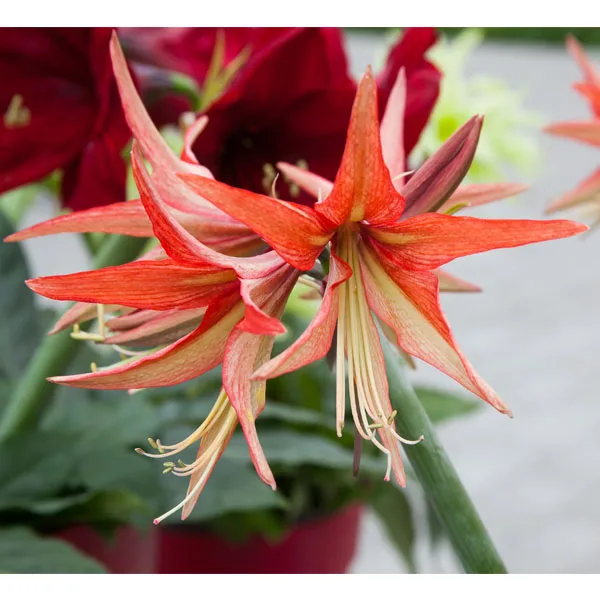
A winter or early spring flowering, bulbous perennial to 40cm tall, producing 1-2 stems each bearing 4-6 large, spidery flowers with slender red petals and long stamens
Scientific classification
- Species
- Hippeastrum 'Sumatra' (Hippeastrum 'Sumatra')
- Genus
- Hippeastrum
- Family
- Amaryllidaceae
- Harmful if eaten. Wear gloves and other protective equipment when handling
- Toxicity
- Bulbs · Houseplants
- Plant type
- 0.1-0.5 metres
- Height
- 0.1-0.5 metres
- Spread
- Deciduous
- Foliage
- Columnar upright
- Habit
- Spring · Winter
- Season of interest
- Full sun · Partial shade
- Sunlight
- Information to be completed
- Ideal temperature









Hippeastrum 'Sumatra' pictures
Distribution of Hippeastrum 'Sumatra'
Distribution map
Information to be completed
Information to be completed
Culture
Information to be completed
Toxicity
Harmful if eaten. Wear gloves and other protective equipment when handling
Quick identification of Hippeastrum 'Sumatra'
Information to be completed
Hippeastrum 'Sumatra' care guide
- Moderate regular watering, avoid prolonged drought or waterlogging
- Watering
- Full sun · Partial shade
- Sunlight
- Information to be completed
- Ideal temperature

Watering
Moderate regular watering, avoid prolonged drought or waterlogging
Fertilizing
 Fertilizing
Balanced feed in spring and light repeat in growth season
Pruning
 Pruning
No pruning required
Propagation
 Propagation
Propagate by removing offsets in autumn. Sow seed as soon as ripe at 16-18°C; keep seedlings growing without a dormant period to encourage earlier flowering
Growing
 Growing
Plant bulbs in autumn in loam-based potting compost with the neck and shoulders above the soil surface. Place in bright filtered or full light and water sparingly until in active growth, then water freely and apply a dilute, balanced liquid fertiliser every 2 weeks. After flowering reduce watering as the leaves die off; keep dry when dormant. Pot on every 3-5 years in autumn. See hippeastrum cultivation for further information
People also ask
Information to be completed
Common pests and diseases
Diseases
May be susceptible to fungal diseases
Pests
May be susceptible to bulb scale mite and large narcissus bulb fly
Explore the plant health library →




