
Dianella tasmanica Tasred ('Tr20')
Also known as: Information to be completed
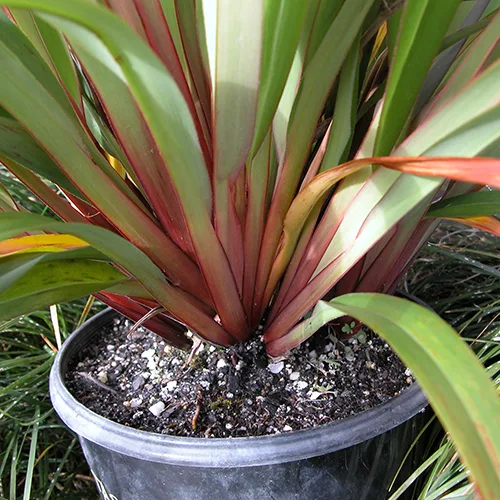
An evergreen perennial to around 50cm high, forming clumps of wide, strappy, stiff green leaves with rough edges, that take on a reddish-pink tint at the base in cooler temperatures. In summer, produces sprays of star-shaped blue-purple flowers on delicate stems, followed by deep blue berries
Scientific classification
- Species
- Dianella tasmanica Tasred ('Tr20') (Dianella tasmanica Tasred ('Tr20'))
- Genus
- Dianella
- Family
- Asphodelaceae
- Order
- Asparagales
- Class
- Liliopsida
- Phylum
- Magnoliophyta
- Fruit are ornamental - not to be eaten. Wear gloves and other protective equipment when handling
- Toxicity
- Herbaceous Perennial
- Plant type
- 0.1-0.5 metres
- Height
- 0.1-0.5 metres
- Spread
- Evergreen
- Foliage
- Clump forming
- Habit
- Spring · Autumn · Winter · Summer
- Season of interest
- Full sun · Partial shade
- Sunlight
- Information to be completed
- Ideal temperature









Dianella tasmanica Tasred ('Tr20') pictures
Toxicity
Fruit are ornamental - not to be eaten. Wear gloves and other protective equipment when handling
Dianella tasmanica Tasred ('Tr20') care guide
- Moderate regular watering, allowing brief slight drying between soakings
- Watering
- Full sun · Partial shade
- Sunlight

Watering
Moderate regular watering, allowing brief slight drying between soakings
Fertilizing
 Fertilizing
Balanced perennial feed every four weeks from spring through summer
Pruning
 Pruning
Trim old leaves as necessary
Propagation
 Propagation
Propagate by division in spring. As this plant is protected by Plant Breeders' Rights, any propagation should be for personal rather than commercial use
Growing
 Growing
In milder areas, grow outdoors in moderately fertile, well-drained, neutral to acid soil in full sun or partial shade. In areas prone to hard frosts, grow under glass in loam-based compost, in full light with shade from hot sun. Water well in growth and keep just moist in winter. Some drought tolerance once established
Common pests and diseases
Diseases
Generally disease-free
Pests
Generally pest-free
Explore the plant health library →




