
Albizia julibrissin 'Ernest Wilson'
Also known as: Information to be completed
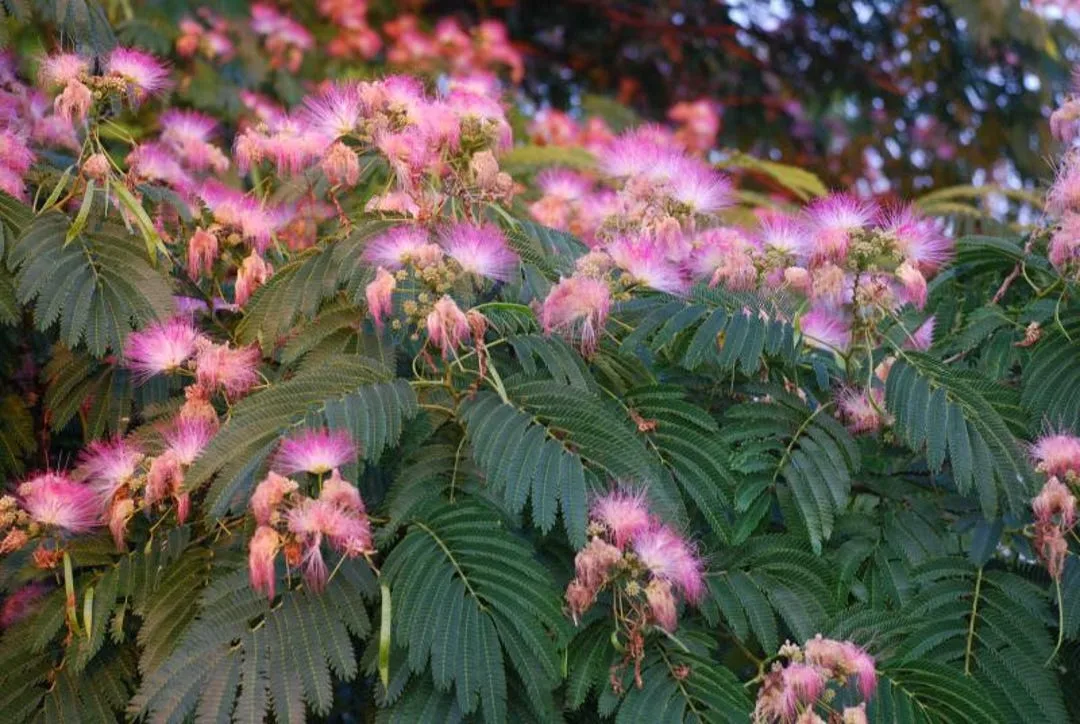
A large shrub or with delicate, mimosa-like, green bipinnate leaves and a spreading, umbrella habit. Fluffy bright pink flower-heads, with prominent stamens, open in summer. An exotic-looking plant which is ideal for smaller gardens where space is limited, or in pots and containers
Scientific classification
- Species
- Albizia julibrissin 'Ernest Wilson' (Albizia julibrissin 'Ernest Wilson')
- Genus
- Albizia
- Family
- Fabaceae
- Order
- Fabales
- Class
- Magnoliopsida
- Phylum
- Magnoliophyta
- Information to be completed
- Toxicity
- Trees
- Plant type
- 4-8 metres
- Height
- 4-8 metres
- Spread
- Deciduous
- Foliage
- Bushy
- Habit
- Spring · Summer · Autumn
- Season of interest
- Full sun
- Sunlight
- Information to be completed
- Ideal temperature









Albizia julibrissin 'Ernest Wilson' pictures
Distribution of Albizia julibrissin 'Ernest Wilson'
Distribution map
- Native
- Introduced
- Cultivated
Locally extinct or doubtful records are excluded from native and introduced layers.
Source:WCVP v16 · Royal Botanic Gardens, Kew · CC BY 3.0 · Boundaries:WGSRPD / TDWG
Albizia julibrissin 'Ernest Wilson' care guide
- Moderate regular watering, avoid prolonged drought or waterlogging
- Watering
- Full sun
- Sunlight

Watering
Moderate regular watering, avoid prolonged drought or waterlogging
Fertilizing
 Fertilizing
Balanced feed in spring and light repeat in growth season
Pruning
 Pruning
For free-standing plants: Little pruning is needed. Remove diseased, damaged, crowded or crossing shoots and unwanted growth. Timing depends on the plant: generally late winter or early spring; plants prone to bleeding and deciduous magnolias need different timing, and deciduous azaleas and lilacs are pruned after flowering. For wall-trained specimens: On established wall-trained shrubs, shorten sideshoots to two to four buds from the framework; remove shoots growing towards the wall. Prune annually after flowering on last-year growth, or in late winter or early spring on current-year growth.
Propagation
 Propagation
Propagate by rooting semi-ripe cuttings with bottom heat in summer or by seed: collect seeds from pea-like pods and soften their coats in very hot water, leave to cool for 24 hours and sow. After germination transplant into root trainers to avoid disturbing tap roots
Growing
 Growing
Grow in well-drained soil, preferably in full sun for best flower production. Alternating mild and cold spells may damage top-growth. Saplings should flower in three years. Drought-tolerant and thrives in high summer heat and humidity
Common pests and diseases
Diseases
May be susceptible to verticillium wilt
Pests
Generally pest-free
Explore the plant health library →




