
witch hazel 'Gingerbread'
Also known as: Information to be completed
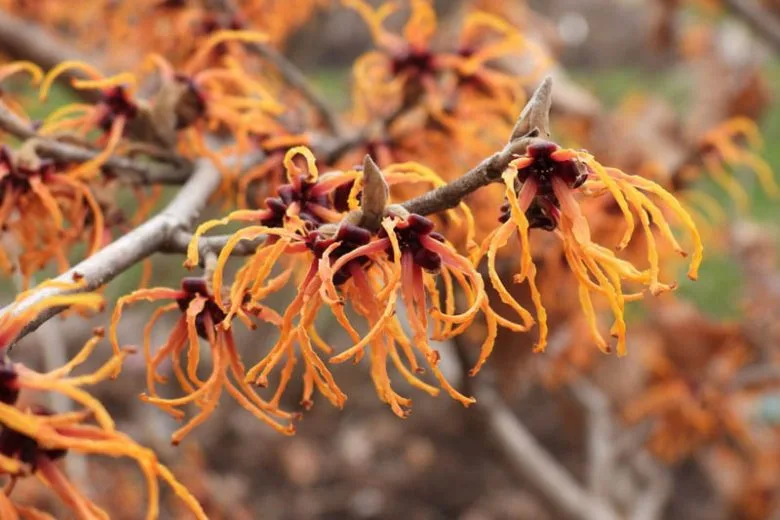
A spreading, moderately vigorous shrub up to 2.5m high and 3.5m wide, with ovate-rounded green leaves 10cm long and 6.5cm wide which are flushed with maroon-purple for a few weeks after they emerge before becoming dark green, then turning yellow in autumn, and slightly scented flowers with deep purplish red calyces and deep burnt orange petals about 2cm long, redder at the base, in late winter
Scientific classification
- Species
- witch hazel 'Gingerbread' (Hamamelis × intermedia 'Gingerbread')
- Genus
- Hamamelis
- Family
- Hamamelidaceae
- Information to be completed
- Toxicity
- Shrubs
- Plant type
- 1.5-2.5 metres
- Height
- 2.5-4 metres
- Spread
- Deciduous
- Foliage
- Information to be completed
- Habit
- Autumn · Spring · Summer · Winter
- Season of interest
- Full sun · Partial shade
- Sunlight
- Information to be completed
- Ideal temperature









witch hazel 'Gingerbread' pictures
Distribution of witch hazel 'Gingerbread'
Distribution map
Information to be completed
Information to be completed
Culture
Information to be completed
Toxicity
Information to be completed
Quick identification of witch hazel 'Gingerbread'
Information to be completed
witch hazel 'Gingerbread' care guide
- Moderate consistent moisture, reduce water intake as autumn cools down
- Watering
- Full sun · Partial shade
- Sunlight
- Information to be completed
- Ideal temperature

Watering
Moderate consistent moisture, reduce water intake as autumn cools down
Fertilizing
 Fertilizing
One annual spring granular fertilizer feed before seasonal leaf flush
Pruning
 Pruning
Little pruning is needed. Remove diseased, damaged, crowded or crossing shoots and unwanted growth. Timing depends on the plant: generally late winter or early spring; plants prone to bleeding and deciduous magnolias need different timing, and deciduous azaleas and lilacs are pruned after flowering.
Propagation
 Propagation
Propagate by layering in autumn, by grafting in late winter or early spring onto H. virginiana rootstocks, by budding in late summer, or by softwood cuttings in mid-spring in very free-draining compost with bottom heat and humid conditions (under mist or in a closed case) and not potted on until the following year
Growing
 Growing
Grow in moderately fertile, neutral or preferably slightly acidic soil which is well-drained but humus-rich and moisture-retentive in summer, in full sun or partial shade, in an open position with shelter from cold drying winds, and add mulch to conserve moisture; will also tolerate soils over chalk if they are deep and humus-rich; for more advice, see witch hazel cultivation
People also ask
Information to be completed
Common pests and diseases
Diseases
May be susceptible to coral spot, honey fungus, phytophthora root rot and powdery mildews
Pests
Generally pest-free
Explore the plant health library →




