
closed African lily 'Midnight Cascade'
Also known as: Information to be completed
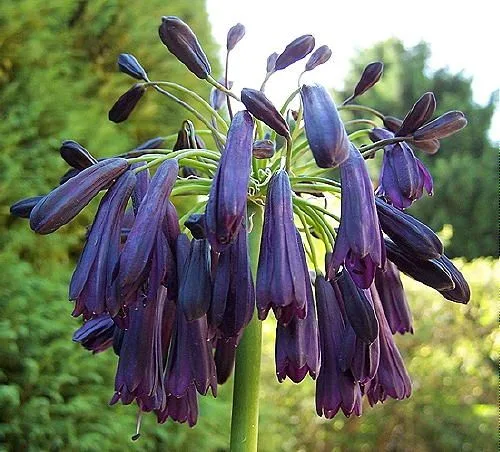
A clump-forming, deciduous, herbaceous perennial, producing narrow, strap-shaped, mid-green foliage, to a height of around 40cm (16in) and spreading to around 40cm (16in). Hemisperical heads of pendulous, funnel-shaped flowers in very deep purple, are produced in late summer, on straight, green stems, to approximately 80cm (32in) high.
Scientific classification
- Species
- closed African lily 'Midnight Cascade' (Agapanthus inapertus 'Midnight Cascade')
- Genus
- Agapanthus
- Family
- Asparagaceae
- Order
- Asparagales
- Class
- Liliopsida
- Phylum
- Magnoliophyta
- Al parts of the plant are harmful if eaten
- Toxicity
- Herbaceous Perennial
- Plant type
- 0.5-1 metres
- Height
- 0.1-0.5 metres
- Spread
- Deciduous
- Foliage
- Clump forming
- Habit
- Spring · Summer · Autumn
- Season of interest
- Full sun
- Sunlight
- Information to be completed
- Ideal temperature









closed African lily 'Midnight Cascade' pictures
Distribution of closed African lily 'Midnight Cascade'
Distribution map
- Native
- Introduced
- Cultivated
Source:WCVP v16 · Royal Botanic Gardens, Kew · CC BY 3.0 · Boundaries:WGSRPD / TDWG
Toxicity
Al parts of the plant are harmful if eaten
closed African lily 'Midnight Cascade' care guide
- Water regularly in growth, reduce when dormant or cool
- Watering
- Full sun
- Sunlight

Watering
Water regularly in growth, reduce when dormant or cool
Fertilizing
 Fertilizing
Balanced feed monthly during spring and summer growth
Pruning
 Pruning
No pruning required other than to remove any dead foliage or spent flower heads
Propagation
 Propagation
Propagate by division in spring, or by seed, but bear in mind that seed-raised plants may not come true to the parent plant, where it is a hybrid cultivar
Growing
 Growing
Grow in a light, well-drained soil and a position in full sun for best flowering. Plants benefit from regular watering and feeding during the growing season April to September. Protect plants in cold areas against frost damage by wrapping with several layers of fleece. See agapanthus cultivation for more details
Common pests and diseases
Diseases
May be susceptible to a virus
Pests
May be susceptible to slugs and snails and agapanthus gall midge
Explore the plant health library →




