
purple apple berry
Also known as: blueberry; long-flowered apple berry; oval-flowered apple berry
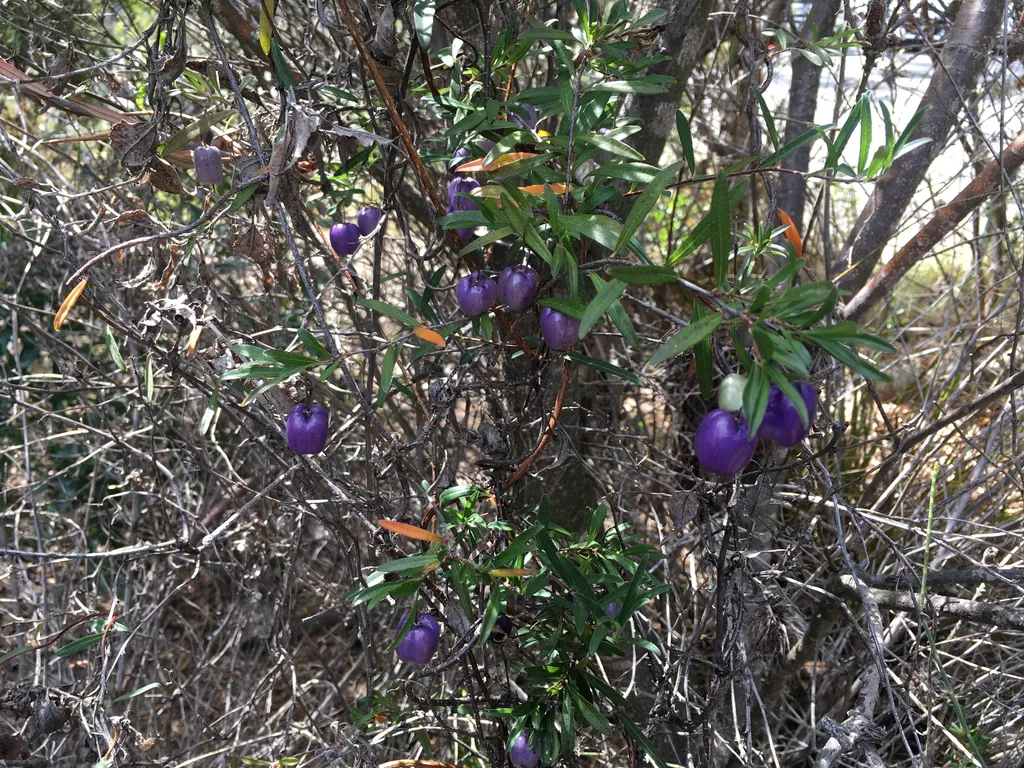
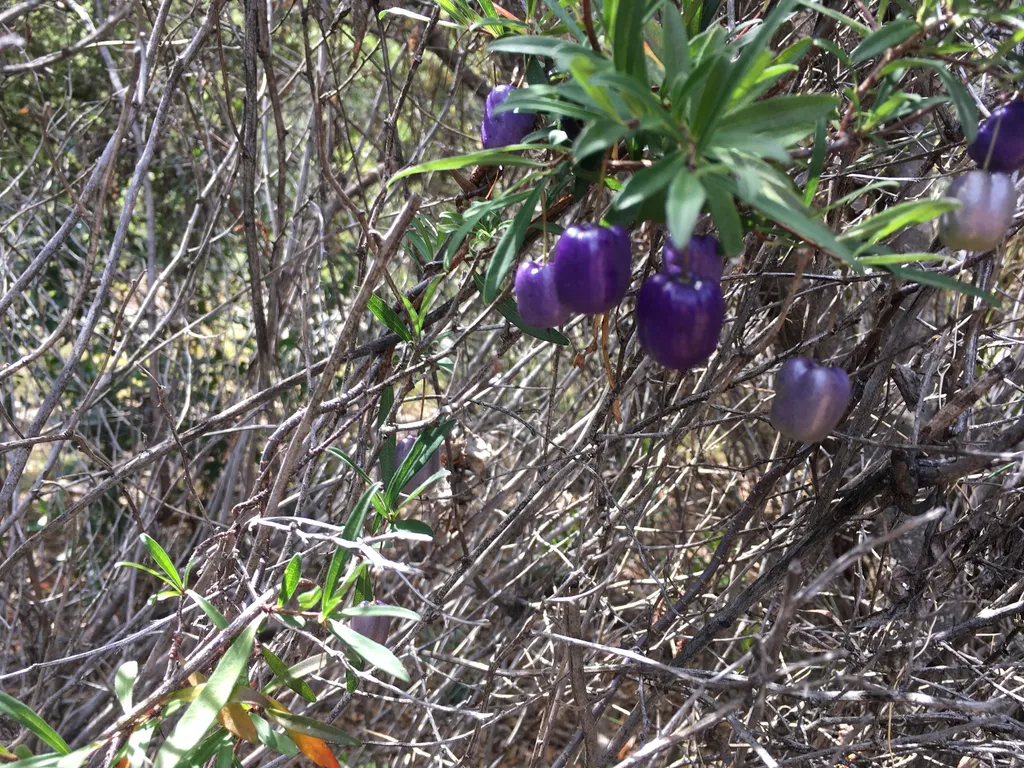
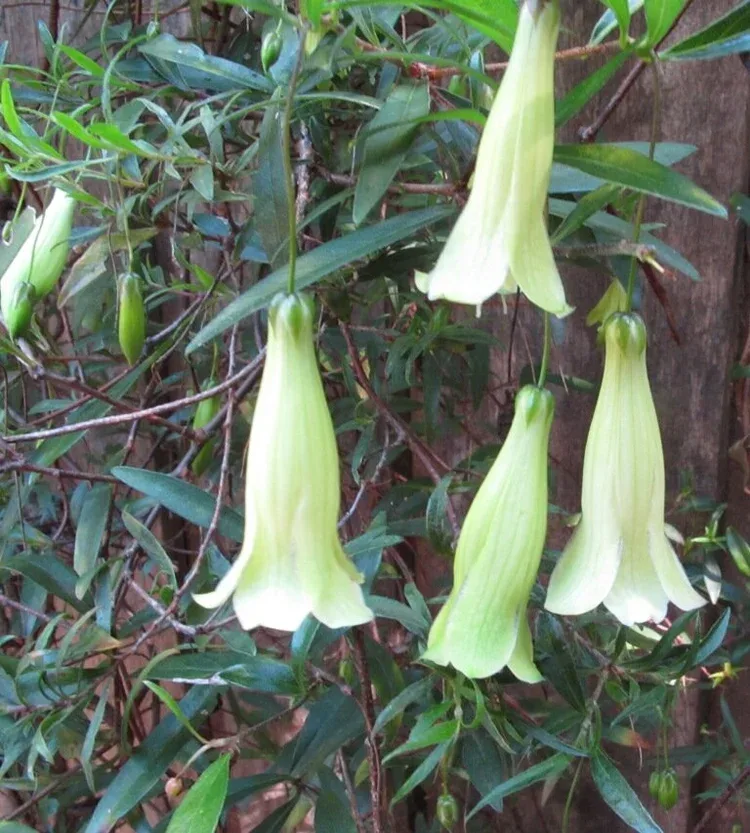
A twining evergreen perennial to 2m, with lance-shaped, dark green leaves and solitary, bell-shaped, yellow-green or purple-tinged flowers 3cm in length, followed by vivid violet berries 2.5cm in length
Scientific classification
- Species
- purple apple berry (Billardiera longiflora)
- Genus
- Billardiera
- Family
- Pittosporaceae
- Information to be completed
- Toxicity
- Climber Wall Shrub · Conservatory Greenhouse
- Plant type
- 1.5-2.5 metres
- Height
- 0.5-1 metres
- Spread
- Evergreen
- Foliage
- Climbing
- Habit
- Spring · Summer · Autumn · Winter
- Season of interest
- Full sun · Partial shade
- Sunlight
- Information to be completed
- Ideal temperature









purple apple berry pictures
Distribution of purple apple berry
Distribution map
Tasmania, Southeastern Australia
Information to be completed
Culture
Information to be completed
Toxicity
Information to be completed
Quick identification of purple apple berry
Information to be completed
purple apple berry care guide
- Moderate regular watering, allowing brief slight drying between soakings
- Watering
- Full sun · Partial shade
- Sunlight
- Information to be completed
- Ideal temperature

Watering
Moderate regular watering, allowing brief slight drying between soakings
Fertilizing
 Fertilizing
Balanced perennial feed every four weeks from spring through summer
Pruning
 Pruning
Routine pruning is unnecessary; shorten overlong shoots to fit the available space. Prune after flowering has finished.
Propagation
 Propagation
Propagate by seed as soon as ripe at 13 to 15°C in autumn. Layering in spring or strike softwood cuttings in early summer with bottom heat or semi-ripe cuttings in late summer
Growing
 Growing
Under glass grow in loam-based or loam-less compost, in full light with shade from hot sun. During growth, water moderately and apply a balanced liquid fertiliser monthly. Maintain low to moderate humidity. Can be grown outdoors in frost-free areas in moderately fertile, humus-rich, moist but well-drained soil in full sun. Apply a dry winter mulch. Provide support for climbing stems
People also ask
Information to be completed
Common pests and diseases
Diseases
Generally disease free
Pests
May be susceptible to glasshouse red spider mite.
Explore the plant health library →




