
blackberry 'Karaka Black'
Also known as: Information to be completed
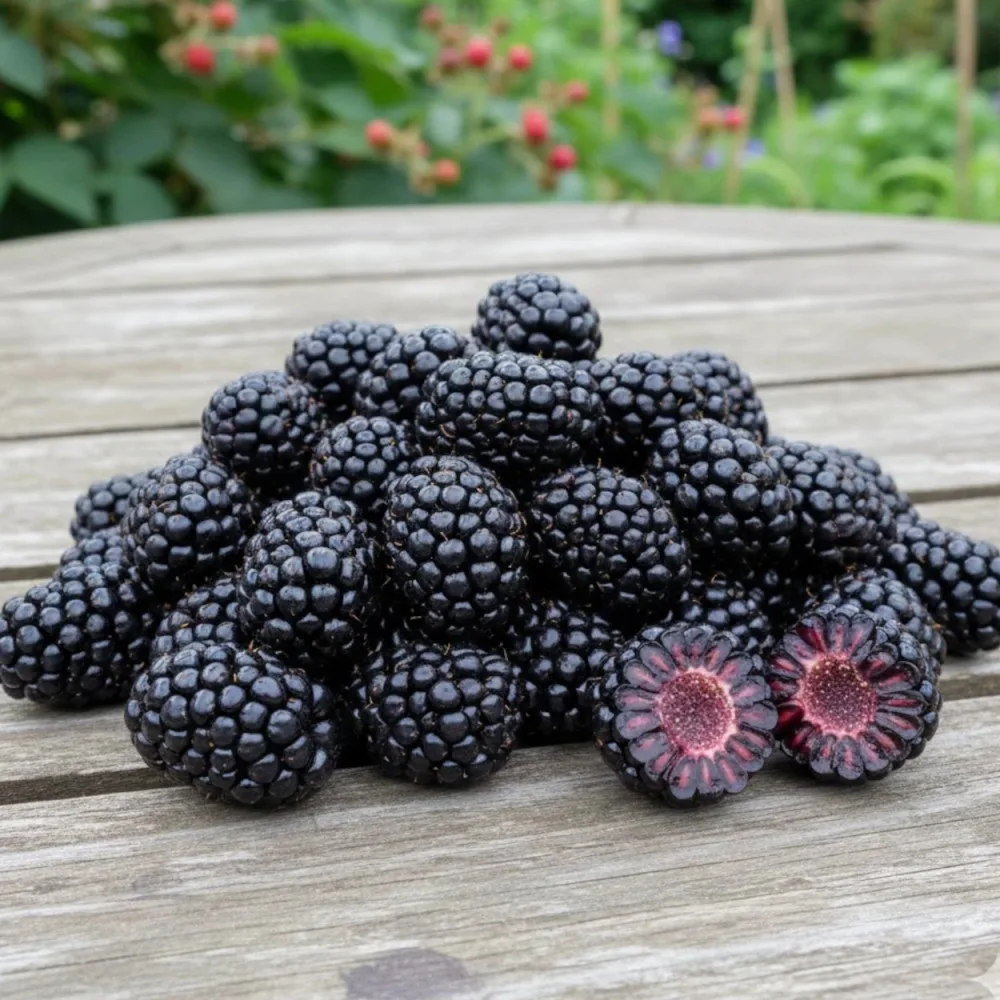
Rubus fruticosus, in its broadest sense, is the blackberry. There are both thorny and thornless cultivars available with long arching canes\r\n\r\n'Karaka Black' is a thorny-stemmed blackberry cultivar with arching canes to around 2m tall bearing lobed, dark green leaves. White flowers are followed by large, shiny black fruit reaching up to 7.5cm in length; the long cropping season extends from early summer into autumn
Scientific classification
- Species
- blackberry 'Karaka Black' (Rubus fruticosus 'Karaka Black')
- Genus
- Rubus
- Family
- Rosaceae
- Order
- Rosales
- Class
- Magnoliopsida
- Phylum
- Magnoliophyta
- Information to be completed
- Toxicity
- Shrubs · Fruit Edible
- Plant type
- 1.5-2.5 metres
- Height
- 4-8 metres
- Spread
- Deciduous
- Foliage
- Trailing
- Habit
- Spring · Autumn · Summer
- Season of interest
- Full sun
- Sunlight
- Information to be completed
- Ideal temperature









blackberry 'Karaka Black' pictures
Distribution of blackberry 'Karaka Black'
Distribution map
- Native
- Introduced
- Cultivated
Locally extinct or doubtful records are excluded from native and introduced layers.
Source:WCVP v16 · Royal Botanic Gardens, Kew · CC BY 3.0 · Boundaries:WGSRPD / TDWG
blackberry 'Karaka Black' care guide
- Moderate regular watering, allowing brief slight drying between soakings
- Watering
- Full sun
- Sunlight

Watering
Moderate regular watering, allowing brief slight drying between soakings
Fertilizing
 Fertilizing
Balanced perennial feed every four weeks from spring through summer
Pruning
 Pruning
Cut out old canes following fruiting and tie in new canes; see pruning blackberries
Propagation
 Propagation
Propagate by tip layering or from cuttings
Growing
 Growing
Usually grown fan-trained on free-standing post and wire support systems. Mulch with well-rotted compost or manure. May have the potential to become a nuisance if not managed well. See blackberry cultivation for further advice
Common pests and diseases
Diseases
May be susceptible to grey moulds and honey fungus (rarely)
Pests
May be susceptible to aphids, leafhoppers, raspberry beetle and gall mites
Explore the plant health library →




