
astilbe 'Opal'
Also known as: Information to be completed
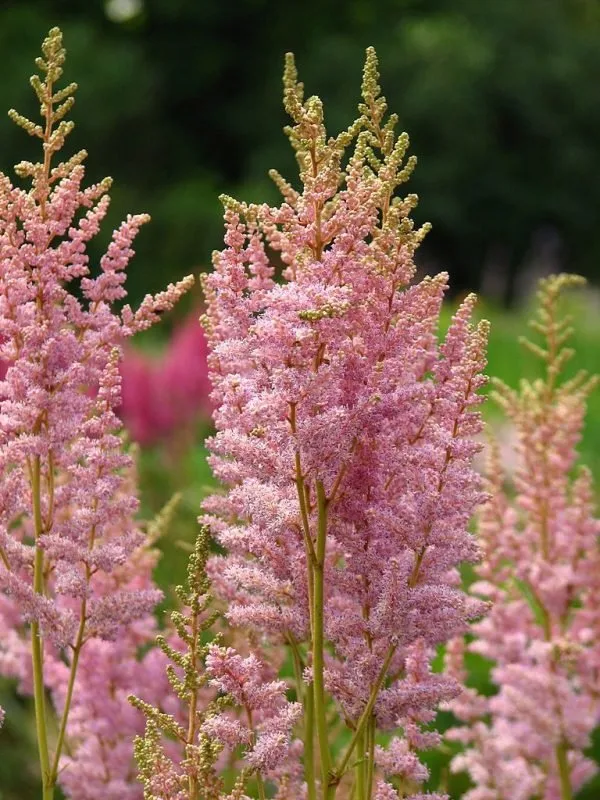
A clump-forming perennial to about 1m tall, with glossy, mid-green, divided foliage. Small, fluffy, silvery lilac-pink flowers, densely packed in long, narrow, branching sprays, appear in mid-summer
Scientific classification
- Species
- astilbe 'Opal' (Astilbe 'Opal')
- Genus
- Astilbe
- Family
- Saxifragaceae
- Information to be completed
- Toxicity
- Bogs · Herbaceous Perennial
- Plant type
- 0.5-1 metres
- Height
- 0.5-1 metres
- Spread
- Deciduous
- Foliage
- Clump forming
- Habit
- Spring · Summer · Autumn
- Season of interest
- Full sun · Partial shade
- Sunlight
- Information to be completed
- Ideal temperature









astilbe 'Opal' pictures
Distribution of astilbe 'Opal'
Distribution map
Information to be completed
Information to be completed
Culture
Information to be completed
Toxicity
Information to be completed
Quick identification of astilbe 'Opal'
Information to be completed
astilbe 'Opal' care guide
- Keep soil consistently moist, especially in warm weather
- Watering
- Full sun · Partial shade
- Sunlight
- Information to be completed
- Ideal temperature

Watering
Keep soil consistently moist, especially in warm weather
Fertilizing
 Fertilizing
Balanced feed in spring and early summer
Pruning
 Pruning
Can cut back after flowering, or delay until spring as faded flower spikes can remain attractive in autumn and winter
Propagation
 Propagation
Propagate by division in late winter or early spring, pot divisions under glass and plant out in late spring
Growing
 Growing
Grow in moist, fertile, humus-rich soil in full sun, or in partial shade if soil is likely to dry out in the summer. Plants must be divided every three to four years to maintain vigour
People also ask
Information to be completed
Common pests and diseases
Diseases
May be susceptible to Powdery mildews and leaf scorch in hot sun
Pests
Generally pest-free
Explore the plant health library →




