
celery 'Loretta'
Also known as: Information to be completed
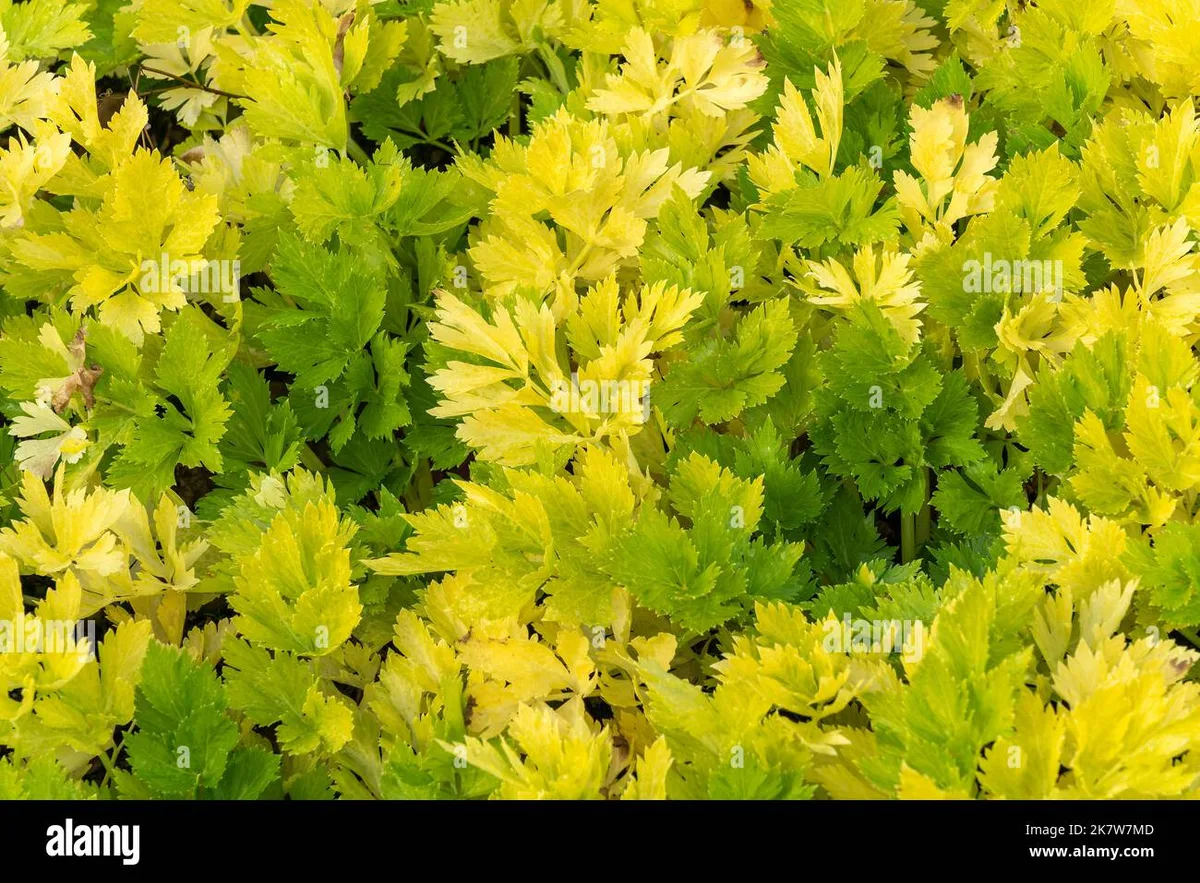
A biennial usually grown as an annual, with large, shiny, bright green, divided foliage and pale green to white leaf-stems eaten as celery. It is a vigorous cultivar producing good crops of smooth, thick, fleshy stems that are sweet and crunchy
Scientific classification
- Species
- celery 'Loretta' (Apium graveolens var. dulce 'Loretta')
- Genus
- Apium
- Family
- Apiaceae
- Order
- Apiales
- Class
- Magnoliopsida
- Phylum
- Magnoliophyta
- Harmful to skin with sunlight. Wear gloves and other protective equipment when handling
- Toxicity
- Annual Biennial
- Plant type
- 0.1-0.5 metres
- Height
- 0.1-0.5 metres
- Spread
- Deciduous
- Foliage
- Clump forming
- Habit
- Spring · Summer · Autumn
- Season of interest
- Full sun · Partial shade
- Sunlight
- Information to be completed
- Ideal temperature









celery 'Loretta' pictures
Distribution of celery 'Loretta'
Distribution map
- Native
- Introduced
- Cultivated
Source:WCVP v16 · Royal Botanic Gardens, Kew · CC BY 3.0 · Boundaries:WGSRPD / TDWG
Toxicity
Harmful to skin with sunlight. Wear gloves and other protective equipment when handling
celery 'Loretta' care guide
- Maintain evenly moist soil, consistent hydration for leaf development
- Watering
- Full sun · Partial shade
- Sunlight

Watering
Maintain evenly moist soil, consistent hydration for leaf development
Fertilizing
 Fertilizing
Balanced vegetable feed every two weeks during active growth
Pruning
 Pruning
No pruning required
Propagation
 Propagation
Propagate by seed. See sowing vegetable seeds
Growing
 Growing
Sow seed in spring in containers, pot on when large enough to handle then plant out in late spring or early summer. Self-blanching varieties are best planted in a block so they shade each other to aid blanching. Keep plants moist at all times and harvest from late summer to mid-autumn. See celery cultivation for further advice
Common pests and diseases
Diseases
May be susceptible to celery leaf spot
Pests
May be susceptible to slugs and snails
Explore the plant health library →




