
chrysanthemum 'Caukeel Copper'
Also known as: Information to be completed
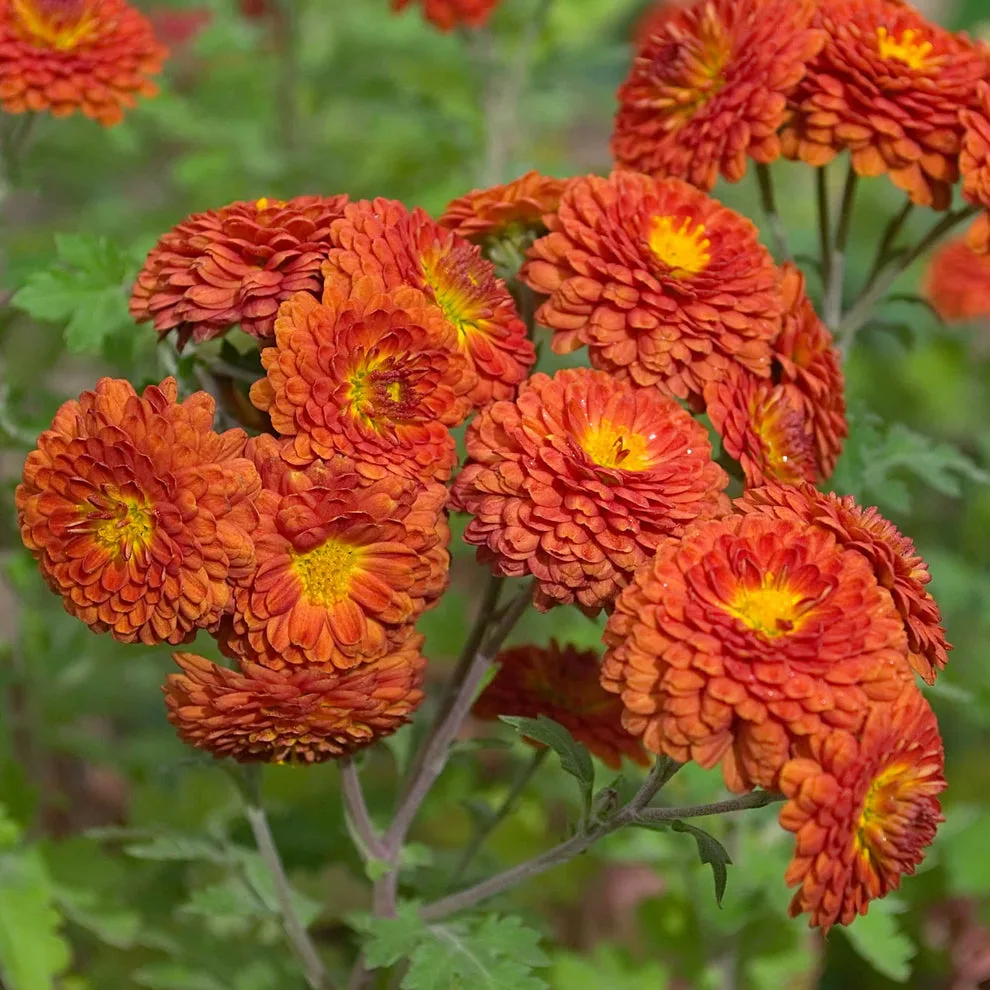
A half-hardy perennial to 90cm in height, with divided green leaves and sprays of flowers, 7cm in width, with warm yellowy orange florets, incurved at the centres and reflexed at the edges
Scientific classification
- Species
- chrysanthemum 'Caukeel Copper' (Chrysanthemum 'Caukeel Copper')
- Genus
- Chrysanthemum
- Family
- Asteraceae
- Order
- Asterales
- Class
- Magnoliopsida
- Phylum
- Tracheophyta
- Skin allergen. Wear gloves and other protective equipment when handling
- Toxicity
- Herbaceous Perennial
- Plant type
- 0.5-1 metres
- Height
- 0.1-0.5 metres
- Spread
- Deciduous
- Foliage
- Bushy
- Habit
- Spring · Summer · Autumn
- Season of interest
- Full sun
- Sunlight
- Information to be completed
- Ideal temperature









chrysanthemum 'Caukeel Copper' pictures
Toxicity
Skin allergen. Wear gloves and other protective equipment when handling
chrysanthemum 'Caukeel Copper' care guide
- Moderate regular watering, allowing brief slight drying between soakings
- Watering
- Full sun
- Sunlight

Watering
Moderate regular watering, allowing brief slight drying between soakings
Fertilizing
 Fertilizing
Balanced perennial feed every four weeks from spring through summer
Pruning
 Pruning
Pinch out the growing tip when the plants are 15-20cm tall to encourage the development of branching stems. Cut back to 20cm in the autumn to produce a stool
Propagation
 Propagation
Propagate by softwood cuttings taken in spring, using shoots from stored plants (stools)
Growing
 Growing
Grow in a sheltered site in full sun in fertile, well-drained soil. Water freely in dry weather. Staking is usually required. In mild areas leave in the ground protected by a thick mulch, elsewhere, lift the crowns and store over winter. See chrysanthemum cultivation for more detailed advice
Common pests and diseases
Diseases
May be susceptible to glasshouse grey mould, powdery mildews and chrysanthemum white rust
Pests
May be susceptible to aphids, earwigs, leaf and bud eelworms, capsid bugs, leaf miners, and sometimes red spider mites and whiteflies
Explore the plant health library →




