
Carpinus polyneura
Also known as: Information to be completed
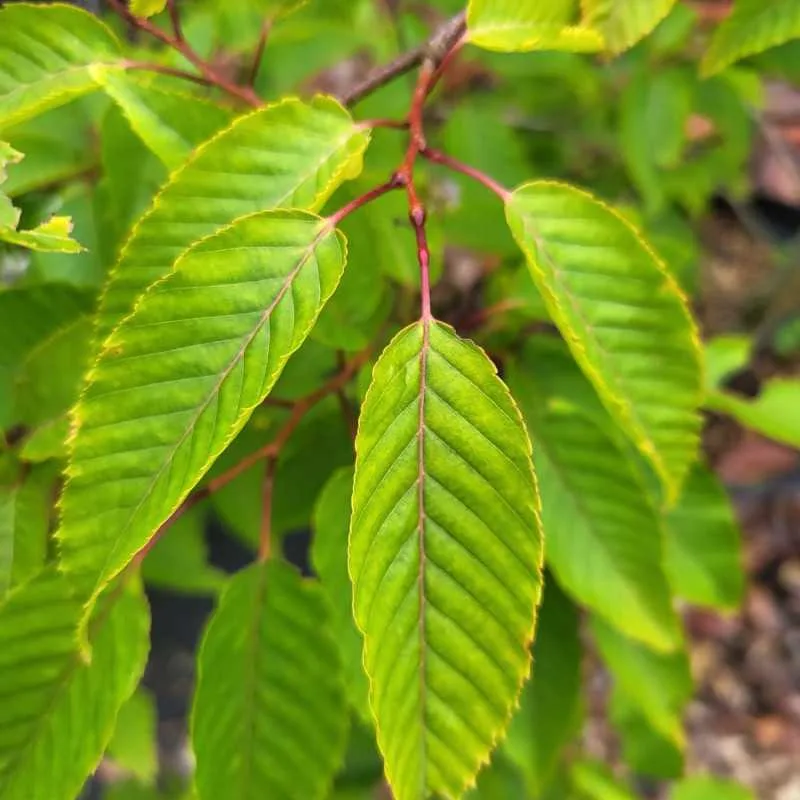
A medium-sized deciduous tree to 15m (50ft) high, with grey older bark and purplish-brown younger twigs and stems. The foliage emerging in spring is reddish-green, maturing to a glossy dark-green in summer. Autumn foliage colour is not very remarkable. The green, male and female catkins are produced separately on the same tree in May to June. After fertilisation, the female flowers develop into hop-like clusters in late summer to autumn, containing winged seeds that disperse on the wind when ripe
Scientific classification
- Species
- Carpinus polyneura (Carpinus polyneura)
- Genus
- Carpinus
- Family
- Betulaceae
- Information to be completed
- Toxicity
- Trees
- Plant type
- Higher than 12 metres
- Height
- wider than 8 metres
- Spread
- Deciduous
- Foliage
- Bushy
- Habit
- Autumn · Spring · Summer
- Season of interest
- Full sun · Partial shade
- Sunlight
- Information to be completed
- Ideal temperature









Carpinus polyneura pictures
Distribution of Carpinus polyneura
Distribution map
Southern China
Information to be completed
Culture
Information to be completed
Toxicity
Information to be completed
Quick identification of Carpinus polyneura
Information to be completed
Carpinus polyneura care guide
- Deep occasional watering with excellent drainage, less once established
- Watering
- Full sun · Partial shade
- Sunlight
- Information to be completed
- Ideal temperature

Watering
Deep occasional watering with excellent drainage, less once established
Fertilizing
 Fertilizing
Light conifer feed once yearly in early spring only
Pruning
 Pruning
Little pruning is needed. Remove diseased, damaged, crowded or crossing shoots and unwanted growth. Timing depends on the plant: generally late winter or early spring; plants prone to bleeding and deciduous magnolias need different timing, and deciduous azaleas and lilacs are pruned after flowering.
Propagation
 Propagation
Propagate by seed, softwood cuttings in spring and early summer, or grafting
Growing
 Growing
Easy to grow in most soils, as long as they are reasonably moist and well drained. Cannot tolerate dry soils. Best given shelter from cold winds
People also ask
Information to be completed
Common pests and diseases
Diseases
May be susceptible to powdery mildews, coral spot and sometimes honey fungus
Pests
May be susceptible to caterpillars and aphids
Explore the plant health library →




