
butterfly bush 'Honeycomb'
Also known as: Information to be completed
Honeycomb' is a deciduous shrub of arching habit with grey-green foliage, this cultivar has globular clusters of creamy, yellow flowers in late summer and autumn
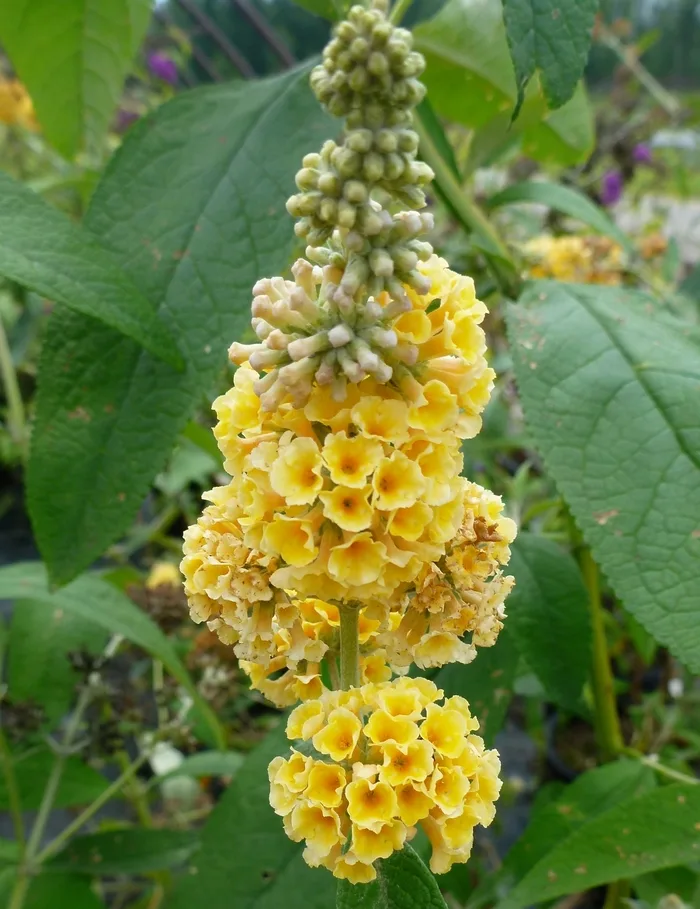
Scientific classification
- Species
- butterfly bush 'Honeycomb' (Buddleja × weyeriana 'Honeycomb')
- Genus
- Buddleja
- Family
- Scrophulariaceae
- Order
- Lamiales
- Class
- Magnoliopsida
- Phylum
- Magnoliophyta
- Information to be completed
- Toxicity
- Shrubs
- Plant type
- 1.5-2.5 metres
- Height
- 1-1.5 metres
- Spread
- Deciduous
- Foliage
- Bushy
- Habit
- Spring · Summer · Autumn
- Season of interest
- Full sun
- Sunlight
- Information to be completed
- Ideal temperature









butterfly bush 'Honeycomb' pictures
butterfly bush 'Honeycomb' care guide
- Deep soak soil as it dries halfway, well drained planting location
- Watering
- Full sun
- Sunlight

Watering
Deep soak soil as it dries halfway, well drained planting location
Fertilizing
 Fertilizing
Balanced butterfly bush feed every four weeks spring through summer
Pruning
 Pruning
Shorten last year's flowering stems to one or two buds from the older woody framework. Remove thin, weak and dead shoots. Prune in spring.
Propagation
 Propagation
Take softwood cuttings in spring and summer, semi-ripe cuttings from midsummer or root hardwood cuttings from autumn to midwinter and keep frost free
Growing
 Growing
Grow in any well-drained soil in full sun. See buddleja cultivation for more detailed advice
Common pests and diseases
Diseases
May be susceptible to honey fungus, fungal leaf spot, and virus diseases
Pests
May be susceptible to aphids, capsid bugs, caterpillars, earwigs, figwort weevils, glasshouse red spider mite, leaf and bud eelworm, and mullein moth
Explore the plant health library →




