
daylily 'August Frost'
Also known as: Information to be completed
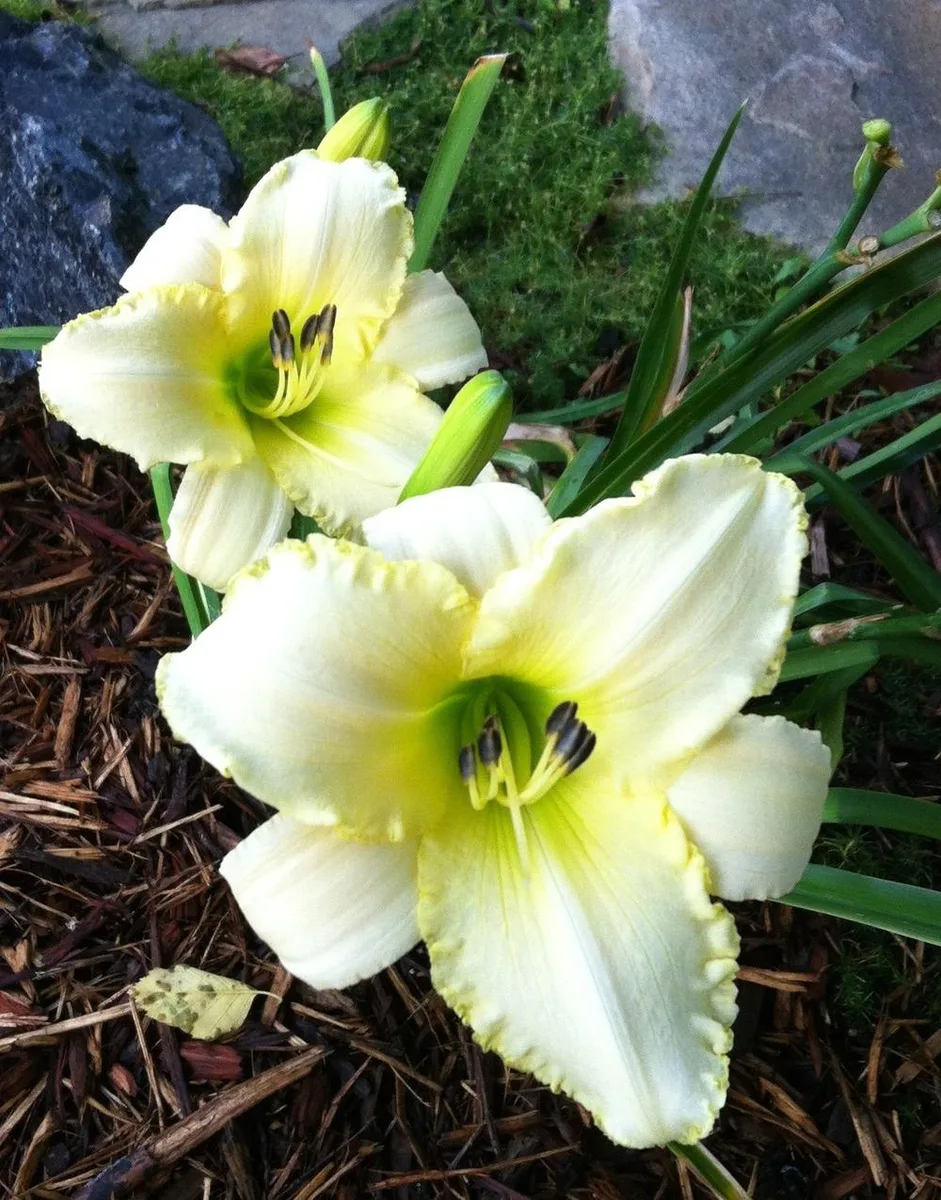
A deciduous, clump-forming perennial with strap-like leaves to 80cm high, producing branching stems of pale, creamy yellow triangular flowers to 15cm across, with yellow throats and ruffled golden yellow edges, in late summer and sometimes into autumn.
Scientific classification
- Species
- daylily 'August Frost' (Hemerocallis 'August Frost')
- Genus
- Hemerocallis
- Family
- Hemerocallidaceae
- Order
- Asparagales
- Class
- Liliopsida
- Phylum
- Magnoliophyta
- Information to be completed
- Toxicity
- Herbaceous Perennial
- Plant type
- 0.5-1 metres
- Height
- 0.5-1 metres
- Spread
- Deciduous
- Foliage
- Clump forming
- Habit
- Spring · Summer · Autumn
- Season of interest
- Full sun · Partial shade
- Sunlight
- Information to be completed
- Ideal temperature









daylily 'August Frost' pictures
daylily 'August Frost' care guide
- Keep soil evenly moist during active growth and flowering season
- Watering
- Full sun · Partial shade
- Sunlight

Watering
Keep soil evenly moist during active growth and flowering season
Fertilizing
 Fertilizing
Daylily feed every two to four weeks through warm blooming months
Pruning
 Pruning
Cut back flower stems after flowering has finished
Propagation
 Propagation
Propagate by division in early spring or autumn, at least six weeks before the first frost. Divide every 2-3 years to maintain vigour. Propagate from seed in containers in a cold frame in autumn or spring; cultivars will not come true from seed.
Growing
 Growing
Grow in fertile, well drained soil that doesn't dry out. Prefers full sun, flowering is likely to be reduced in shadier situations. Water freely from spring to summer. See Hemerocallis cultivation for details
Common pests and diseases
Diseases
May be susceptible to rust. In climates with alternating winter frosts and thaws, bacterial leaf and stem rot (spring sickness) may be a problem; in areas with high temperatures and high humidity, crown rot may cause damage.
Pests
May be susceptible to hemerocallis gall midge, aphids, red spider mite and thrips. Slugs and snails may damage young leaves.
Explore the plant health library →




