
hellebore Harvington double red
Also known as: Information to be completed
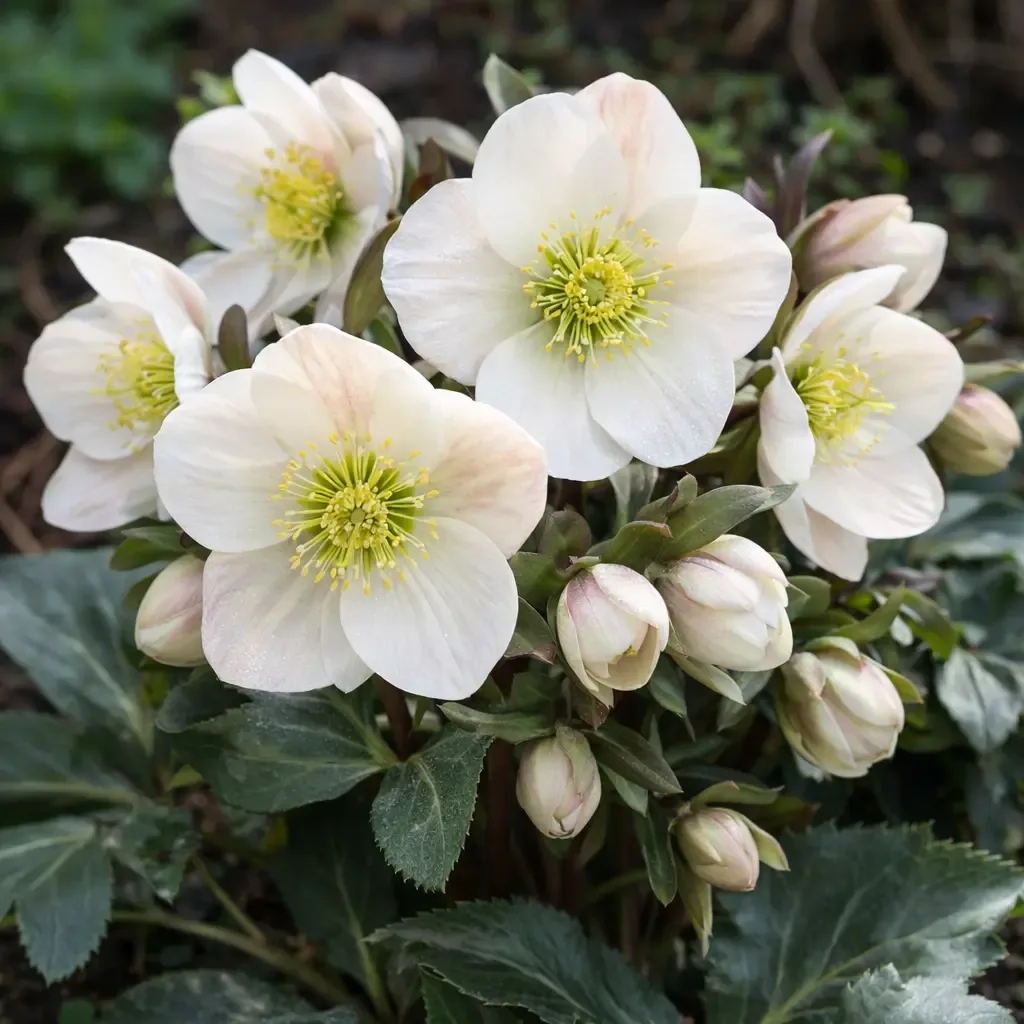
A clump forming, semi-evergreen perennial up to 60cm high, with deeply cut, dark green, leathery leaves and saucer-shaped, pendent to outward-facing double, red flowers with curved petals from late winter to spring.
Scientific classification
- Species
- hellebore Harvington double red (Helleborus × hybridus [Harvington Double Red])
- Genus
- Helleborus
- Family
- Ranunculaceae
- Order
- Ranunculales
- Class
- Magnoliopsida
- Phylum
- Magnoliophyta
- Harmful if eaten, skin irritant. Wear gloves and other protective equipment when handling]
- Toxicity
- Herbaceous Perennial
- Plant type
- 0.5-1 metres
- Height
- 0.5-1 metres
- Spread
- Semi evergreen · Evergreen
- Foliage
- Clump forming
- Habit
- Spring · Summer · Autumn · Winter
- Season of interest
- Partial shade
- Sunlight
- Information to be completed
- Ideal temperature









hellebore Harvington double red pictures
Toxicity
Harmful if eaten, skin irritant. Wear gloves and other protective equipment when handling]
hellebore Harvington double red care guide
- Moderate regular watering, allowing brief slight drying between soakings
- Watering
- Partial shade
- Sunlight

Watering
Moderate regular watering, allowing brief slight drying between soakings
Fertilizing
 Fertilizing
Balanced perennial feed every four weeks from spring through summer
Pruning
 Pruning
Remove old leaves to expose the flowers and control hellebore leaf spot in winter before the flowers start appearing and deadhead by removing the old faded flower stems
Propagation
 Propagation
Propagate large clumps by division in early spring or early autumn. and water well until established; plants propagated by seed may be variable
Growing
 Growing
Tolerant of a range of moisture retentive, humus-rich soils in light shade but best in fertile, neutral to alkaline soils that are not prone to drying out in summer. For more advice, see hellebore cultivation
Common pests and diseases
Diseases
May be susceptible to hellebore leaf spot, hellebore black death, grey mould (botrytis) and virus diseases
Pests
May be susceptible to hellebore aphids, slugs and snails
Explore the plant health library →




