
Muscari armeniacum 'Atlantic'
Also known as: Information to be completed
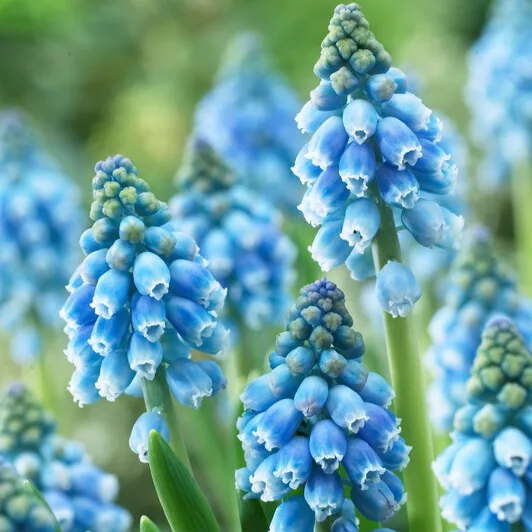
A vigorous, clump-forming, perennial bulb, to around 20cm high in flower, with narrow, linear green leaves. In spring, produces densely packed spikes of small, bright violet-blue flowers with white tips
Scientific classification
- Species
- Muscari armeniacum 'Atlantic' (Muscari armeniacum 'Atlantic')
- Genus
- Muscari
- Family
- Asparagaceae
- Order
- Asparagales
- Class
- Liliopsida
- Phylum
- Magnoliophyta
- Ornamental bulbs, not to be eaten. Wear gloves and other protective equipment when handling
- Toxicity
- Bulbs
- Plant type
- 0.1-0.5 metres
- Height
- 0-0.1 metre
- Spread
- Deciduous
- Foliage
- Clump forming · Columnar upright
- Habit
- Spring · Autumn · Winter
- Season of interest
- Full sun
- Sunlight
- Information to be completed
- Ideal temperature









Muscari armeniacum 'Atlantic' pictures
Distribution of Muscari armeniacum 'Atlantic'
Distribution map
- Native
- Introduced
- Cultivated
Source:WCVP v16 · Royal Botanic Gardens, Kew · CC BY 3.0 · Boundaries:WGSRPD / TDWG
Toxicity
Ornamental bulbs, not to be eaten. Wear gloves and other protective equipment when handling
Muscari armeniacum 'Atlantic' care guide
- Moderate regular watering, avoid prolonged drought or waterlogging
- Watering
- Full sun
- Sunlight

Watering
Moderate regular watering, avoid prolonged drought or waterlogging
Fertilizing
 Fertilizing
Balanced feed in spring and light repeat in growth season
Pruning
 Pruning
No pruning required
Propagation
 Propagation
Propagate by division of established clumps, separating offsets when dormant in summer
Growing
 Growing
Plant 10cm deep in autumn in any moderately fertile, well-drained soil. Lift and divide congested clumps in summer to maintain vigour. Spreads readily in good conditions; good for naturalising in meadows and wildlife gardens - see bulbs: naturalising
Common pests and diseases
Diseases
May be susceptible to fungal infections including anther smuts and bluebell rust (see rust diseases), and bacterial soft rot and some virus diseases
Pests
Generally pest-free
Explore the plant health library →




