
×Brassocattleya Heatonensis gx
Also known as: Information to be completed
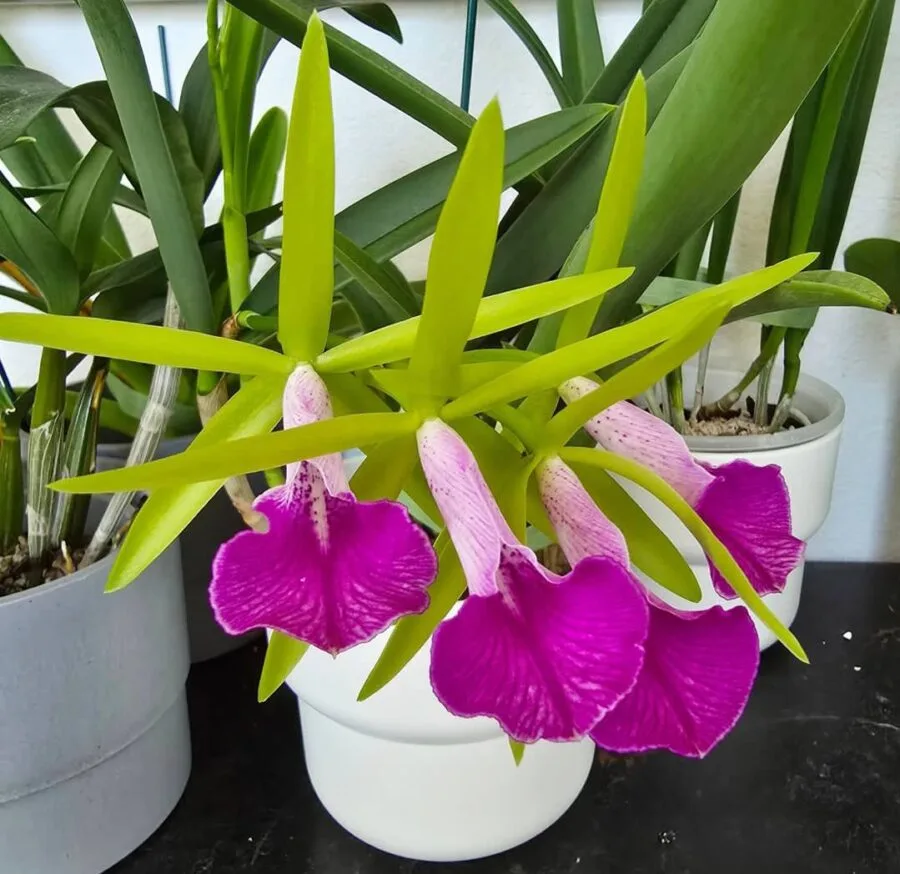
An evergreen, medium-sized, epiphytic orchid with elongated, upright, cane-like stems growing from a short rhizome. Each stem-pseudobulb is broader in the central part and narrower at the base, up to 40cm long, carrying a single, firm, leathery leaf. Large, showy flowers emerge on terminal stems, arising from the new mature growth from autumn to spring. Each flower measures up to 20cm across. The colour varies according to cultivar; from white and pale pink to bright magenta and yellow.
Scientific classification
- Species
- ×Brassocattleya Heatonensis gx (×Brassocattleya Heatonensis gx)
- Genus
- ×Brassocattleya
- Family
- Orchidaceae
- Order
- Asparagales
- Class
- Liliopsida
- Phylum
- Magnoliophyta
- Information to be completed
- Toxicity
- Conservatory Greenhouse · Houseplants
- Plant type
- 0.1-0.5 metres
- Height
- 0.1-0.5 metres
- Spread
- Evergreen
- Foliage
- Clump forming · Columnar upright
- Habit
- Spring · Summer · Autumn · Winter
- Season of interest
- Partial shade · Full sun
- Sunlight
- Information to be completed
- Ideal temperature









×Brassocattleya Heatonensis gx pictures
×Brassocattleya Heatonensis gx care guide
- Keep potting medium lightly moist, airy, and never stagnant
- Watering
- Partial shade · Full sun
- Sunlight

Watering
Keep potting medium lightly moist, airy, and never stagnant
Fertilizing
 Fertilizing
Half-strength orchid feed every two to three weeks in active growth
Pruning
 Pruning
No pruning required.
Propagation
 Propagation
Mature plants may be divided when the plant overgrows its container. Each division should have at least 3 older growths with a sufficient amount of stored energy and water, to support new growth and reduce stress after repotting.
Growing
 Growing
Grow in an open, coarse bark-based orchid mix with addition of perlite and coconut chips. Provide bright light conditions, but shade from hot, direct mid-day sun. Ideal temperatures are 15°C minimum in winter and up to maximum 28 °C during summer day. Water and feed plants regularly during the growing season. Ensure that all water drains away, preventing the plant sitting too wet. Provide enough humidity by regular misting. Reduce watering and feeding in winter months and keep in a bright, sunny position. As with many orchids, they grow best when well-established and slightly pot-bound. Re-potting should be only done if the plant overgrows its container or before the potting mix starts to deteriorate - approximately once in 2-3 years. The plant should only be re-potted when the new growth appears in spring. See also indoor orchid cultivation.
Common pests and diseases
Diseases
Generally disease-free. Poor air movement may cause bacterial or fungal rots. Good hygiene practice and sterilising cutting tools prevent the spread of virus diseases.
Pests
May be susceptible to glasshouse red spider mite, scale insects and mealybugs. Thrips may cause damage on flowers.
Explore the plant health library →




