
paulownia [Fast Blue]
Also known as: Information to be completed
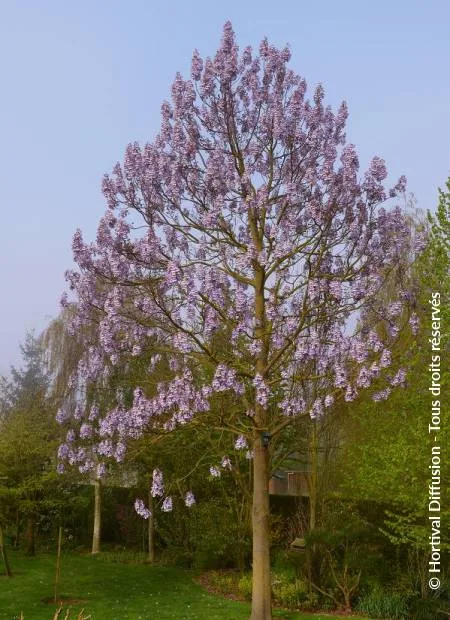
A fast-growing tree with a pyramidal habit reaching to 8m tall. Large, ovate to heart-shaped leaves have hairy undersides and are up to 20cm across. Upright panicles of fragrant, funnel-shaped flowers are borne in spring and are lilac-blue outside and creamy-white inside with a yellow throat
Scientific classification
- Species
- paulownia [Fast Blue] (Paulownia fortunei Fast Blue ('Minfast'))
- Genus
- Paulownia
- Family
- Paulowniaceae
- Order
- Lamiales
- Class
- Magnoliopsida
- Phylum
- Magnoliophyta
- Information to be completed
- Toxicity
- Trees
- Plant type
- 4-8 metres
- Height
- 4-8 metres
- Spread
- Deciduous
- Foliage
- Columnar upright
- Habit
- Spring · Summer · Autumn
- Season of interest
- Full sun
- Sunlight
- Information to be completed
- Ideal temperature









paulownia [Fast Blue] pictures
paulownia [Fast Blue] care guide
- Moderate regular watering, avoid prolonged drought or waterlogging
- Watering
- Full sun
- Sunlight

Watering
Moderate regular watering, avoid prolonged drought or waterlogging
Fertilizing
 Fertilizing
Balanced feed in spring and light repeat in growth season
Pruning
 Pruning
Little pruning is needed. Remove diseased, damaged, crowded or crossing shoots and unwanted growth. Timing depends on the plant: generally late winter or early spring; plants prone to bleeding and deciduous magnolias need different timing, and deciduous azaleas and lilacs are pruned after flowering.
Propagation
 Propagation
Propagate by root cuttings
Growing
 Growing
Grow in a fertile, well drained soil in full sun. Protect flower buds and young growth of small plants from hard frosts by growing in a sheltered position. Grow for foliage effect only by cutting back young shoots hard in spring which results in production of very large leaves up to 60cm across
Common pests and diseases
Diseases
May be susceptible to honey fungus
Pests
Generally pest-free
Explore the plant health library →




