
mountain pepper
Also known as: Australian pepper; pepper tree; Tasmanian pepper
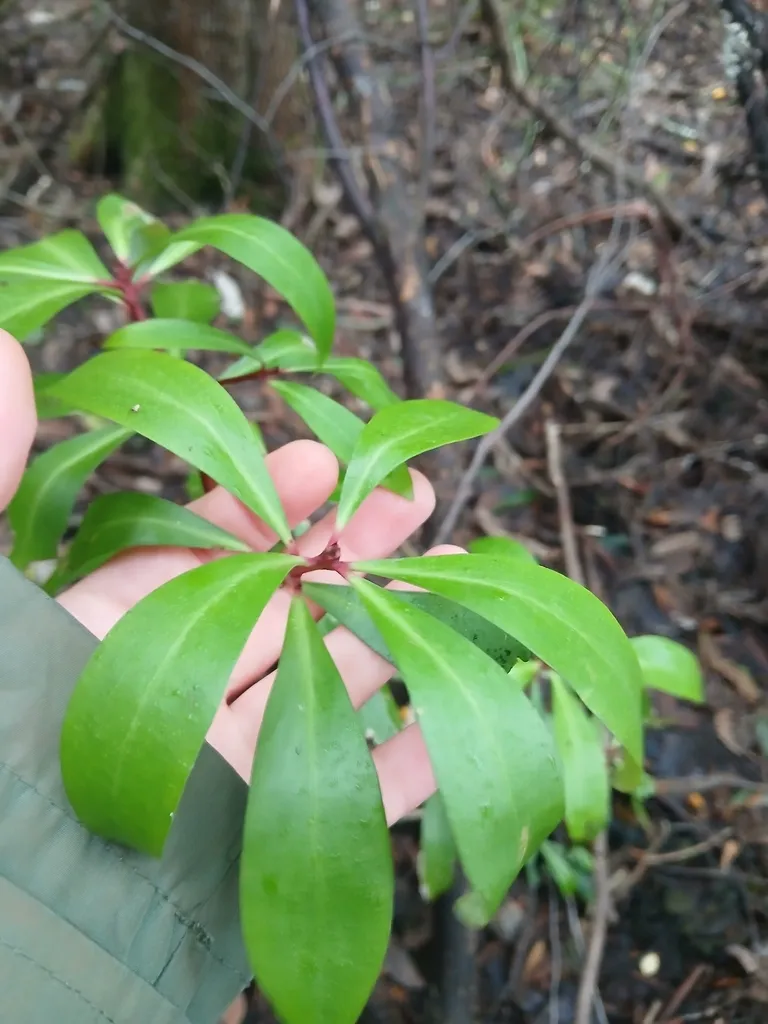
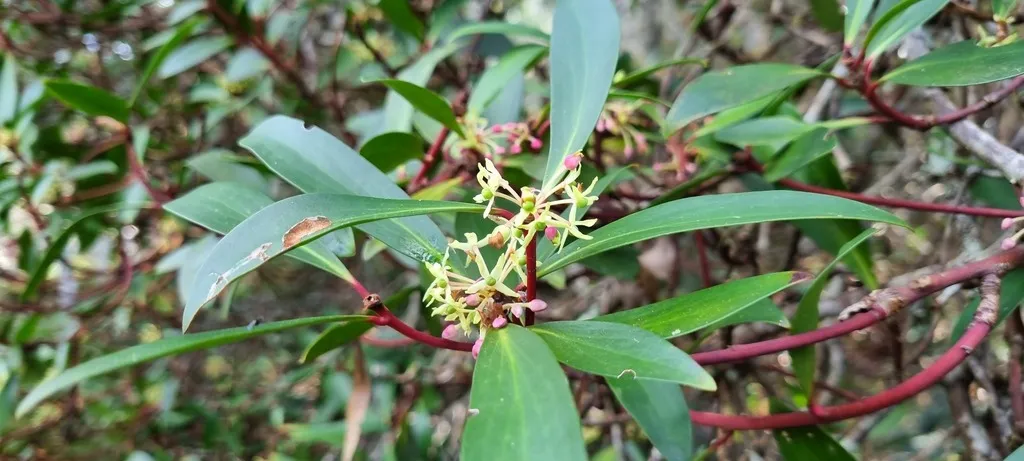
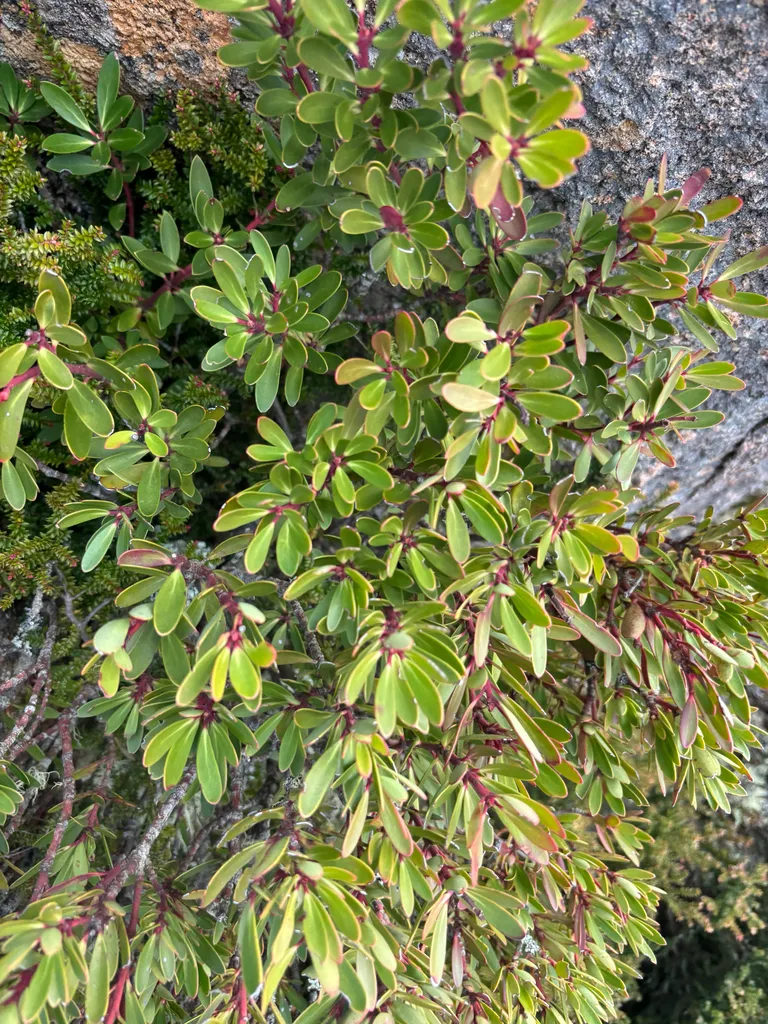
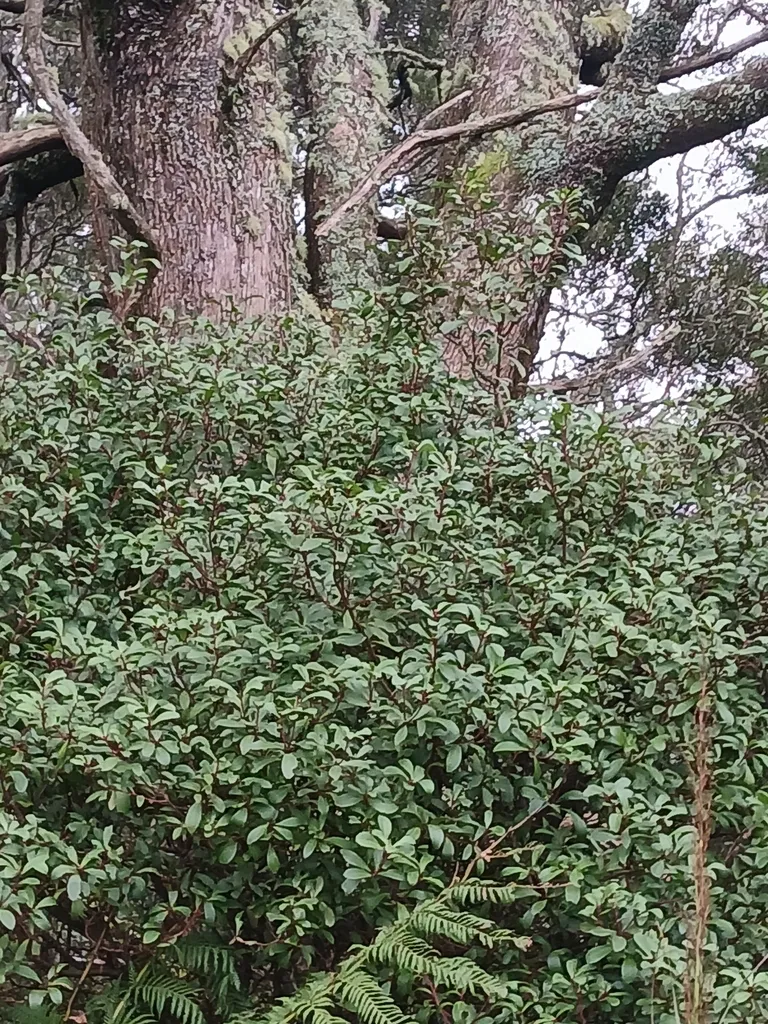
A dense, evergreen, medium to large shrub of upright habit, possibly to 4m or more in height, with dark green leaves, paler below, copper-tinted when young. Young stems and twigs are reddish-purple. Bark and leaves are strongly cinnamon-scented. Flowers are dioecious and fragrant, borne in side and terminal clusters in spring, greenish-yellow with narrow twisting petals, which surround yellow anthers on the male flowers. Fruit a glossy, round black berry
Scientific classification
- Species
- mountain pepper (Tasmannia lanceolata)
- Genus
- Tasmannia
- Family
- Winteraceae
- Information to be completed
- Toxicity
- Shrubs
- Plant type
- 2.5-4 metres
- Height
- 1.5-2.5 metres
- Spread
- Evergreen
- Foliage
- Columnar upright
- Habit
- Spring · Summer · Autumn · Winter
- Season of interest
- Partial shade
- Sunlight
- Information to be completed
- Ideal temperature









mountain pepper pictures
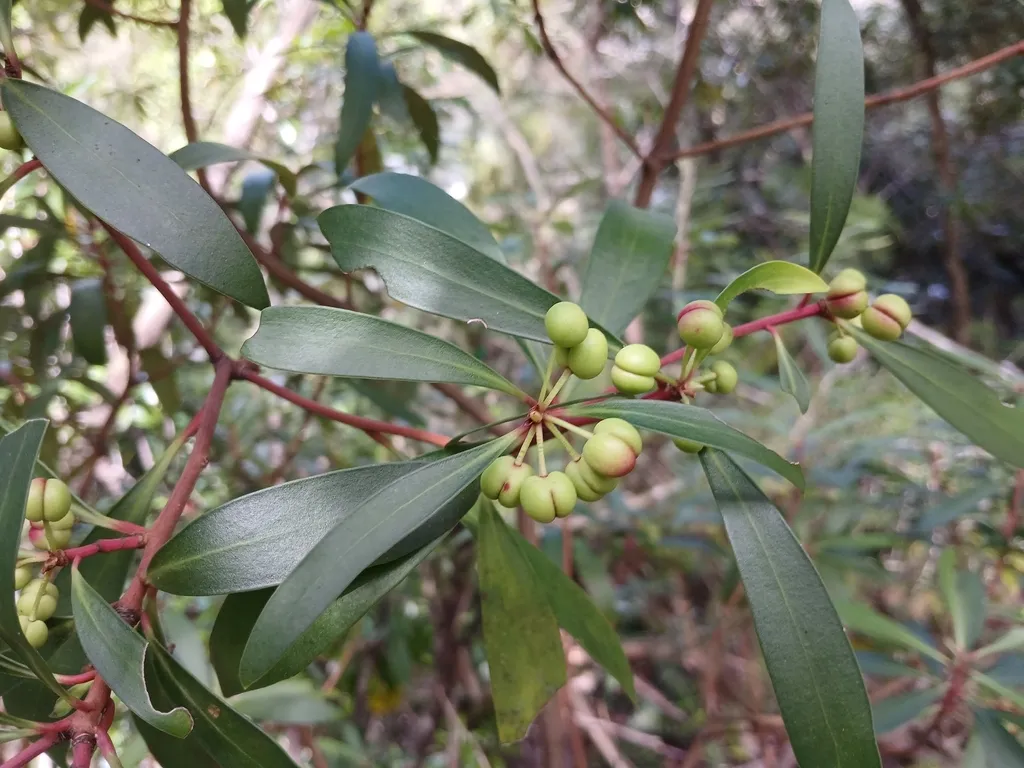
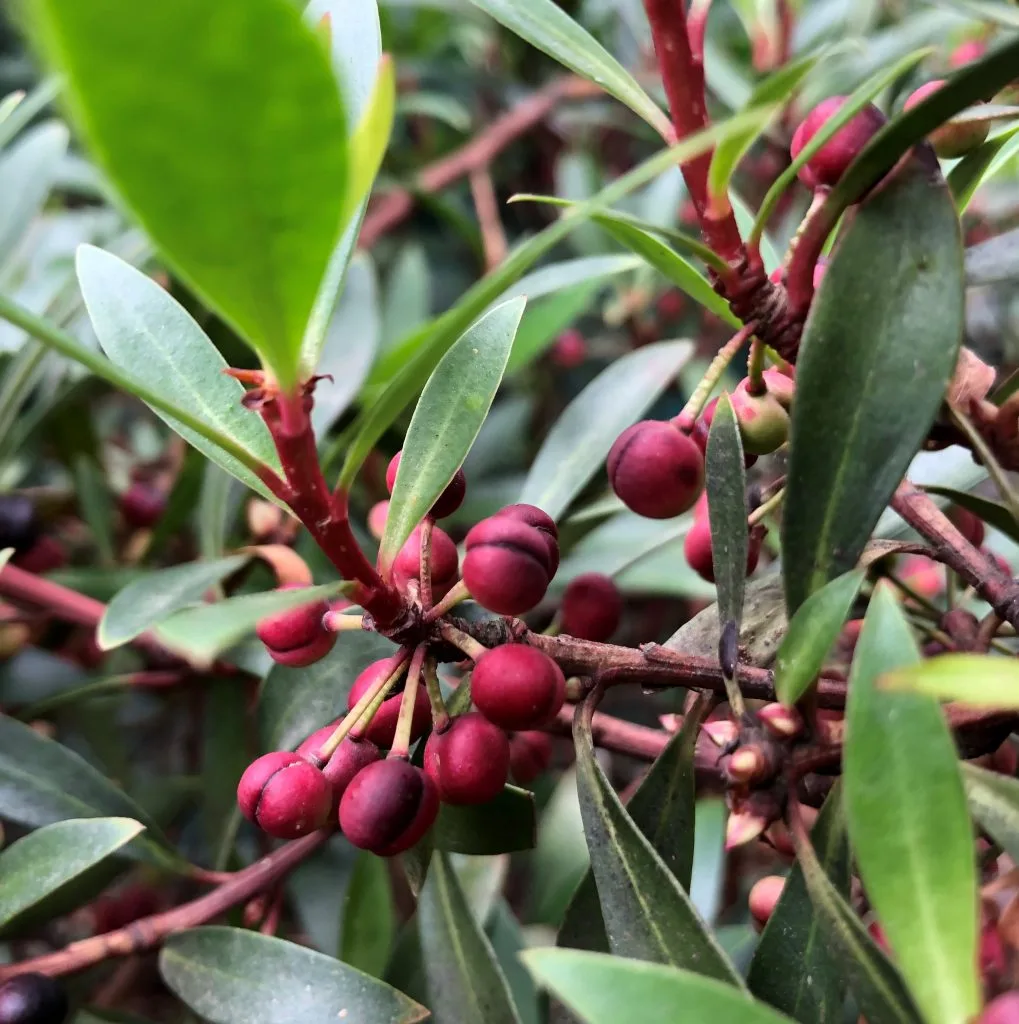
Distribution of mountain pepper
Distribution map
Australia and Tasmania
Information to be completed
Culture
Information to be completed
Toxicity
Information to be completed
Quick identification of mountain pepper
Information to be completed
mountain pepper care guide
- Moderate regular watering, allowing brief slight drying between soakings
- Watering
- Partial shade
- Sunlight
- Information to be completed
- Ideal temperature

Watering
Moderate regular watering, allowing brief slight drying between soakings
Fertilizing
 Fertilizing
Balanced perennial feed every four weeks from spring through summer
Pruning
 Pruning
Responds well to pruning; best done in spring
Propagation
 Propagation
Propagate by seed as soon as ripe, as viability is short. Semi-ripe cuttings can be taken in summer
Growing
 Growing
Grows best in fertile, moist, well-drained, lime-free soils. Will tolerate clay soils. Successful in both sunny and shady positions but prefers semi-shade
People also ask
Information to be completed
Common pests and diseases
Diseases
Can be susceptible to Phytophthora root rot
Pests
Generally trouble free
Explore the plant health library →




