
sweet pepper 'Mohawk'
Also known as: Information to be completed
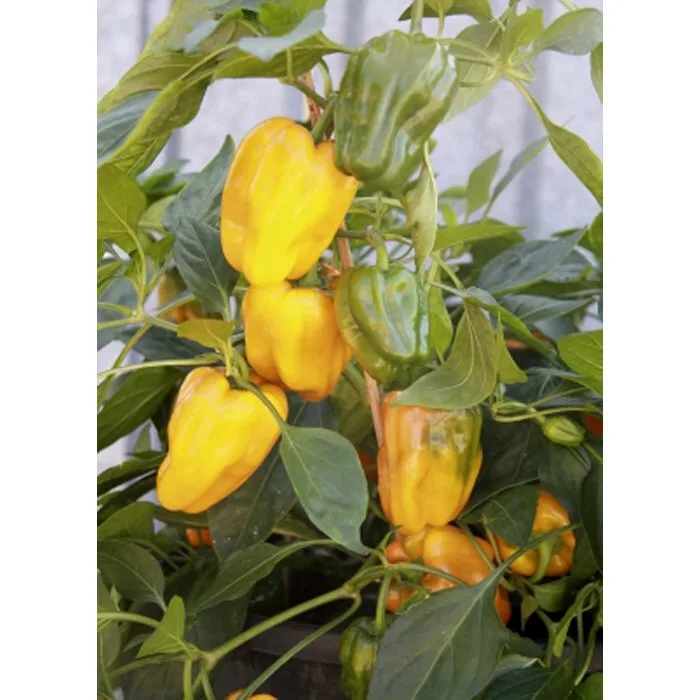
Dwarf sweet pepper to 50cm tall, with high yields of bell-shaped fruits to 9cm long that ripen in summer, from dark green to bright yellow and are ideally suited to patio containers
Scientific classification
- Species
- sweet pepper 'Mohawk' (Capsicum annuum 'Mohawk')
- Genus
- Capsicum
- Family
- Solanaceae
- Irritant if eaten, skin/eye irritant. Wear gloves and other protective equipment when handling]
- Toxicity
- Fruit Edible
- Plant type
- 0.1-0.5 metres
- Height
- 0.1-0.5 metres
- Spread
- Deciduous
- Foliage
- Information to be completed
- Habit
- Spring · Summer · Autumn
- Season of interest
- Full sun
- Sunlight
- Information to be completed
- Ideal temperature









sweet pepper 'Mohawk' pictures
Distribution of sweet pepper 'Mohawk'
Distribution map
Information to be completed
Information to be completed
Culture
Information to be completed
Toxicity
Irritant if eaten, skin/eye irritant. Wear gloves and other protective equipment when handling]
Quick identification of sweet pepper 'Mohawk'
Information to be completed
sweet pepper 'Mohawk' care guide
- Keep soil evenly moist and warm, never bone dry
- Watering
- Full sun
- Sunlight
- Information to be completed
- Ideal temperature

Watering
Keep soil evenly moist and warm, never bone dry
Fertilizing
 Fertilizing
Regular tomato or pepper feed during flowering and fruiting
Pruning
 Pruning
Staking may be necessary if a heavy crop of large peppers are produced
Propagation
 Propagation
Propagate by seed. See sowing vegetable seeds or sowing seeds indoors for further advice
Growing
 Growing
Grow in any fertile, moisture-retentive soil that warms quickly in spring in a sunny sheltered site. Ideally suited to containers or growbags. More cultivation advice can be found in Peppers in Vegetable cultivation
People also ask
Information to be completed
Common pests and diseases
Diseases
May be susceptible to blossom end rot, grey mould (botrytis) and Verticillium wilt
Pests
May be susceptible to aphids, glasshouse red spider mites and glasshouse whitefly
Explore the plant health library →




