
carrot 'Eskimo'
Also known as: Information to be completed
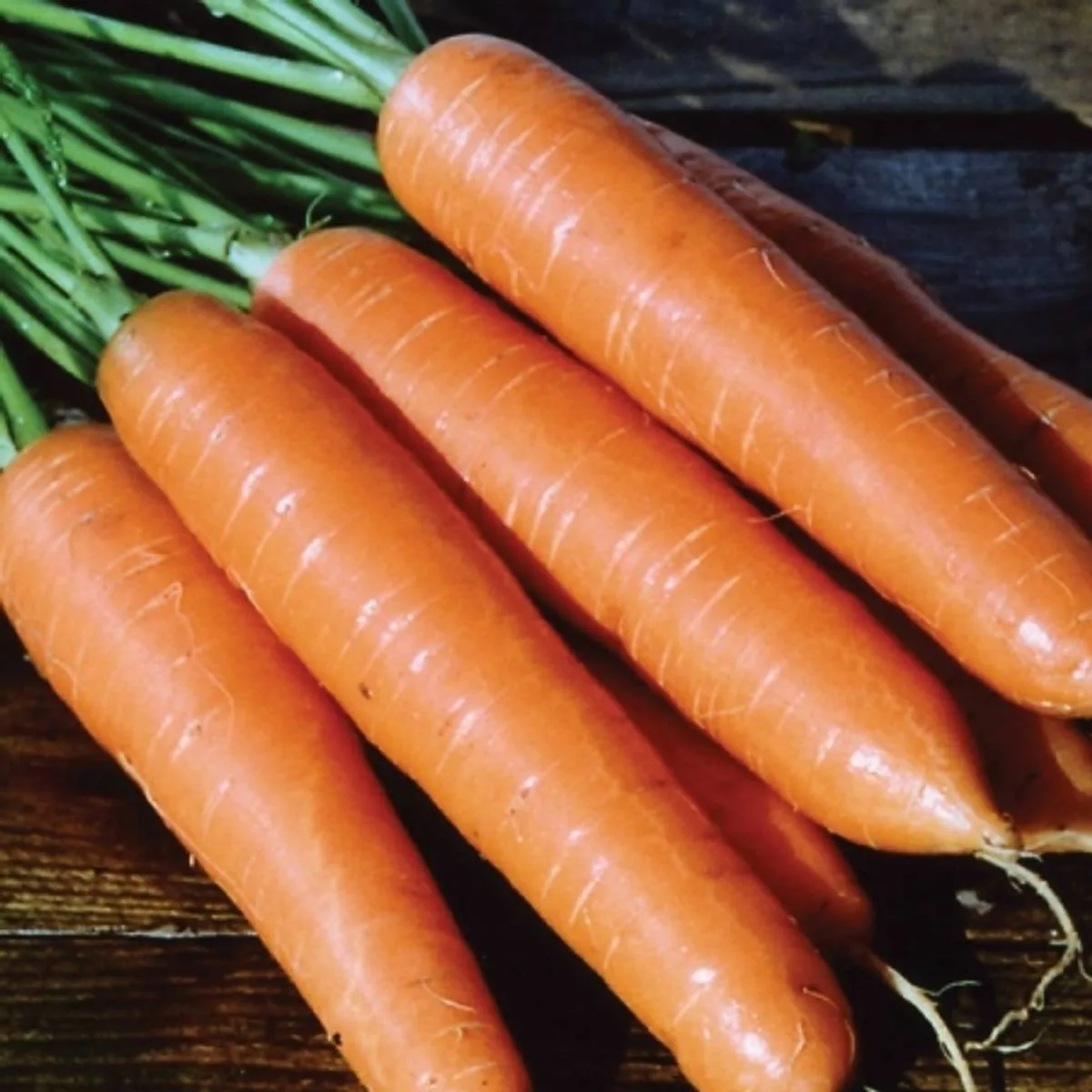
An annual, deciduous vegetable and a superb F1 variety that is suited to both early and late sowings. It produces rich orange roots with a sweet flavour, and has strong tops that make it easy to harvest. Shows a good resistance to disease as well as a high tolerance to frost, meaning the carrots can be left in the ground and lifted as required throughout the winter, without losing flavour. Sow April to July, harvest June to January
Scientific classification
- Species
- carrot 'Eskimo' (Daucus carota 'Eskimo')
- Genus
- Daucus
- Family
- Apiaceae
- Order
- Apiales
- Class
- Magnoliopsida
- Phylum
- Magnoliophyta
- Information to be completed
- Toxicity
- Annual Biennial
- Plant type
- 0.1-0.5 metres
- Height
- 0.1-0.5 metres
- Spread
- Deciduous
- Foliage
- Clump forming
- Habit
- Spring · Summer · Autumn · Winter
- Season of interest
- Full sun
- Sunlight
- Information to be completed
- Ideal temperature









carrot 'Eskimo' pictures
Distribution of carrot 'Eskimo'
Distribution map
- Native
- Introduced
- Cultivated
Source:WCVP v16 · Royal Botanic Gardens, Kew · CC BY 3.0 · Boundaries:WGSRPD / TDWG
carrot 'Eskimo' care guide
- Even soil moisture required, avoid drought stress during root development
- Watering
- Full sun
- Sunlight

Watering
Even soil moisture required, avoid drought stress during root development
Fertilizing
 Fertilizing
Balanced vegetable feed every two weeks until root crop maturation
Pruning
 Pruning
No pruning required
Propagation
 Propagation
Propagate by seed. See sowing vegetable seeds
Growing
 Growing
Grow in an open, sunny position with deeply cultivated, well-drained soil; heavy clay or stony soils may cause carrots to fork so it is best to make sure you have removed as many stones as possible and for clay soils add plenty of organic matter, such as well rotted manure. To reduce chances of harvesting forked carrots in clay soil choose a short-rooted cultivar. Keep seeds well-watered until your seedlings have emerged. You can also sow seeds in containers, especially if you select a cultivar with a shorter root. Harvest carrots from June, right through the winter until January. For more advice, see carrots cultivation
Common pests and diseases
Diseases
May be susceptible to carrot leaf blight in wet conditions during the growing season but generally disease-free
Pests
May be susceptible to root damage by carrot fly larvae, wireworm, slugs and rodents; foliage may be affected by aphids. A barrier of fine insect mesh at least 60cm high around the beds can help prevent carrot fly laying eggs
Explore the plant health library →




