
Passiflora caerulea White Lightning ('Yanpas')
Also known as: Information to be completed
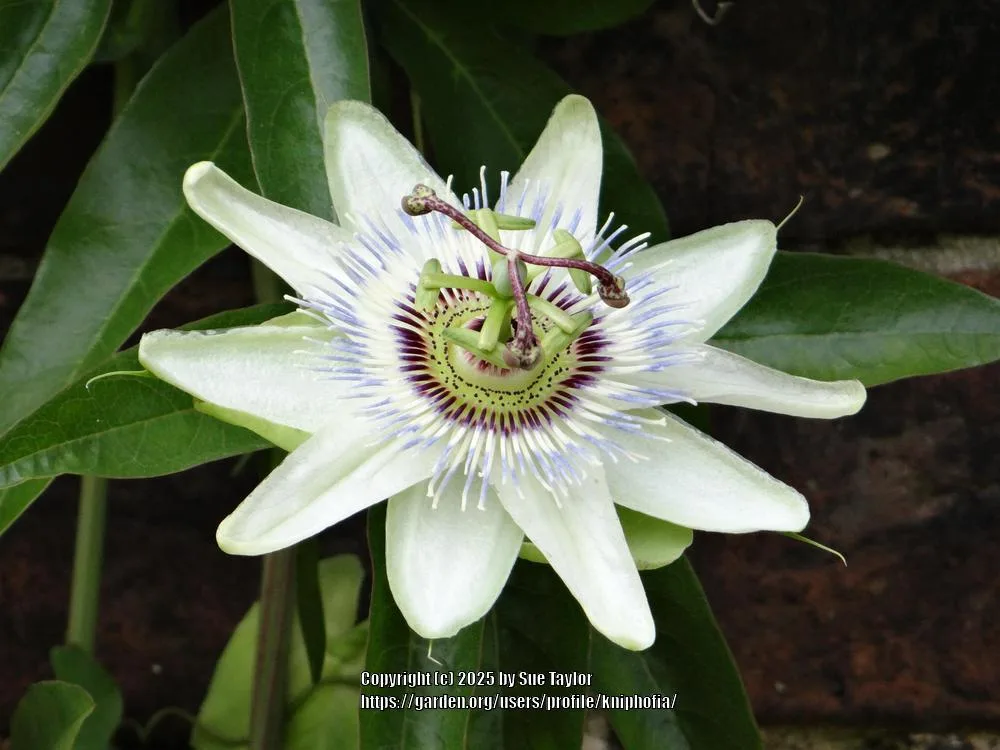
A vigorous semi evergreen climber to 5m, with deeply lobed, dark green leaves and 3.5cm wide, star-shaped white passion flowers with contrasting lilac and purple central crown with a cross of greenish filaments and purple speckled style-branches, in late summer and autumn. Egg-shaped orange fruits appear after the flowers. These are edible but not particularly tasty
Scientific classification
- Species
- Passiflora caerulea White Lightning ('Yanpas') (Passiflora caerulea White Lightning ('Yanpas'))
- Genus
- Passiflora
- Family
- Passifloraceae
- Information to be completed
- Toxicity
- Climber Wall Shrub
- Plant type
- 4-8 metres
- Height
- 2.5-4 metres
- Spread
- Semi evergreen
- Foliage
- Climbing
- Habit
- Spring · Summer · Autumn · Winter
- Season of interest
- Full sun · Partial shade
- Sunlight
- Information to be completed
- Ideal temperature









Passiflora caerulea White Lightning ('Yanpas') pictures
Distribution of Passiflora caerulea White Lightning ('Yanpas')
Distribution map
Information to be completed
Information to be completed
Culture
Information to be completed
Toxicity
Information to be completed
Quick identification of Passiflora caerulea White Lightning ('Yanpas')
Information to be completed
Passiflora caerulea White Lightning ('Yanpas') care guide
- Water deeply when top soil dries, reduce moisture level in cold winter
- Watering
- Full sun · Partial shade
- Sunlight
- Information to be completed
- Ideal temperature

Watering
Water deeply when top soil dries, reduce moisture level in cold winter
Fertilizing
 Fertilizing
Diluted high-potassium fertilizer every month in warm growing periods
Pruning
 Pruning
Little pruning is needed. Remove diseased, damaged, crowded or crossing shoots and unwanted growth. Timing depends on the plant: generally late winter or early spring; plants prone to bleeding and deciduous magnolias need different timing, and deciduous azaleas and lilacs are pruned after flowering.
Propagation
 Propagation
Propagate by seed, semi-hardwood cuttings or by layering in spring or autumn
Growing
 Growing
Fast-growing climber for sun or partial shade, thrives in moist but well-drained soil. In cold areas, grow in a container and overwinter indoors. flower In a south-facing glasshouse or conservatory, shade from direct sunlight to prevent the leaf scorch. Note that due to its vigorous nature in some gardens it has the potential to become a nuisance. See passion flower cultivation
People also ask
Information to be completed
Common pests and diseases
Diseases
May be susceptible to honey fungus (rarely) and a virus
Pests
May be susceptible to glasshouse red spider mite, scale insects and glasshouse whitefly
Explore the plant health library →




