
Crassula pellucida subsp. marginalis 'Rubra'
Also known as: Information to be completed
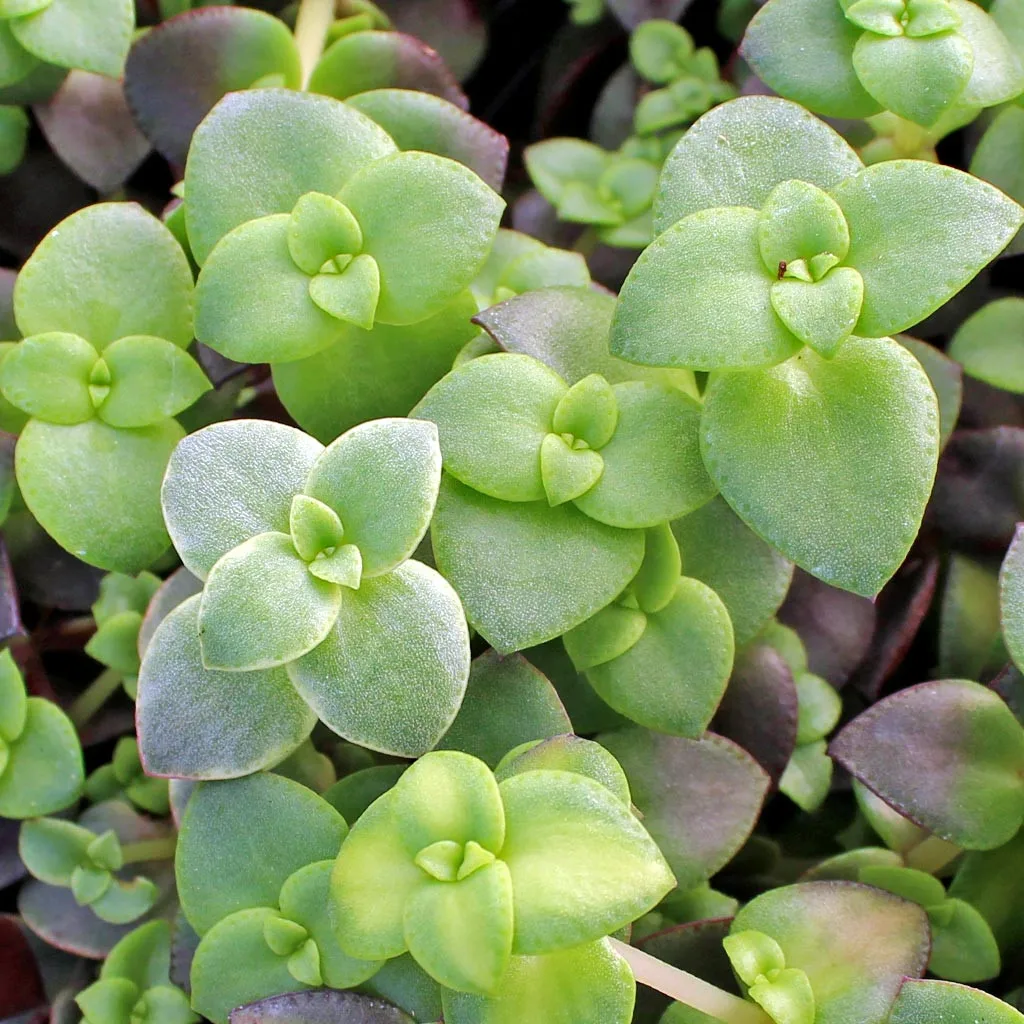
A succulent of cascading habit with fleshy pairs of heart-shaped leaves. These leaves are purplish-pink, edged with red, sometimes with a hint of yellow or green. Inflorescences of white flowers emerge from the tips of the branches
Scientific classification
- Species
- Crassula pellucida subsp. marginalis 'Rubra' (Crassula pellucida subsp. marginalis 'Rubra')
- Genus
- Crassula
- Family
- Crassulaceae
- Information to be completed
- Toxicity
- Cactus Succulent · Conservatory Greenhouse · Houseplants
- Plant type
- 0.1-0.5 metres
- Height
- 0.1-0.5 metres
- Spread
- Evergreen
- Foliage
- Pendulous weeping
- Habit
- Spring · Summer · Autumn · Winter
- Season of interest
- Full sun
- Sunlight
- Information to be completed
- Ideal temperature









Crassula pellucida subsp. marginalis 'Rubra' pictures
Distribution of Crassula pellucida subsp. marginalis 'Rubra'
Distribution map
- Native
- Introduced
- Cultivated
Source:WCVP v16 · Royal Botanic Gardens, Kew · CC BY 3.0 · Boundaries:WGSRPD / TDWG
Culture
Information to be completed
Toxicity
Information to be completed
Quick identification of Crassula pellucida subsp. marginalis 'Rubra'
Information to be completed
Crassula pellucida subsp. marginalis 'Rubra' care guide
- Let gritty substrate dry completely before giving another full soaking
- Watering
- Full sun
- Sunlight
- Information to be completed
- Ideal temperature

Watering
Let gritty substrate dry completely before giving another full soaking
Fertilizing
 Fertilizing
Ultra-diluted low-nitrogen succulent feed monthly warm summer only
Pruning
 Pruning
No pruning required
Propagation
 Propagation
Propagate by cuttings in spring or early summer
Growing
 Growing
Grow under glass in a standard cactus compost, in bright, filtered light or full sun. When in growth feed every two or three weeks with a balanced liquid feed. Water moderately from spring to autumn, sparingly at other times
People also ask
Information to be completed
Common pests and diseases
Diseases
Generally disease free
Pests
May be attacked by mealybugs, vine weevil and aphids
Explore the plant health library →




