
commonName:"clematis 'Purple Princess'"
Also known as: Information to be completed
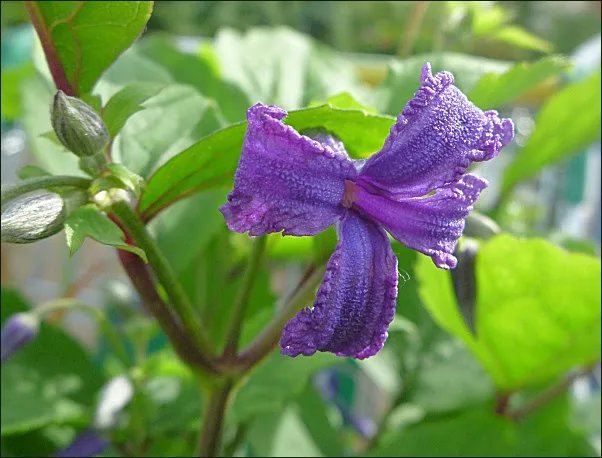
A deciduous, low-growing, upright, bushy perennial with dark green leaves. Purple flowers with paler edges to the petals appear in mid-summer. This variety doesn't climb but is ideal for a mixed border
Scientific classification
- Species
- commonName:"clematis 'Purple Princess'" (Clematis 'Purple Princess')
- Genus
- Clematis
- Family
- Ranunculaceae
- Order
- Ranunculales
- Class
- Magnoliopsida
- Phylum
- Tracheophyta
- Skin irritant. Wear gloves and other protective equipment when handling
- Toxicity
- Herbaceous Perennial
- Plant type
- 1-1.5 metres
- Height
- 1-1.5 metres
- Spread
- Deciduous
- Foliage
- Bushy · Columnar upright
- Habit
- Spring · Summer · Autumn
- Season of interest
- Full sun
- Sunlight
- Information to be completed
- Ideal temperature









commonName:"clematis 'Purple Princess'" pictures
Toxicity
Skin irritant. Wear gloves and other protective equipment when handling
commonName:"clematis 'Purple Princess'" care guide
- Water deeply once surface dries partially, prevent soggy root zone mud
- Watering
- Full sun
- Sunlight

Watering
Water deeply once surface dries partially, prevent soggy root zone mud
Fertilizing
 Fertilizing
Low nitrogen climbing clematis feed monthly spring pre-bloom stage
Pruning
 Pruning
 (clematis) group 3
Propagation
 Propagation
Propagate by division or take basal softwood cuttings of herbaceous clematis in spring
Growing
 Growing
Plant herbaceous clematis at soil level in moisture-retentive, well-drained soil in full sun, with the roots and base of the plant in shade. See clematis cultivation. May require support. See staking perennials for further advice
Common pests and diseases
Diseases
May be susceptible to honey fungus (rarely), clematis wilt and clematis slime flux
Pests
May be susceptible to aphids, snails and caterpillars; petals may be eaten by earwigs
Explore the plant health library →




