
Sanguisorba tenuifolia 'White Elephant'
Also known as: Information to be completed
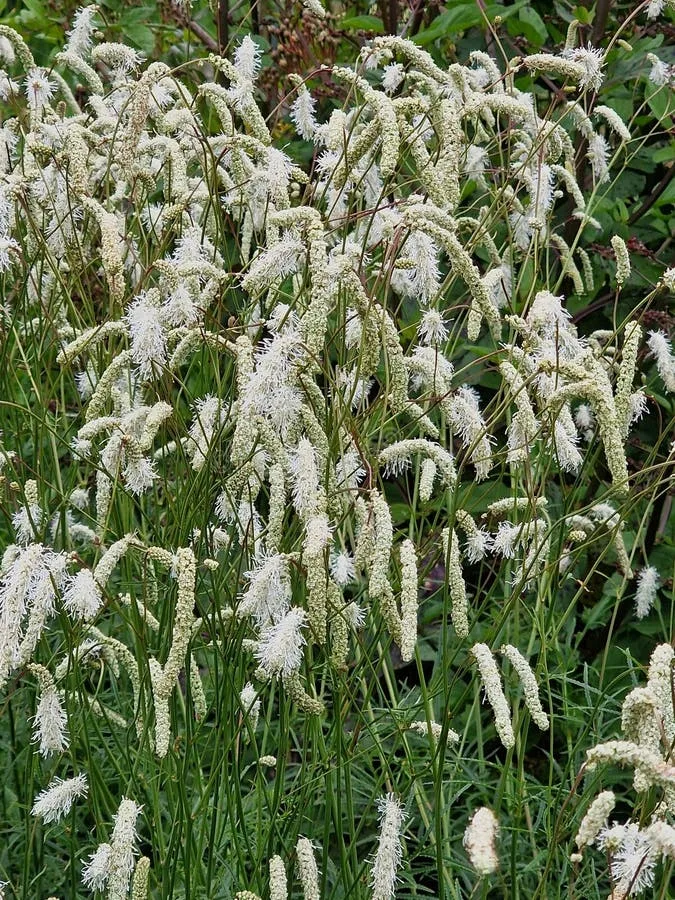
A tall, rhizomatous perennial to 1.8m, with rosettes of dark green, pinnate leaves and nodding spikes of bottlebrush-like flowers in summer and early autumn. Flowers open white and turn pale pink.
Scientific classification
- Species
- Sanguisorba tenuifolia 'White Elephant' (Sanguisorba tenuifolia 'White Elephant')
- Genus
- Sanguisorba
- Family
- Rosaceae
- Order
- Rosales
- Class
- Magnoliopsida
- Phylum
- Tracheophyta
- Information to be completed
- Toxicity
- Herbaceous Perennial
- Plant type
- 1.5-2.5 metres
- Height
- 0.5-1 metres
- Spread
- Deciduous
- Foliage
- Clump forming
- Habit
- Spring · Summer · Autumn
- Season of interest
- Full sun · Partial shade
- Sunlight
- Information to be completed
- Ideal temperature









Sanguisorba tenuifolia 'White Elephant' pictures
Distribution of Sanguisorba tenuifolia 'White Elephant'
Distribution map
- Native
- Introduced
- Cultivated
Source:WCVP v16 · Royal Botanic Gardens, Kew · CC BY 3.0 · Boundaries:WGSRPD / TDWG
Sanguisorba tenuifolia 'White Elephant' care guide
- Grow in damp soil, supply extra water in prolonged hot weather
- Watering
- Full sun · Partial shade
- Sunlight

Watering
Grow in damp soil, supply extra water in prolonged hot weather
Fertilizing
 Fertilizing
Balanced liquid fertilizer every three weeks from spring to mid summer
Pruning
 Pruning
No pruning required
Propagation
 Propagation
Propagate by seed sown in containers in a cold frame in spring, or by division in spring or autumn
Growing
 Growing
Grow in any moderately fertile soil that does not dry out. May require support, see staking (perennials)
Common pests and diseases
Diseases
Generally disease-free
Pests
May be susceptible to slugs causing damage to young leaves
Explore the plant health library →




