
sea buckthorn 'Hikul'
Also known as: Information to be completed
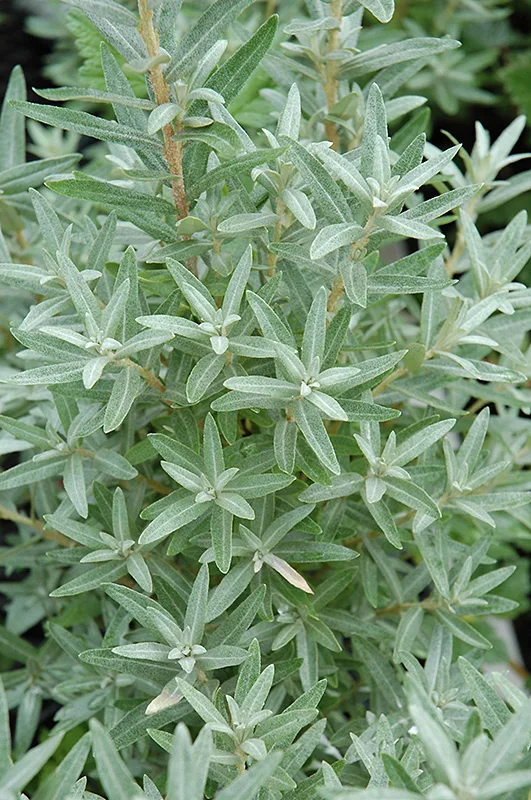
Compact, deciduous, slow growing and thorny shrub that forms a neat, rounded dome of silvery foliage approximately 1.5m tall with an equal spread. It has long thin silvery-green leaves which remain until early winter. It is drought and salt-wind tolerant so is suitable for use in coastal situations. It is a male cultivar so does not produce berries.
Scientific classification
- Species
- sea buckthorn 'Hikul' (Hippophae rhamnoides 'Hikul')
- Genus
- Hippophae
- Family
- Elaeagnaceae
- Order
- Rosales
- Class
- Magnoliopsida
- Phylum
- Magnoliophyta
- Information to be completed
- Toxicity
- Shrubs
- Plant type
- 1-1.5 metres
- Height
- 1-1.5 metres
- Spread
- Semi evergreen · Deciduous
- Foliage
- Bushy
- Habit
- Spring · Summer · Autumn
- Season of interest
- Full sun
- Sunlight
- Information to be completed
- Ideal temperature









sea buckthorn 'Hikul' pictures
Distribution of sea buckthorn 'Hikul'
Distribution map
- Native
- Introduced
- Cultivated
Source:WCVP v16 · Royal Botanic Gardens, Kew · CC BY 3.0 · Boundaries:WGSRPD / TDWG
sea buckthorn 'Hikul' care guide
- Moderate regular watering, allowing brief slight drying between soakings
- Watering
- Full sun
- Sunlight

Watering
Moderate regular watering, allowing brief slight drying between soakings
Fertilizing
 Fertilizing
Balanced perennial feed every four weeks from spring through summer
Pruning
 Pruning
Little pruning is needed. Remove diseased, damaged, crowded or crossing shoots and unwanted growth. Timing depends on the plant: generally late winter or early spring; plants prone to bleeding and deciduous magnolias need different timing, and deciduous azaleas and lilacs are pruned after flowering.
Propagation
 Propagation
Please see cultivation notes
Growing
 Growing
This plant is listed on Schedule 9 of the UK Wildlife & Countryside Act as an invasive non-native species. Although not banned from sale, it is an offence to plant or cause these to grow in the wild in NORTHERN IRELAND and the REPUBLIC OF IRELAND. Gardeners possessing them should undertake measures to control them. See RHS advice on invasive non-native species for further information
Common pests and diseases
Diseases
May be susceptible to honey fungus in gardens where it is present but insufficient data to determine degree of susceptibility
Pests
Generally pest-free
Explore the plant health library →




