
Primula 'Blindsee'
Also known as: Information to be completed
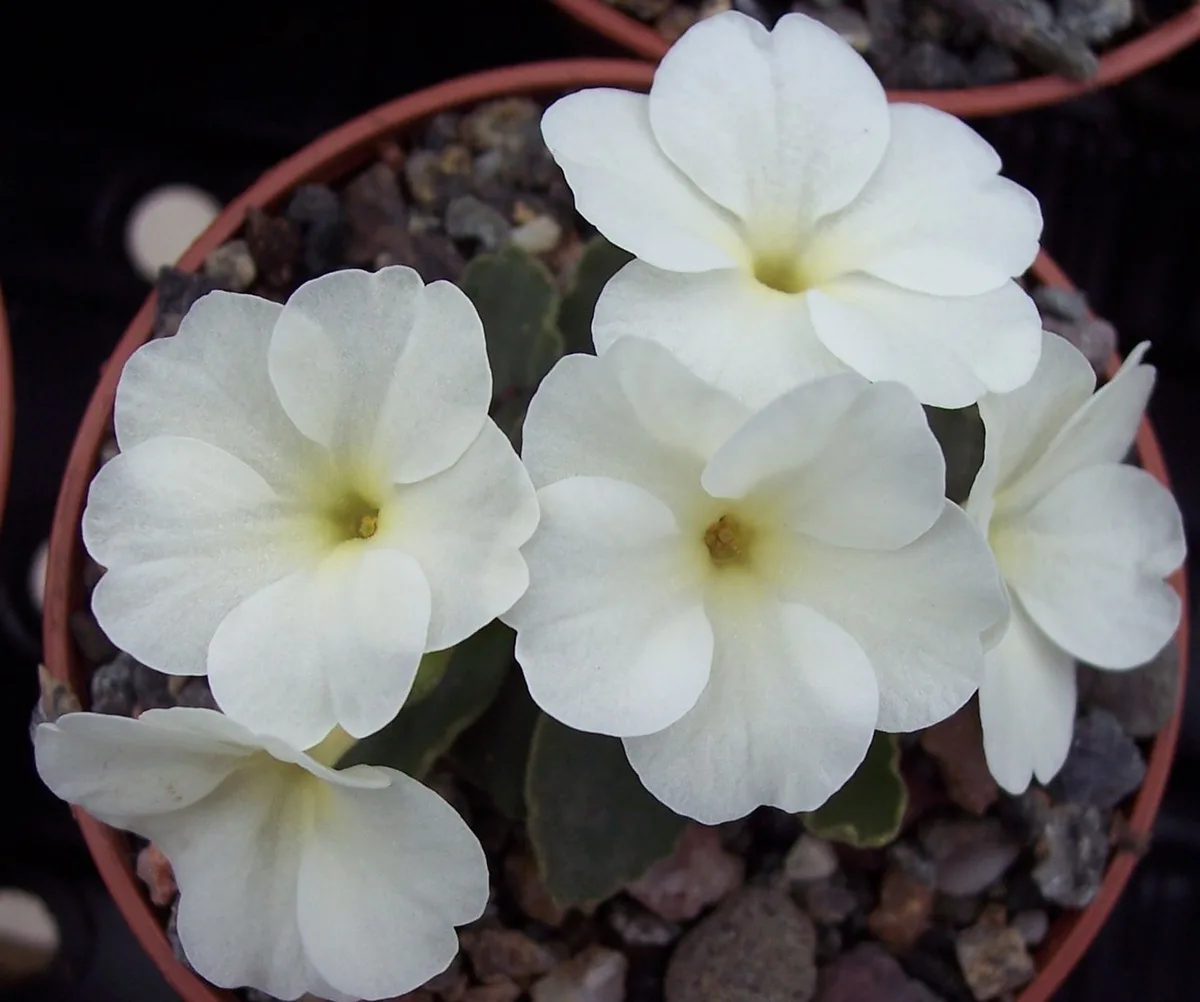
A compact, rosette-forming, evergreen perennial with small, spoon-shaped, toothed pale green foliage, and fragrant, cream flowers with darker cream centres, appearing from late-winter to early-spring
Scientific classification
- Species
- Primula 'Blindsee' (Primula 'Blindsee')
- Genus
- Primula
- Family
- Primulaceae
- Information to be completed
- Toxicity
- Conservatory Greenhouse · Alpine Rockery · Herbaceous Perennial
- Plant type
- Information to be completed
- Height
- Information to be completed
- Spread
- Evergreen
- Foliage
- Clump forming
- Habit
- Spring · Summer · Autumn · Winter
- Season of interest
- Partial shade
- Sunlight
- Information to be completed
- Ideal temperature









Primula 'Blindsee' pictures
Distribution of Primula 'Blindsee'
Distribution map
Information to be completed
Information to be completed
Culture
Information to be completed
Toxicity
Information to be completed
Quick identification of Primula 'Blindsee'
Information to be completed
Primula 'Blindsee' care guide
- Keep soil evenly moist and cool, never fully dry
- Watering
- Partial shade
- Sunlight
- Information to be completed
- Ideal temperature

Watering
Keep soil evenly moist and cool, never fully dry
Fertilizing
 Fertilizing
Weak balanced feed during spring growing season
Pruning
 Pruning
No pruning required
Propagation
 Propagation
Propagate by seed when ripe, division or by separating and rooting offsets in autumn or early spring
Growing
 Growing
Grow in partial shade in moderately fertile, moist but well-drained, humus-rich soil. May also be grown in an alpine house or greenhouse/conservatory using a specialist alpine plant compost based on loam with added lime. Avoid wetting the foliage
People also ask
Information to be completed
Common pests and diseases
Diseases
May be susceptible to a virus, primula brown core and grey moulds
Pests
May be susceptible to aphids, glasshouse red spider mite, slugs, leafhoppers and vine weevils
Explore the plant health library →




