
marigold 'Nova'
Also known as: Information to be completed
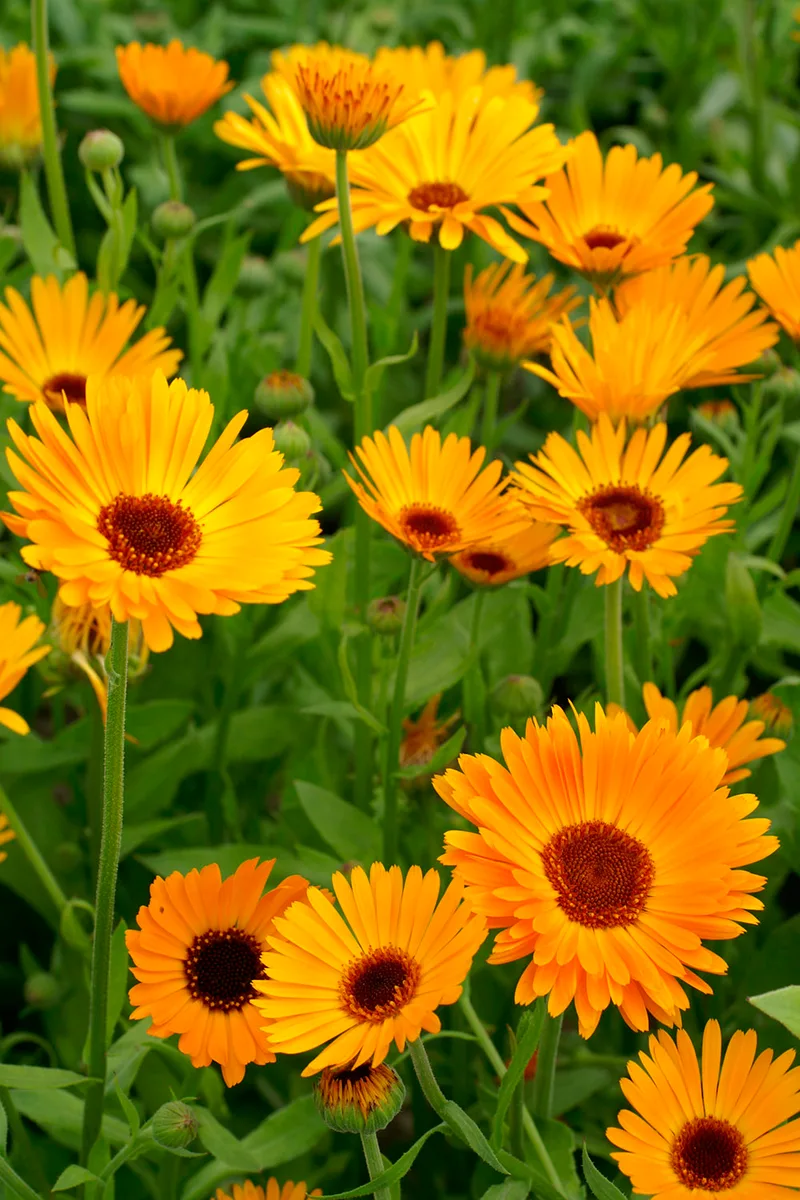
An excellent hardy annual for a border or container, this variety produces single flowers with vibrant orange petals on tall stems up to 60cm. It will flower from May to September until the first hard frost. Excellent as a cut flower and an edible addition to Summer salads or baking. Readily self-seeds for the following year
Scientific classification
- Species
- marigold 'Nova' (Calendula officinalis 'Nova')
- Genus
- Calendula
- Family
- Asteraceae
- Order
- Asterales
- Class
- Magnoliopsida
- Phylum
- Magnoliophyta
- Information to be completed
- Toxicity
- Annual Biennial
- Plant type
- 0.5-1 metres
- Height
- 0.1-0.5 metres
- Spread
- Deciduous
- Foliage
- Bushy
- Habit
- Spring · Summer · Autumn
- Season of interest
- Full sun · Partial shade
- Sunlight
- Information to be completed
- Ideal temperature









marigold 'Nova' pictures
Distribution of marigold 'Nova'
Distribution map
- Native
- Introduced
- Cultivated
Source:WCVP v16 · Royal Botanic Gardens, Kew · CC BY 3.0 · Boundaries:WGSRPD / TDWG
marigold 'Nova' care guide
- Moderate regular watering, allowing brief slight drying between soakings
- Watering
- Full sun · Partial shade
- Sunlight

Watering
Moderate regular watering, allowing brief slight drying between soakings
Fertilizing
 Fertilizing
Balanced perennial feed every four weeks from spring through summer
Pruning
 Pruning
Regularly deadhead to extend flowering. Cut back to ground level after flowering
Propagation
 Propagation
Propagate by seed sown in situ in Spring or Autumn
Growing
 Growing
Grow in well drained soil in full sun. Sow direct in Spring, 0.5cm deep into finely prepared soil, thin to 23cm apart. For a continuous display, sow at two to three weekly intervals. Autumn sowings will flower the following year. Deadhead regularly and pinch out terminal shoots to encourage bushy growth
Common pests and diseases
Diseases
May be susceptible to powdery mildews and a virus
Pests
May be susceptible to aphids
Explore the plant health library →




